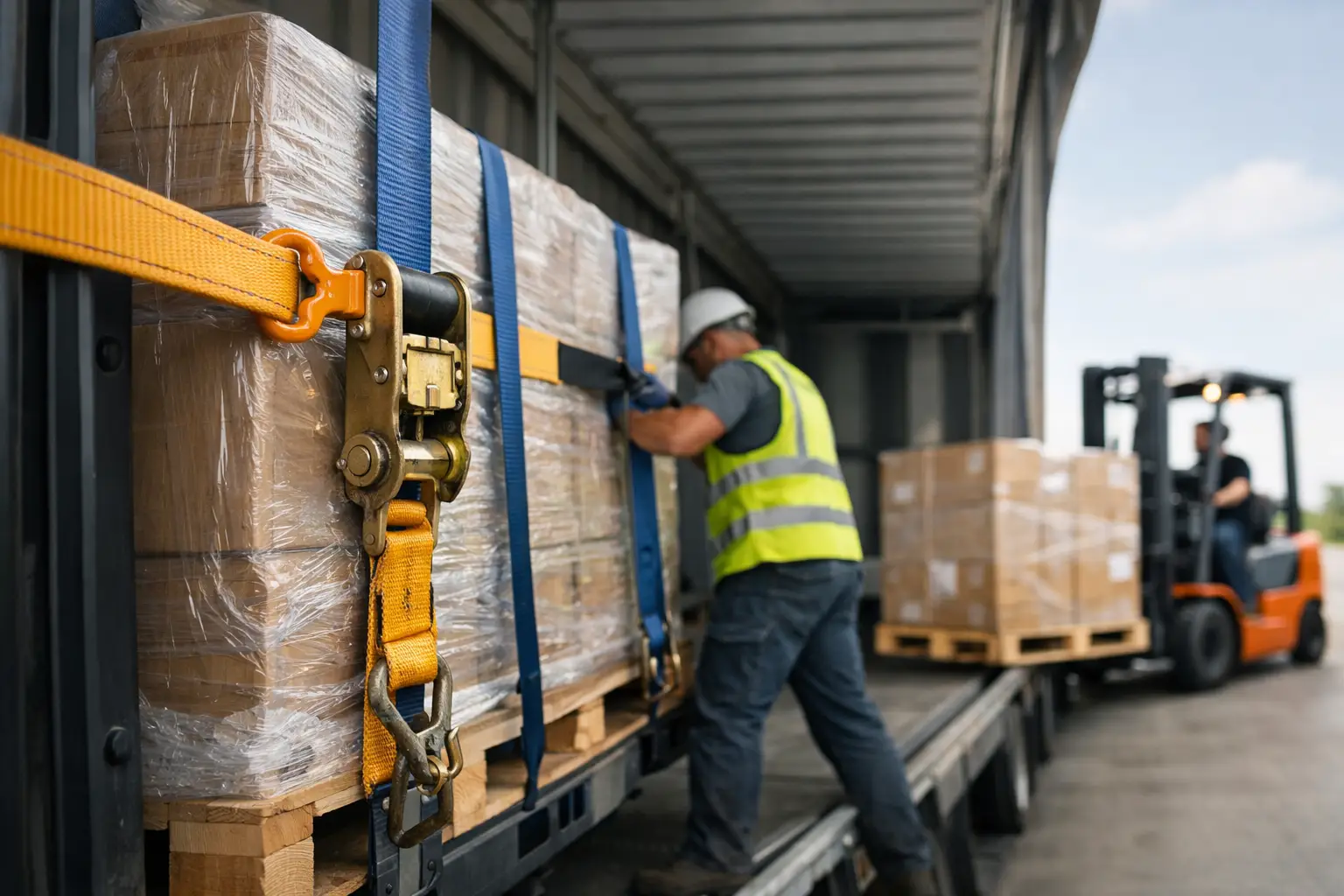
A driver is standing beside a loaded tautliner at a customer site, with traffic, forklifts and a tight delivery window all competing for attention. That is where the question, why use tautliner restraint, stops being theoretical. The right system can reduce the need to climb, reach, drag and work around an exposed load while helping the vehicle get back on the road sooner.
For Australian fleets, owner-drivers and body builders, load restraint is not just a compliance item added after the truck is built. It is part of daily productivity, driver safety and freight protection. A restraint system needs to work reliably in real operating conditions – at depots, regional yards, customer sites and roadside unloads.
Why use tautliner restraint on curtain-sided trucks?
A tautliner provides excellent access for loading and unloading, but curtains are generally not load restraint devices. Freight still needs to be restrained against forward, rearward and sideways movement using a suitable system and sound loading practices.
Traditional methods can involve manually handling straps, climbing into position, reaching across freight or working from awkward locations. These tasks may seem routine, but they add physical strain and create avoidable exposure to slips, falls and sudden load movement. They also take time, particularly when the driver is working alone or making multiple drops.
Purpose-designed tautliner restraint addresses those practical issues. It gives operators a consistent way to secure freight within the truck body, with restraint components positioned for the vehicle and task. The result is a safer, more repeatable loading process that supports efficient freight movement.
The value is especially clear in high-frequency work. A vehicle completing several deliveries each day does not lose only a few minutes at one stop. Small delays in securing, releasing and re-securing loads accumulate across shifts, routes and an entire fleet.
Reduce manual handling and working-at-height exposure
Manual handling is one of the clearest reasons to improve restraint equipment. Pulling straps over freight, throwing them across a body, climbing to reach anchor points or leaning around loads can place drivers in uncomfortable and unpredictable positions.
A well-designed system reduces unnecessary movement around the vehicle. Rather than treating awkward access as part of the job, it allows the restraint process to be managed from safer positions using purpose-built hardware. This is particularly useful for drivers working independently, where there is no second person available to assist with straps or manage a load from the opposite side.
Reducing exposure does not remove the need for proper training, site awareness or safe loading procedures. Drivers still need to assess the load, choose suitable restraint arrangements and follow their company process. But equipment should support safe work, not force people to take shortcuts because the standard method is too slow or physically demanding.
For fleet managers, this is also a practical workforce issue. A restraint method that asks less of a driver’s shoulders, back and knees can help make demanding transport work more sustainable over the long term.
A safer process is easier to repeat
The best safety processes are the ones drivers can apply consistently under pressure. If a system is difficult to access, takes excessive effort or varies from truck to truck, operators may be tempted to improvise. That is where risk increases.
A dedicated track-based tautliner restraint arrangement creates a defined operating method. The restraint location, connection points and handling procedure are established as part of the truck body fit-out. Consistency makes driver induction simpler and gives supervisors a clearer standard to inspect.
Protect the load, the truck and the people nearby
Load movement is not only a risk to the freight. It can affect vehicle stability, damage curtains and body components, and create danger for drivers, forklift operators and customers working nearby.
Effective restraint helps keep freight where it was loaded, especially through braking, cornering, uneven road surfaces and the repeated stop-start conditions common in metro distribution. Different freight types will need different approaches. Palletised goods, machinery, building products and mixed consignments do not behave the same way under transport forces.
That is why restraint selection should never be based on appearance alone. The equipment must suit the load, the body configuration and the intended operating conditions. Load weight, centre of gravity, packaging strength, gaps between freight and available anchor points all matter.
A tautliner restraint system is most valuable when it forms part of a complete load-securing plan. Correct loading, sensible weight distribution, suitable dunnage where required and regular checks remain essential. Good equipment gives drivers a practical way to carry out that plan properly.
Improve loading productivity without cutting corners
Speed matters in transport, but only when it comes from a better process. Rushing through a restraint task or relying on an unsuitable arrangement can cost far more than it saves if freight is damaged, a driver is injured or a truck is delayed.
The productivity advantage of a purpose-built system comes from reduced labour and fewer unnecessary steps. Drivers can secure loads with less climbing, less reaching and less handling of loose restraint gear. At a busy depot, that can improve turnaround and reduce congestion around loading bays.
For operations managers, the benefit is easier to measure than it first appears. Consider the time spent per vehicle, per load and per week. If restraint takes less time while maintaining a consistent safe process, that time can be returned to deliveries, loading capacity or driver breaks. It also makes scheduling more predictable when every vehicle is equipped in a similar way.
There is a trade-off: the right system requires an upfront investment and a proper installation. It should be specified for the truck body and operating task, not treated as a one-size-fits-all accessory. However, businesses that run curtain-siders regularly often find that lower handling effort and improved operational consistency justify the decision.
Why tautliner restraint suits modern fleet operations
Curtain-sided fleets are expected to move a wide variety of freight quickly. One truck may carry palletised distribution goods one day and industrial products the next. The body needs to remain accessible while the load stays secure.
A restraint system designed specifically for tautliners supports that balance. It works with the body rather than creating a process that depends on drivers wrestling with equipment around curtains and freight. This matters for fleets standardising new vehicles as well as owner-drivers upgrading a working truck.
It also matters to truck body builders. Integrating suitable restraint equipment during the build can produce a cleaner, more practical result than retrofitting an unsuitable solution later. A properly considered installation gives the operator usable restraint points and hardware positioned for everyday access.
Australian-made equipment can also be an advantage when parts, local knowledge and installer support are important. For national fleets, access to experienced body builders and stockists helps keep specifications consistent across vehicle makes and locations.
What to assess before choosing a restraint system
Before fitting any tautliner restraint, start with the work the truck actually performs. The most suitable arrangement for a dedicated pallet vehicle may not be the right answer for a multi-drop truck carrying mixed freight.
Assess the usual freight profile, load dimensions, weight distribution and the number of drops per day. Look at where drivers currently spend time or take awkward actions. If they regularly climb, throw straps, cross a busy loading area or struggle to reach restraint points, those are clear improvement opportunities.
The truck body itself also needs consideration. Track location, available space, curtain operation and compatibility with existing components all affect the final outcome. Installation should be completed by an experienced provider so the system is fitted correctly and performs as intended.
Finally, make sure drivers understand the method. Demonstrate the correct use of the equipment, set clear inspection expectations and reinforce that restraint requirements change with the load. Equipment is a major part of safe transport, but competent use is what delivers the result.
A practical investment in safer freight movement
StrapNGo’s patented Australian-made tautliner restraint system is designed around the daily realities of curtain-sided transport: safe and secure freight, minimal labour and a faster loading process. With track, bungee unit and extendable pole hardware, it gives drivers a practical alternative to unnecessary manual handling around the truck body.
The right restraint system will not solve every loading challenge on its own. It will, however, give drivers a safer starting point every time they secure a load. When the equipment is easy to use, properly fitted and matched to the job, safer freight movement becomes part of the normal workflow rather than an extra task at the end of it.