
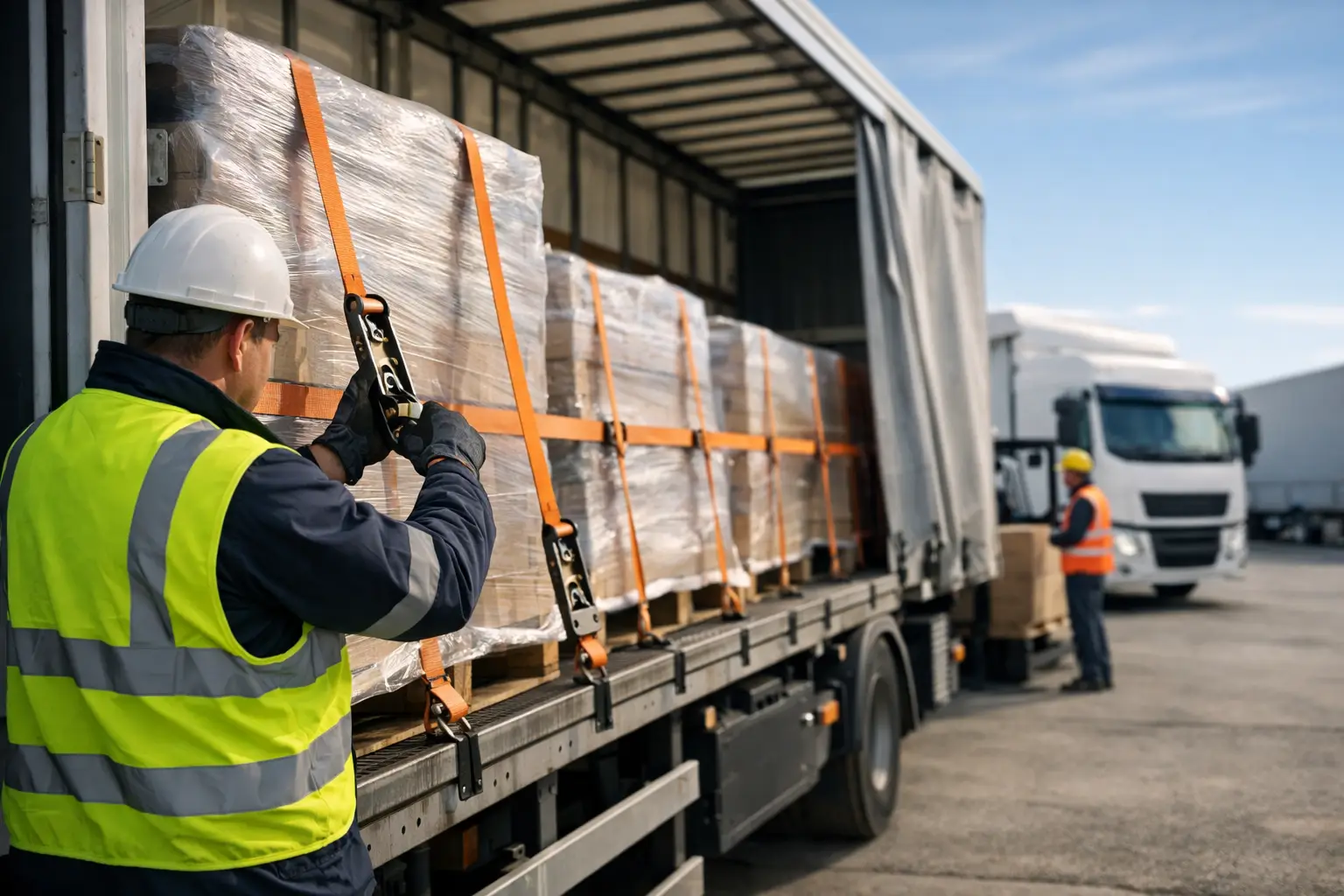
A safe tautliner loading method starts before the forklift moves and before the curtain is opened. The job is not simply to get freight on the deck. It is to position, restrain and release that freight without putting drivers beside moving plant, climbing over loads or wrestling with straps at shoulder height.
For Australian fleets, that means treating loading as a repeatable operating process. The best method will vary with the freight, vehicle layout, loading bay and restraint equipment, but the safety principles do not change. Plan the load, keep people clear of crush zones, use suitable restraint equipment and make the final check before the truck moves.
Start with the load plan, not the straps
A tautliner gives excellent side access, but that access can encourage rushed loading. Freight is placed where it fits, then the driver is left to work out how to restrain it. That approach creates delays and exposes people to avoidable manual handling risk.
The loading plan should identify the weight and dimensions of each item, the delivery sequence, available anchor points, restraint requirements and any special handling needs. It should also account for axle weights and load distribution. Heavy freight needs to be positioned to suit the vehicle and the restraint plan, not merely placed close to the doors or where the forklift can reach it fastest.
Before loading begins, inspect the deck, tracks, anchor points, curtains, buckles, straps and hardware. Remove damaged equipment from service. Check that pallets are sound, packaging is stable and there are no loose items that could shift during transport. A restraint system is only as reliable as the load and attachment points it is working with.
Curtains must also be understood for what they are. A standard curtain is not automatically a load restraint device. Whether a curtain can form part of the restraint solution depends on the vehicle design, freight type and the approved system fitted to the body. Drivers and loaders should never assume that closing the curtain makes an unstable load safe.
Control the loading area
Most loading incidents are not caused by one major failure. They happen when pedestrians, forklifts, drivers and freight are all moving through the same space without clear control.
Set the truck up on firm, level ground wherever practical. Apply the park brake, follow site requirements for wheel chocks where required and confirm the vehicle cannot move while loading is underway. Open curtains and doors fully, secure them so they cannot blow or swing into the work area, and check for overhead hazards before lifting equipment is used.
The driver and forklift operator need a clear understanding of who is controlling the job. In many depots, the safest arrangement is for the driver to stay in a designated safe area while the forklift loads, then return to inspect and secure the freight once plant has stopped. This reduces the chance of a driver stepping into a forklift path or standing beside an unstable load.
A simple exclusion zone is often more effective than a complicated procedure nobody follows. Keep unnecessary people out of the loading side of the vehicle. Do not walk between a forklift and the truck. Do not stand under raised forks, suspended loads or a curtain that has not been secured.
Build a stable load from the deck up
The load needs to be stable before restraint is applied. Restraint equipment is not a fix for poor stacking, damaged pallets or freight loaded with unsupported gaps.
Place heavy and dense items low and in positions that support correct weight distribution. Keep the load as compact as practical, using suitable dunnage, blocking or packing where needed to prevent movement. If different freight types are carried together, separate them so hard, heavy items cannot move into lighter or fragile goods.
The delivery order matters too. Freight for the first stop should be accessible without removing or disturbing secured freight intended for later stops. A load that is safe at the depot can become unsafe at the first delivery if staff need to reach over it, release multiple restraints or shift other pallets to access one item.
Load restraint must deal with the forces created by braking, acceleration, cornering and road vibration. The right approach depends on the load shape, mass, friction, packaging and the restraint system in use. Use equipment that is rated and configured for the task, and follow the vehicle manufacturer instructions, restraint equipment instructions and your business procedures.
A safe tautliner loading method keeps drivers off the deck
Climbing onto the trailer deck to throw straps over high freight has long been treated as part of the job. It also creates obvious risks: falls from height, slips on wet decks, overreaching, strain injuries and exposure to freight that may move unexpectedly.
A safer method is to fit the restraint equipment so it can be deployed from ground level or from a controlled, safe working position. This reduces the need for drivers to climb, throw straps or work above shoulder height. It also makes the process more consistent across drivers and shifts.
For fleets using track-mounted restraint systems, straps can be positioned along the body to suit the load without handling loose webbing across the deck. An extendable pole with a hook can assist with engaging equipment while the operator remains on the ground. Where a bungee return unit is fitted, straps can be managed neatly between loads rather than hanging loose, dragging on the deck or creating a trip hazard.
This is where the system design matters. StrapNGo provides a patented Australian-made restraint solution designed specifically for tautliners and curtain-sided trucks, helping drivers secure suitable loads with minimal labour and less exposure to hazardous manual handling. It should still be installed correctly, inspected regularly and used within its intended application.
Secure, tension and inspect before departure
Once the load is in position, apply the planned restraints in the correct sequence. Make sure straps are not twisted, cut, trapped on sharp edges or routed over unstable freight. Protect webbing where the load could damage it, and ensure hooks, buckles and track fittings are fully engaged.
Tension should be sufficient for the restraint method and load, but overtightening can damage packaging or create other problems. Check that straps are bearing on strong areas of the load and that they are not likely to slip into gaps as the vehicle moves. If the load has multiple sections or different heights, each section may need its own restraint arrangement.
The final inspection should be deliberate. Walk both sides of the vehicle. Confirm the load has not shifted while restraints were applied, all equipment is secure, the curtain can close without fouling straps or freight, and no loose gear remains on the deck. Close and secure the curtains and rear doors according to the vehicle procedure.
Drivers should also recheck the load after the first part of the journey, particularly after braking, rough roads or a change in freight condition. Some loads settle in transit. A quick inspection at a safe location can identify reduced tension, damaged packaging or movement before it becomes a roadside incident.
Make the method practical for every shift
A safe process only works if people can carry it out under normal freight pressures. If securing a load requires excessive climbing, repeated strap throwing or searching for loose equipment, shortcuts will eventually appear. The aim is to make the safe option the quickest practical option.
That means standardising restraint layouts where freight is consistent, training drivers and loaders on the same sequence, and keeping equipment maintained. Workshop checks should include track condition, mounting hardware, webbing wear, hook condition, bungee operation and pole integrity. Replace damaged components promptly rather than waiting for a failure during a run.
Different work has different demands. A metro pallet run, a mixed regional delivery and a dedicated industrial contract may each require a different load plan. The common requirement is that drivers have a restraint method suited to the work, not a one-size-fits-all process imposed on every load.
When loading is planned, plant movements are controlled and restraint can be applied without unnecessary climbing or strain, safety and productivity stop competing with each other. The result is a tautliner operation that protects the driver, safeguards the freight and keeps the vehicle moving.