
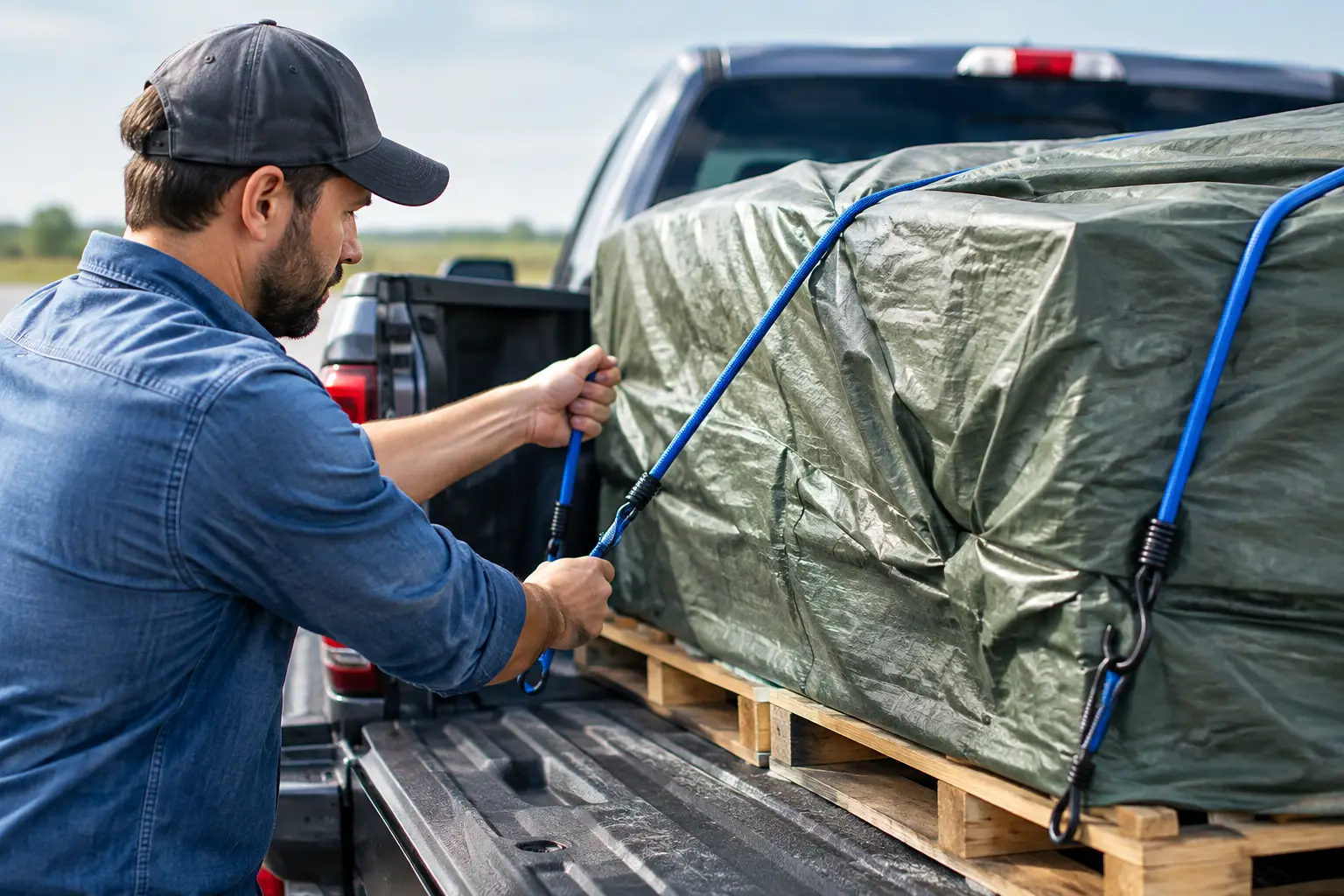
A loose curtain bungee can flap, wear quickly and leave a curtain-sided body looking poorly secured. An over-tensioned bungee can be just as costly, placing unnecessary load on the cord, hooks, buckles and curtain hardware. Knowing how to tension truck bungees correctly helps drivers keep equipment serviceable, reduce manual handling risk and present a safer vehicle at every stop.
For tautliners and curtain-sided trucks, the job is not about pulling a bungee as hard as possible. It is about applying even, controlled tension so the curtain sits correctly against the body and the securing hardware remains within its intended operating range. The correct method depends on the bungee system, truck body design and the condition of the curtain and track.
How to Tension Truck Bungees Safely
Start with the truck parked on firm, level ground where possible. Apply the park brake, assess the traffic environment and avoid carrying out curtain work on an exposed roadside unless there is no safer alternative. If loading or unloading is taking place, make sure the area is clear of forklifts, pedestrians and other vehicles before working along the side of the body.
Before handling the bungee, inspect the full curtain system. Look for frayed elastic, split outer covers, damaged hooks, bent fittings, loose fasteners, torn curtain material and debris in the track. Check that the curtain is correctly closed and aligned. A bungee will not correct a curtain that is twisted, caught on a load or running out of its track.
With the curtain properly positioned, connect the bungee hook or fitting to its designated anchor point. Keep fingers clear of the hook, rail and tensioning hardware. Elastic under load can release suddenly if a hook slips or a cord fails, so never place your face or body in the line of recoil.
Pull the bungee using a steady, controlled movement. The aim is to remove slack and hold the curtain neatly in position, not to stretch the cord beyond its intended working range. Secure the bungee to the correct point and confirm the hook has fully engaged. A hook sitting only partly over a rail or fitting can release during travel.
Once secured, step back and inspect the line of tension. The curtain should sit evenly, with no obvious sagging, excessive distortion or concentrated pull at one point. Work progressively along the vehicle where multiple bungees are fitted, rather than tensioning one section aggressively and trying to compensate elsewhere.
Use the Right Tool for the Reach
Repeatedly reaching above shoulder height to tension bungees increases the risk of strain, particularly when drivers are working alone or completing multiple drops. Climbing on wheels, side rails or makeshift steps to reach a high hook creates a far greater risk and should never be treated as normal practice.
An extendable pole with a suitable hook allows operators to engage and tension elevated bungee points while remaining on the ground. It improves reach, but it does not remove the need for control. Keep a stable stance, hold the pole securely and make sure the hook is properly located before applying tension.
The advantage is practical: less stretching, less climbing and less time spent working in awkward positions. For fleets, this matters over hundreds of daily curtain operations, not just one load.
Do not use bungees to restrain freight
Truck bungees are generally used to secure or tension curtain components. They are not a substitute for a compliant load restraint system. Curtains and their associated bungees must not be relied on to prevent freight movement unless the vehicle and restraint arrangement have been specifically designed, rated and operated for that purpose.
Freight still needs to be restrained using equipment appropriate to the load, vehicle and journey. That may include rated internal restraint systems, straps, bars, gates or other approved methods. The restraint arrangement must account for load weight, shape, stability, friction, placement and the forces encountered under braking, cornering and rough-road conditions.
This distinction is critical. A tidy, properly tensioned curtain contributes to a safe and professional vehicle presentation, but it does not automatically mean the load behind it is secure.
Set a Consistent Tension Standard
The correct amount of tension is set by the bungee and curtain system manufacturer. Do not guess, and do not use a damaged cord simply because it still reaches the hook. If the bungee feels unusually hard to stretch, is difficult to connect, or pulls the curtain out of shape, stop and check for an obstruction, incorrect routing or the wrong component.
A practical check is to look for balanced tension across the curtain. There should be no loose sections that can flap excessively in the wind, but the curtain should not be pulled so tight that eyelets, buckles, tracks or fabric are under visible stress. On a multi-bungee setup, inconsistencies often point to a worn bungee, incorrect hook position or a curtain that is not square.
Drivers should follow their fleet procedure and the truck body builder’s instructions. Workshop teams should make sure replacement bungees match the original specification for length, strength, fittings and intended application. Substituting an unfamiliar elastic cord or improvised hook may appear to solve a problem at the depot, but it can introduce a failure point on the road.
Common Problems That Affect Tension
Bungees rarely fail without warning. UV exposure, road grime, weather and repeated stretching all reduce service life. A visual inspection before a run can prevent a small defect becoming a curtain failure during transit.
Watch for these common issues:
- Fraying, cracking or perishing of the elastic cover.
- Hooks that are bent, sharp, corroded or no longer retain securely.
- Curtain tracks blocked by dirt, damaged rollers or misalignment.
- Uneven tension caused by a stretched bungee or incorrect anchor point.
- Torn curtain material around fittings, eyelets or attachment points.
If a bungee is damaged, remove it from service and replace it with the correct approved part. Do not knot it, shorten it with cable ties or add an improvised extension. Those fixes make tension unpredictable and can create a snap-back hazard for the next person handling the curtain.
Make Tensioning Part of the Pre-Trip Check
A reliable process is more useful than relying on memory at the end of a long shift. Include curtain and bungee condition in the daily vehicle inspection, particularly on trucks completing multi-drop work where curtains are opened and closed repeatedly.
Check the bungees after loading, after the curtains are closed and again during walk-around checks at scheduled stops. Pay attention to any change in curtain shape, flapping noise or a hook that has moved from its correct position. These are early indicators that the system needs attention.
For workshop managers and fleet operators, consistent inspections also make maintenance easier to plan. Replacing worn components during scheduled servicing is safer and more economical than dealing with a failed bungee at a customer site or on the side of a highway.
Safety and Productivity Work Together
The fastest method is not the one that asks a driver to overreach, climb or rush through a tensioning task. It is the method that keeps the operator on the ground where possible, uses equipment designed for the truck body and gives the curtain system a repeatable, even finish.
StrapNGo’s Australian-made load restraint approach is built around that same practical outcome: improving safety and productivity without adding unnecessary labour to the loading process. Used alongside correctly maintained curtain hardware, dedicated load restraint equipment helps operators keep freight controlled and drivers out of avoidable harm.
A bungee takes only moments to inspect and tension properly. Treat those moments as part of the job, not an interruption to it. The result is a better-secured curtain, less wear on the vehicle body and a safer working routine for the driver handling it.