
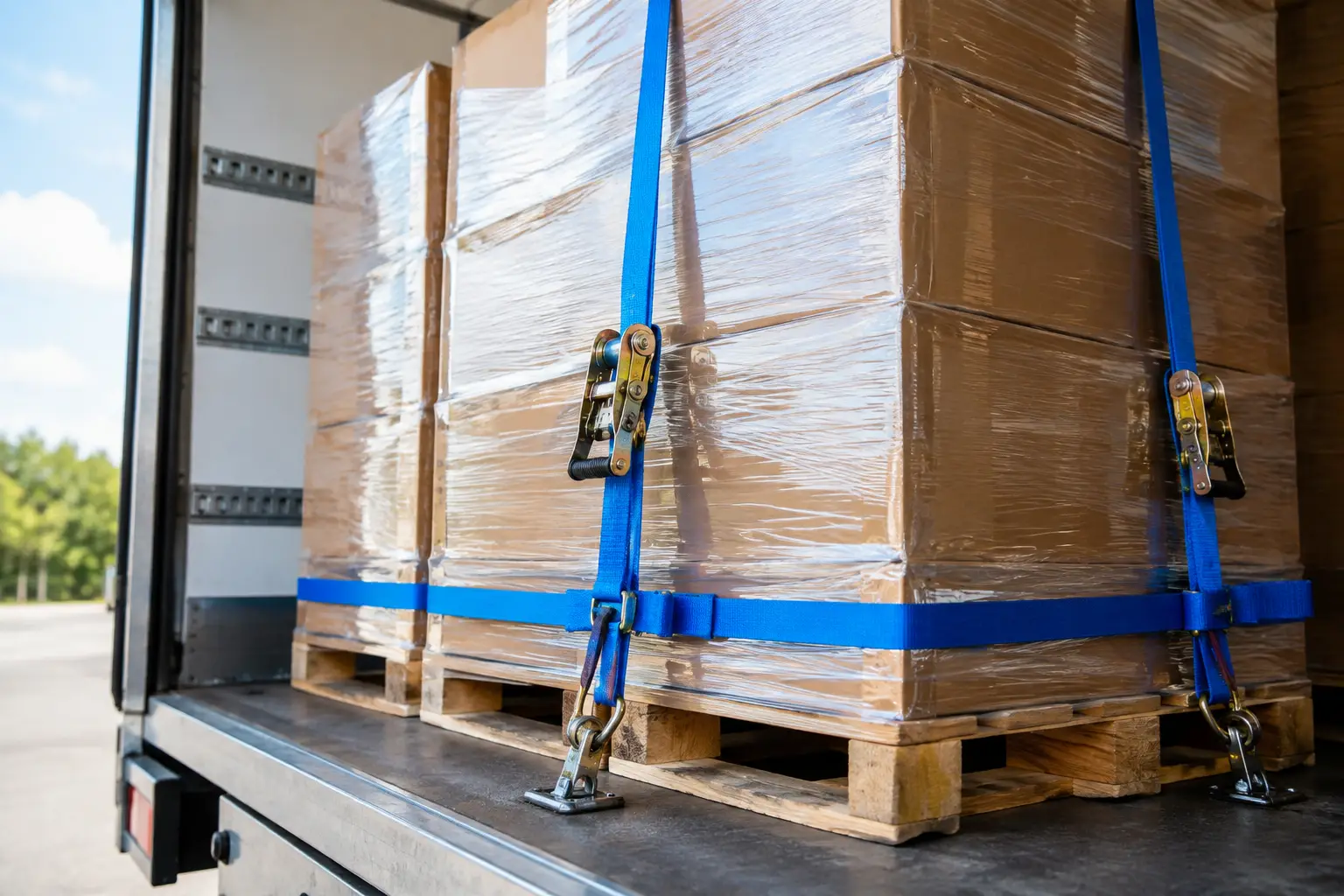
A pallet can look secure at the depot, then become a moving hazard after the first roundabout, steep descent or urgent brake application. Effective freight restraint for pallets is not about ticking a box before the curtains close. It is about controlling load movement, protecting the driver from avoidable manual handling, and giving the operation confidence that freight will arrive in the same condition it left.
For Australian fleets running tautliners and curtain-sided trucks, pallet restraint needs to work at pace. Drivers are often loading mixed freight, making multiple drops and working in yards where time, space and access are limited. The right system must secure the load without adding unnecessary climbing, stretching, throwing or repeated handling of heavy equipment.
Why pallet loads need positive restraint
A pallet is only as stable as the freight stacked on it, the condition of its wrapping and the way it is positioned in the body. Shrink wrap can hold cartons together, but it is not a load restraint method. Likewise, placing pallets tightly together may reduce movement, but it does not reliably control forward, rearward or sideways forces during transport.
Braking, cornering, rough roads and uneven load distribution all create forces that can shift freight. Once one pallet moves, it can create space for others to follow. In a curtain-sided body, that movement can place pressure against the curtain, damage product and create a serious risk when the driver opens the vehicle at the next delivery point.
Positive restraint is the practical answer. It applies a suitable barrier or restraint method against the load so the pallet cannot gain momentum. The aim is not simply to stop a pallet falling over. It is to prevent movement before it starts.
Freight restraint for pallets in curtain-sided trucks
Curtain-sided trucks are built for access and loading efficiency. Their curtains are weather protection systems, not a substitute for properly securing freight. This distinction matters at every load point, particularly with full pallets, tall lightweight stock, mixed consignments and loads with gaps between pallet rows.
Traditional methods can involve straps, chains, internal gates, load bars or timber dunnage. Each has a place, depending on the freight and vehicle. But operators should assess the full job, not only the rated capacity of the equipment. Ask how the driver reaches the restraint, how many times it must be handled, whether it creates trip hazards, and whether the process remains practical across repeated drops.
A restraint method that is technically suitable but slow or physically awkward is more likely to be inconsistently used when schedules tighten. Good pallet restraint makes the safe method the workable method.
The loading pattern changes the answer
There is no single restraint arrangement for every palletised load. A full load packed firmly from the headboard to the rear may require a different approach from a part load with open space behind it. Double-stacked pallets, fragile goods, irregular pallet footprints and unbalanced weight all need closer assessment.
The restraint plan should account for the direction in which the load could move. Forward movement under braking is often the first concern, but rearward movement during acceleration and lateral movement through corners also matter. Where load gaps exist, operators need a reliable way to close or manage them.
It also pays to consider the delivery sequence. Freight unloaded early can leave remaining pallets with a large open area behind them. A system that can be repositioned quickly helps the driver maintain restraint throughout the run, rather than securing the load once at departure and hoping it remains stable after multiple drops.
Reduce manual handling without compromising control
Drivers should not need to climb on freight, throw straps over tall pallets or work at height to secure a load. These tasks can expose people to falls, shoulder strain, awkward postures and risks from unstable freight. They also take time, especially when repeated across a shift.
A well-designed track-based restraint system keeps the working components accessible from ground level or a safer operating position. The driver can position the restraint against the palletised freight, tension it correctly and move it as the load changes. This is particularly valuable in curtainsiders, where safe access and rapid turnaround directly affect the day’s productivity.
StrapNGo’s patented Australian-made system is designed around this practical requirement: safe and secure pallet restraint with minimal labour. Used with the appropriate track, bungee unit and extendable pole with hook, it provides a more efficient way to manage palletised freight in tautliners and curtain-sided trucks.
The commercial benefit is straightforward. Less time spent wrestling with conventional restraints can reduce loading and unloading delays. More importantly, reducing unnecessary manual handling helps operators protect the people doing the work every day.
What to check before selecting a restraint system
The best equipment choice depends on the vehicle, freight profile and operating conditions. Before fitting or standardising a system across a fleet, assess the truck body and the actual work it performs.
Start with the body configuration. Track location, structural fixing points, internal dimensions and curtain operation must all be considered. A restraint system should integrate with the truck body without interfering with loading equipment, pallet access or normal curtain use.
Then look at the freight. Consider pallet height and weight, whether loads are single or double stacked, how often partial loads are carried, and whether consignments change throughout the day. A metropolitan multi-drop truck may need a very different setup to an interstate unit carrying more consistent full loads.
Finally, consider the operator. Equipment should be clear to use, practical in wet weather and reliable under daily use. If drivers need specialised workarounds to make the system fit the job, the setup needs further attention.
For a proper assessment, fleets should consider:
- the load restraint forces and requirements relevant to the task;
- the condition and rating of tracks, anchor points and restraint components;
- pallet quality, wrapping, load stability and weight distribution;
- the changing load layout after each delivery; and
- driver training, inspection routines and reporting of damaged equipment.
These checks support safer decisions, but they do not replace the need to follow applicable load restraint requirements, vehicle manufacturer guidance and workplace procedures.
Installation matters as much as the product
A quality restraint system can only perform as intended when it is correctly fitted. Tracks and mounting hardware must be installed into suitable parts of the truck body, with the correct fixings and spacing for the application. Poor installation can compromise the body, reduce restraint performance and create costly rework later.
This is why experienced truck body builders and installers are valuable partners. They understand how different tautliner and curtain-sided bodies are constructed, where hardware can be fitted, and how to retain practical loading access. For fleet operators, professional installation also creates consistency across vehicles, making training and daily operation easier.
Compatibility should be confirmed at the vehicle level rather than assumed. A system may suit trucks from major manufacturers such as Isuzu, Iveco, Fuso, Hino, Sitrak, UD Trucks, Mercedes-Benz and Scania, but body specifications can vary. The truck chassis is only part of the picture. The body builder’s design and the intended freight task determine the final restraint layout.
Daily checks keep restraint dependable
Load restraint equipment works hard. It is exposed to forklift contact, vibration, dust, moisture and frequent handling. A quick pre-start check can identify damage before it becomes a failure on the road.
Drivers should inspect straps or webbing for cuts, abrasion and contamination; check hooks, buckles and fittings for distortion; and ensure tracks remain clear, secure and free from visible damage. Any component that is worn, damaged or not operating correctly should be removed from service and assessed under the fleet’s maintenance process.
The load itself also needs checking. A sound restraint system cannot compensate for broken pallets, crushed cartons, failed wrap or unstable stacking. Where the freight condition is poor, the loading method may need to change before the truck leaves the yard.
Make restraint part of the loading process
The strongest safety outcomes come when restraint is planned at the same time as loading. Position heavier pallets appropriately, minimise unnecessary gaps, account for the delivery sequence and apply the restraint before the vehicle moves. At each stop, reassess the remaining load rather than assuming the original setup is still suitable.
That approach protects more than freight. It protects drivers opening curtains, warehouse teams working around the vehicle, customers receiving goods and the business carrying the cost of damage, downtime and incidents.
A practical pallet restraint system should earn its place on the truck every day: quicker to use, safer for the driver and dependable when the road puts the load to the test.