
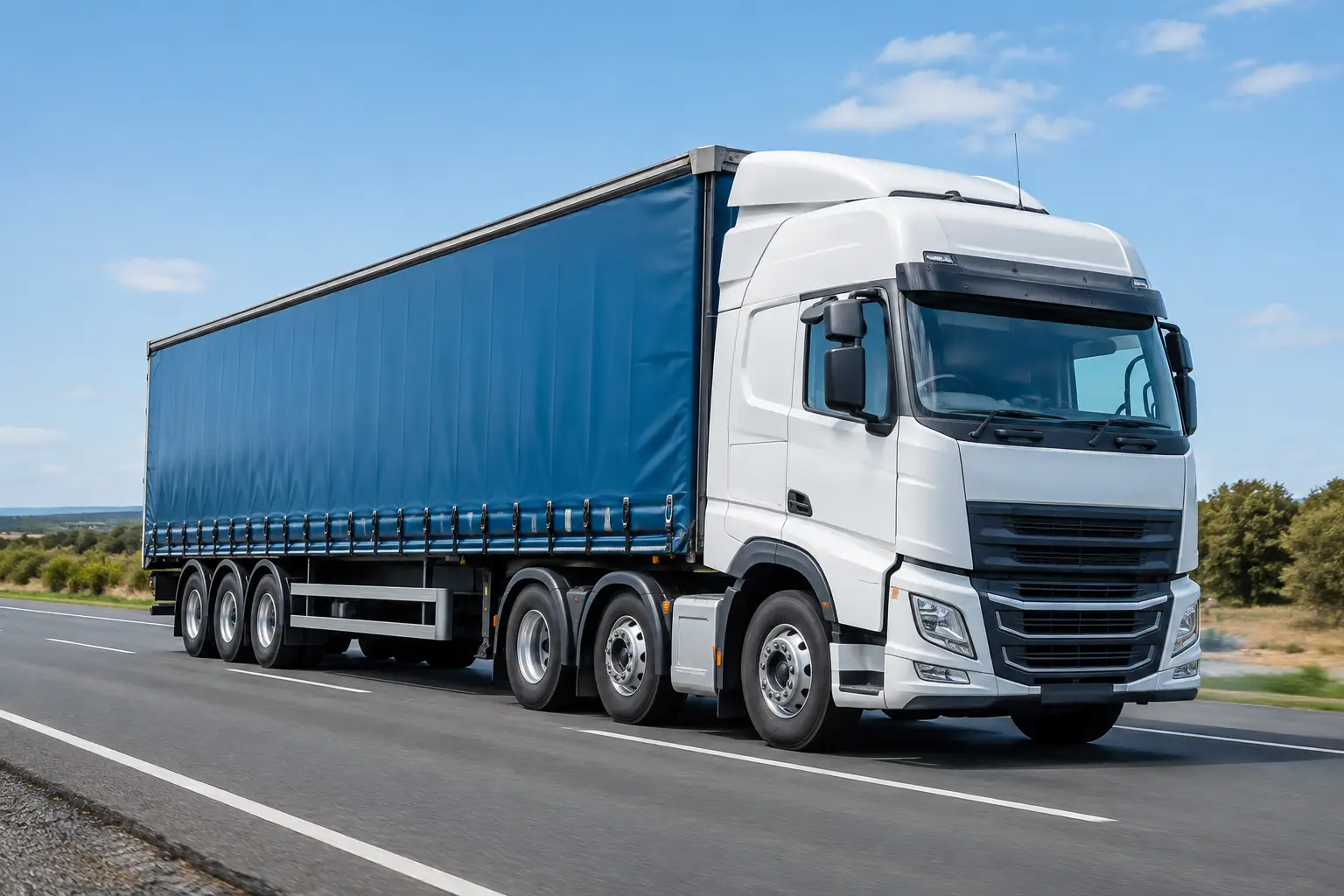
A curtain-sided truck can be loaded quickly from either side, but that access does not secure the load. When operators ask what restraints suit curtain siders, the answer starts with the freight, the truck body and the forces the load will face in transit. Curtains contain weather and provide access. In most applications, they should not be treated as the primary restraint system unless the vehicle and curtain arrangement are specifically engineered, rated and approved for that purpose.
The right restraint method keeps the load stable under braking, cornering, acceleration and uneven-road movement. It also needs to work safely in the real conditions drivers face: tight delivery sites, multiple drops, wet weather, limited room beside the vehicle and pressure to keep freight moving.
Start with the load, not the curtain
There is no single restraint that suits every curtain sider. Cartons on pallets, steel products, machinery, building materials and mixed general freight all behave differently. A restraint system must prevent the load from sliding, tipping, rolling, bouncing or shifting into an unsafe position.
Before selecting equipment, assess the load’s weight, dimensions, centre of gravity, packaging strength and surface friction. Consider whether the load is unitised, whether pallets are in sound condition, and whether the load can settle during transport. A neatly wrapped pallet is not automatically a secure pallet. Stretchwrap may hold cartons together, but it is not generally a substitute for a properly designed restraint arrangement.
The vehicle matters too. Restraint equipment is only as effective as the anchor points, track, headboard, deck and body structure it connects to. Operators should use rated equipment with compatible fittings and follow the vehicle manufacturer’s requirements, the applicable load restraint guidance and site procedures.
Curtains are usually containment, not restraint
A common and costly assumption is that closing the curtains makes freight secure. Standard curtains are primarily there to protect the load from weather and allow rapid side loading. They may reduce exposure or provide a degree of containment, but they are not automatically designed to withstand the forces generated by a shifting load.
This distinction matters most with tall, heavy, unstable or loosely packed freight. If a load moves sideways, it can place pressure on the curtain, damage buckles or tracks, compromise the body and create a serious risk when the curtain is opened at the next stop. A curtain that looks intact from outside does not prove the load is stable behind it.
Some curtain-sided bodies are purpose-built and certified to provide particular load restraint performance. Where this is the case, operators need to understand exactly what the certification covers, including load type, placement, restraint conditions and any restrictions. Do not assume one rated body configuration applies to every load carried in the fleet.
What restraints suit curtain siders for general freight?
For many curtain-sided applications, the most practical answer is a combination of direct restraint, tie-down restraint and load containment equipment. The best arrangement depends on the freight and how it is loaded.
Internal straps and rated tracks
Internal webbing straps connected to correctly rated tracks or anchor points are a familiar solution for pallets and general freight. They can restrain loads laterally, stop movement into open spaces and help keep unstable items upright. Their effectiveness depends on strap rating, angle, tension, anchor capacity and placement.
A strap run across the face of a load can be useful, but it is not a universal fix. If the strap sits too high, too low, over weak packaging or at a poor angle, it may not control the movement that matters. A strap should bear against a suitable part of the load, not crush cartons or rely on fragile pallet edges to carry the force.
For multi-drop work, internal systems need to be practical to release and re-secure. If drivers must climb repeatedly, reach over freight or work beside live traffic to adjust restraints, the job becomes slower and riskier than it needs to be.
Load-rated nets and curtains within the body
Purpose-designed load-rated nets can suit palletised and mixed freight where broad load coverage is needed. They may be particularly useful for controlling multiple items across a bay, provided their rating, attachment points and installation method are appropriate.
Internal restraint curtains can also provide a fast, repeatable barrier between freight sections. As with any system, their performance is determined by the full assembly: track, fittings, webbing, mounting structure and correct use. A net or internal curtain is not suitable simply because it fills a gap. It must be rated and installed for the task.
Blocking, bracing and dunnage
Blocking and bracing help remove free space around the load. Dunnage, chocks, load bars and timber blocking can be effective where they are strong enough, correctly positioned and secured against movement. These methods are often valuable for rigid items, long products or freight that cannot be strapped directly without damage.
They also have limits. Loose timber, improvised packing and damaged pallets can become hazards themselves. Use materials that are fit for purpose, check them during loading and replace them when they are split, worn or contaminated.
Purpose-built restraint systems
For fleets running regular curtain-sider or tautliner work, a purpose-built system can reduce the reliance on manual throwing, climbing and roadside restraint adjustments. A track-mounted restraint arrangement gives drivers a consistent method to position and secure freight from a safer working location.
This is where the commercial benefit is clear. A patented system such as StrapNGo is designed specifically for tautliners and curtain-sided trucks, combining track-mounted restraint equipment with tools that allow the operator to work with minimal labour. The aim is not to replace sound loading practice. It is to make a compliant, repeatable restraint process easier to carry out across daily runs.
Tie-downs need more than tension
Chains, webbing tie-downs and ratchets all have a place in transport, particularly for machinery, steel, plant and other dense freight. However, their suitability in a curtain sider depends on the available anchor points, the body design and the way the load is presented.
Tie-down restraints rely partly on friction. Their holding ability can change with a wet deck, smooth packaging, plastic pallet feet, vibration and load settlement. Extra tension alone is not always the answer. Excessive tension can damage freight, bend lightweight packaging or overload fittings without providing better control.
Use edge protection where straps pass over sharp corners. Check webbing for cuts, abrasion, UV damage, contamination and damaged stitching. Inspect ratchets, hooks, chains and fittings before use. Equipment with no visible damage can still be unsuitable if its rating is unknown or its anchor point is not rated for the applied load.
Plan for the full journey
A load that is safe at the depot can become unsafe after hard braking, a roundabout, rough regional roads or several deliveries. Every stop changes the load arrangement. Removing one pallet may leave the remaining freight without lateral support, create a gap or alter weight distribution.
Drivers should be able to inspect the load safely at practical intervals and after events likely to cause movement. For multi-drop work, the restraint plan should show what stays in place, what must be re-secured and how empty spaces will be managed. This planning reduces rushed decisions at customer sites.
The safest method is often the one drivers can use correctly every time. That means restraint equipment should be accessible, rated, maintained and suited to the freight task – not buried under cargo, improvised on the day or dependent on risky manual handling.
Choose a system that matches the operation
A metropolitan pallet operation may need fast internal restraint between frequent stops. An interstate operator carrying mixed industrial freight may need a combination of tracks, straps, blocking and specialised tie-down equipment. A body builder fitting out new curtain siders should consider restraint integration before the vehicle enters service, not after drivers have found the gaps.
Ask practical questions: Can the system restrain the heaviest regular load? Does it suit the lightest and most fragile freight too? Are the tracks and anchorages correctly rated? Can a driver use it without climbing on the load or working in an exposed position? Can the system be inspected and maintained without disrupting the vehicle?
The right restraint for a curtain sider is the one that controls the specific load, works with the body’s rated structure and can be applied consistently by the people doing the job. Build that discipline into every load plan, and the curtain remains what it should be: a useful part of the truck body, not the last line of defence against moving freight.