
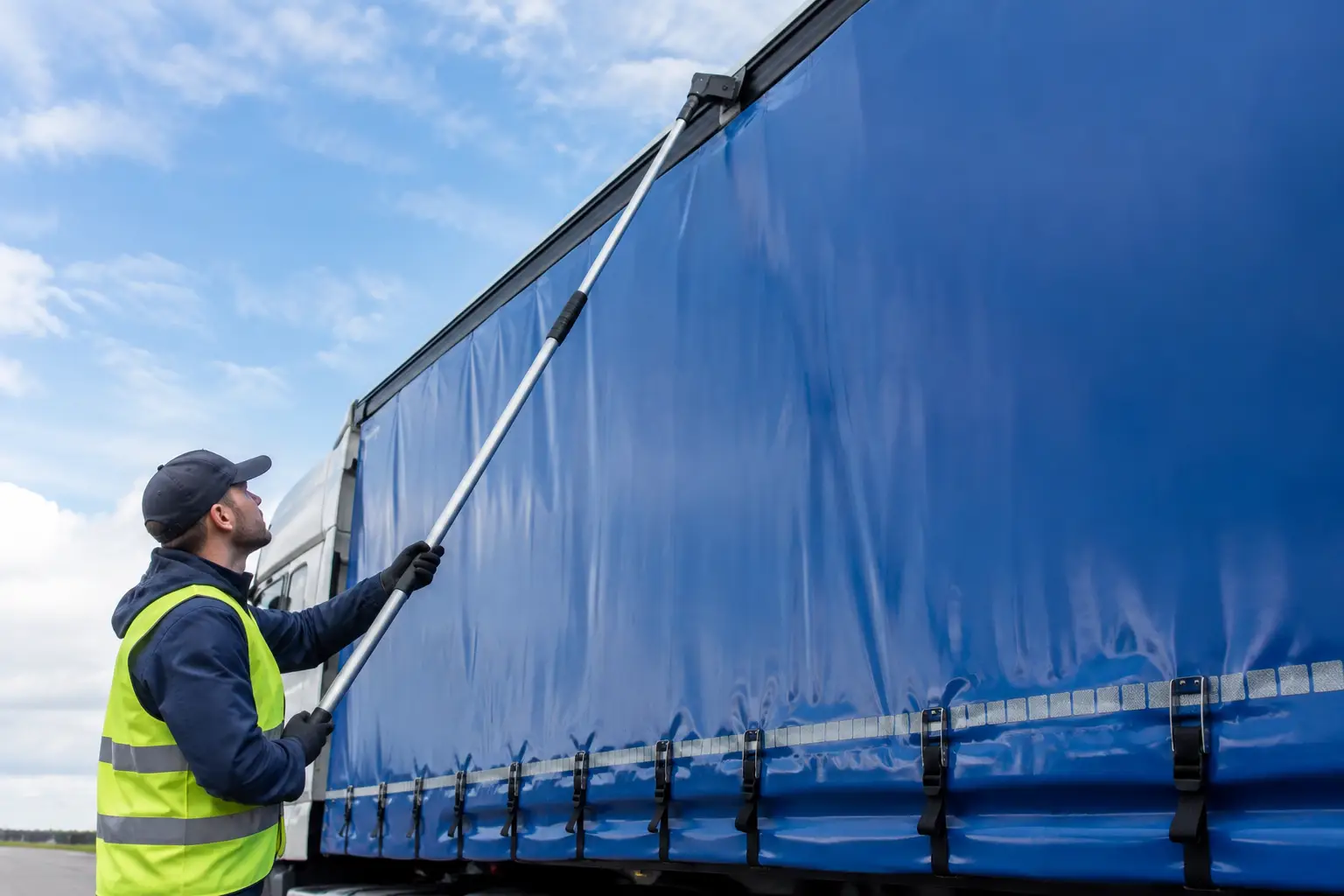
A strap that sits high in a tautliner can turn a routine loading task into an unnecessary manual handling risk. Reaching above shoulder height, climbing on tyres or side rails, and working beside active traffic all increase the chance of an injury. Using an extendable pole safely allows drivers to position and retrieve curtain straps from ground level, but only when the pole, hook, load and work area are properly managed.
For fleet operators, the benefit is not simply fewer awkward movements. A consistent ground-based process can reduce loading delays, support safer work practices and give drivers a practical alternative to climbing or overreaching. The pole is a handling aid, however. It does not replace a compliant load restraint process, a pre-trip inspection or sound judgement at the loading site.
Using an extendable pole safely starts before loading
Start with the truck on firm, level ground wherever practical. Apply the parking brake and confirm the vehicle cannot move during loading or restraint work. If the job is taking place in a depot, loading dock, customer yard or roadside location, assess vehicle movements before opening the curtain. Keep clear of forklifts, pallet jacks and other people working around the truck.
The load must be stable before straps are handled. A pole can help guide a strap into position, but it cannot correct a load that has shifted, is poorly distributed or is standing unsupported. Check the freight, dunnage and restraint points before releasing any existing restraint. If there is evidence of load movement, stop and follow the site procedure rather than attempting to pull a strap free from a distance.
Inspect the pole before each use. Check that the telescopic sections extend and lock correctly, the handle is secure and the hook is not bent, cracked or excessively worn. Look closely at the hook connection and any moving components, as these parts carry the force of guiding a strap at height. A damaged pole can slip off the strap or fail when the driver is reaching into the truck body.
Also inspect the strap being handled. Frayed webbing, damaged buckles, cuts, contamination and distorted hardware all need attention. An extendable pole should never be used to compensate for worn restraint equipment.
Set up the work area, not just the pole
The safest position is generally beside the truck, with both feet planted on clear, dry ground. Do not stand on a kerb, pallet, loose gravel, the truck step or freight to gain extra height. If the strap cannot be reached safely from the ground with the correct pole, reassess the task. Another person, a different loading position or an approved access method may be required.
Create enough space to operate the pole without striking a person, a curtain, a forklift mast or adjacent freight. The pole length is useful, but it also increases the area the operator can sweep through. Before lifting it, check above and behind you for overhead obstructions, dock structures, powerlines and nearby workers.
Maintain an exclusion area around the side of the truck while straps are being positioned. In busy yards, a driver concentrating on a high hook can easily miss a forklift approaching from the rear. Good communication with the loader is part of the restraint process. Make sure everyone understands when the curtain side is open, when straps are being handled and when it is safe to continue loading.
Use controlled movements and keep the load in view
Extend the pole only as far as the task requires. A fully extended pole gives greater reach, but it also has more flex and is harder to control. Use the shortest practical length that lets you connect with the strap or fitting while keeping your body in a balanced position.
Hold the pole with two hands where possible and keep the movement deliberate. Guide the hook onto the strap or hardware, then apply only enough force to move it into place. Avoid sharp jerks, swinging motions or using the pole as a lever. These actions can damage the pole, dislodge the hook or cause the strap to release suddenly.
Keep your face and body out of the line of travel. If a strap is under tension, it may move quickly when released or when the hook disengages. Stand slightly to one side rather than directly beneath the strap or between the strap and the load. Never pull a strap towards your chest in an attempt to gain force.
Visual control matters. If the operator cannot clearly see the hook engage with the intended strap or track fitting, they should not continue by feel alone. Reposition the truck or curtain where possible, improve lighting, or use an appropriate alternative method. Guessing whether a hook is properly seated is not an efficient shortcut.
Know what the pole is designed to do
An extendable pole with hook is designed to guide and retrieve straps from a safe working position. It is not a lifting device, a pry bar, a substitute for a ladder or a means of pulling heavy freight into alignment. Misusing it for these tasks can overload the shaft, damage the hook or place the operator in an unstable position.
The distinction is particularly important with curtain-sided trailers carrying mixed or irregular loads. If the curtain is catching, a strap is jammed behind freight or a buckle is inaccessible, forcing the issue with a pole can make the situation worse. Stop, identify why the restraint is not moving and correct the underlying problem.
A properly fitted restraint system makes the task more predictable. StrapNGo’s patented system is designed to help drivers manage curtain straps from ground level with minimal labour, but its safe use still depends on correct installation, equipment condition and trained operators. Every fleet should ensure the pole and associated track or bungee components are used according to their intended purpose.
Adjust the process for weather and site conditions
Wet surfaces, strong wind and poor visibility change the risk level. Rain can make the ground slippery and reduce grip on handles and straps. Wind can catch an open curtain and create unexpected movement around the truck. At night or in enclosed loading areas, poor lighting can hide damaged straps or prevent the driver from confirming the hook position.
In these conditions, slow the job down. Wear suitable footwear with sound grip and use gloves that allow a secure hold without reducing dexterity. If the wind is moving the curtain heavily, wait for conditions to settle or use the site controls available. Trying to complete a quick restraint task while a curtain is whipping beside you is not a productive decision.
Roadside work requires an even higher level of caution. Position the vehicle as safely as conditions allow, use required warning measures and stay aware of passing traffic. An extendable pole reduces the need to climb, but it does not remove the risks of working beside a live road.
Build the pole into daily checks and training
Safe use becomes reliable when it is part of the normal loading routine. Include the pole in daily vehicle checks, record damaged equipment and remove it from service until it is repaired or replaced. Do not leave poles loose in the truck body where they can become damaged, create a trip hazard or move during transport.
Training should cover more than how to extend the shaft. Drivers need to understand safe footing, hook engagement, load stability, exclusion zones and the limits of the equipment. A short practical demonstration at handover is often more valuable than assuming every experienced driver will use a new restraint setup in the same way.
Supervisors should also look for the shortcuts that creep in under time pressure: standing on a wheel, overextending the pole, working around moving forklifts or forcing jammed straps. Addressing these early protects people and prevents minor equipment damage becoming a failed restraint or lost loading time.
A well-used pole keeps the driver on the ground and in control. Make that the standard for every load, even when the delivery schedule is tight.