
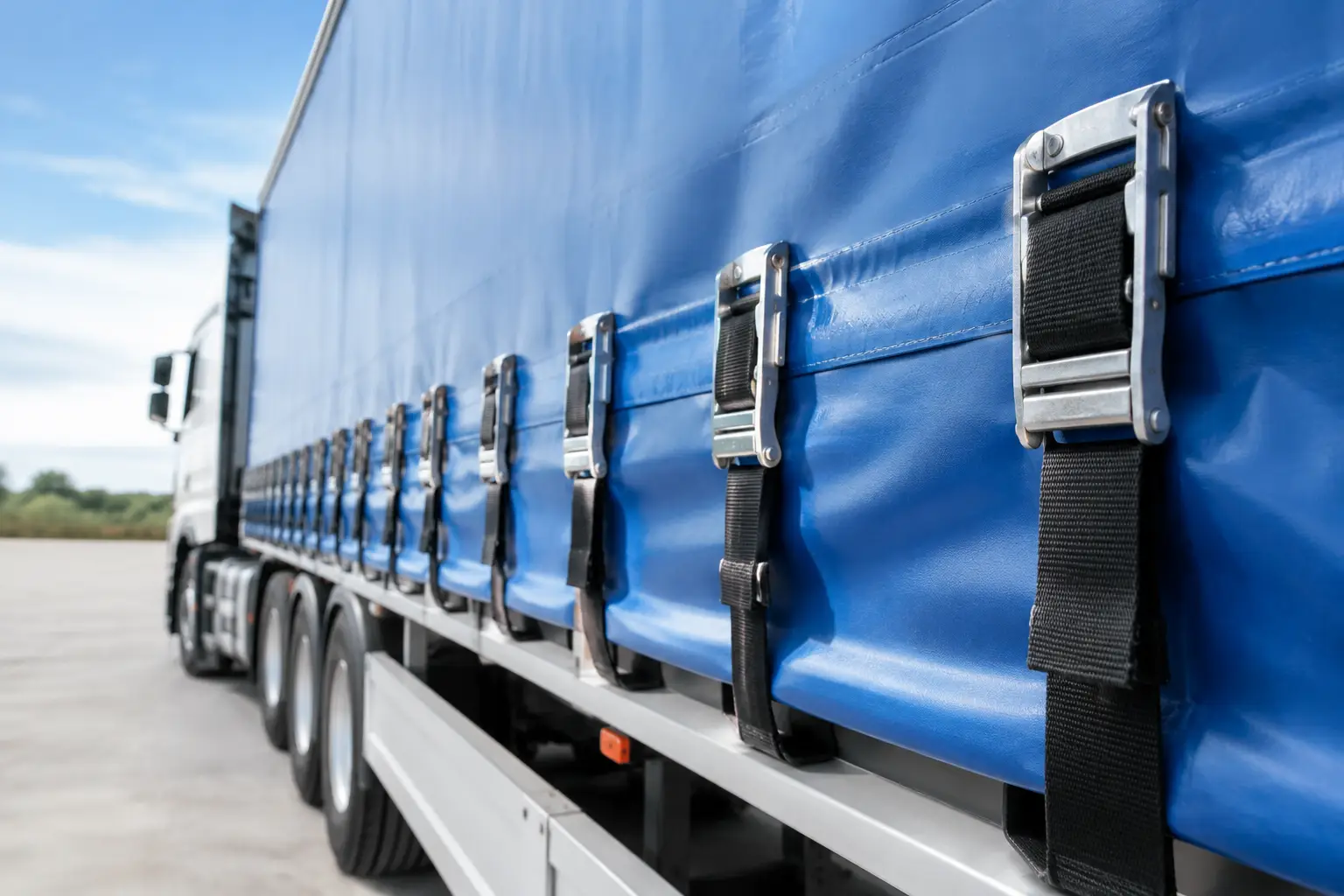
A curtain-sided truck earns its keep by loading quickly from the side. But when freight is moving, the best curtain side accessories are the ones that help drivers restrain loads safely, with less climbing, reaching and time spent wrestling loose straps. They need to suit the body, the load, the route and the way your drivers actually work.
For Australian fleets, accessories are not an afterthought. A poorly matched track, worn strap or awkward access method can add manual handling risk and slow every stop. The right setup supports a practical load restraint arrangement while keeping the truck productive.
What makes an accessory worth fitting?
There is no single shopping list that suits every tautliner. A metro pallet fleet loading several times a day has different needs from an interstate operator carrying mixed industrial freight. The best choice starts with the load, its restraint requirements and the vehicle body – not the cheapest item on the shelf.
Good curtain-side accessories should do four things: provide suitable restraint capability, stand up to daily use, reduce unnecessary manual effort and fit the truck body correctly. They also need to be easy for drivers to inspect. If a component is difficult to access or use properly, it is more likely to be skipped, misused or left until it fails.
Curtains generally protect freight from weather and provide side containment. They should not be assumed to restrain a load unless the complete vehicle and restraint arrangement has been designed and rated for that purpose. Operators should assess each load against applicable legal requirements and the current NHVR Load Restraint Guide.
Best curtain side accessories for daily freight work
Load restraint tracks and anchor points
A properly specified track is the foundation of an efficient restraint system. It gives the operator fixed, repeatable restraint positions instead of relying on improvised tie-off points. For palletised loads, mixed consignments and return freight, that flexibility matters.
Track selection depends on where it is fitted, the body construction, intended restraint forces and compatible fittings. Installation quality is just as important as the track itself. Fasteners, reinforcement, spacing and the truck body builder’s installation method all affect the final arrangement.
Look for a system that places usable anchor points where drivers need them. A track that technically fits but leaves straps at poor angles can create avoidable work and reduce restraint effectiveness. Consider loading patterns at both the headboard and rear of the body, not only the most common load.
Retractable strap and bungee units
Loose straps can become a daily nuisance. They tangle, drag on the ground, get caught in freight and take time to roll up after unloading. Retractable units and purpose-built bungee arrangements help keep restraint equipment controlled and ready for the next load.
The benefit is not simply tidiness. Keeping equipment off the ground can reduce damage and makes pre-start checks quicker. It also helps drivers maintain a clearer work area around the truck, particularly at busy depots and roadside delivery points.
Any strap or bungee unit must be suitable for its intended purpose and used as part of a complete restraint arrangement. Check the webbing, stitching, hooks, retracting action and mounting points routinely. Frayed webbing or a damaged hook is not a minor defect when it is being relied on to manage load movement.
Extendable poles with hooks
An extendable pole with a hook is one of the most practical accessories for reducing reaching and climbing. It allows a driver to guide or retrieve straps from ground level where the body layout permits, rather than climbing onto wheels, tyres or unsecured freight.
This is especially useful on high-sided curtain-siders and tautliners where a driver may otherwise stretch above shoulder height repeatedly through a shift. The productivity gain can be modest on one load, but across a fleet completing multiple drops each day, those minutes and movements add up.
A pole must be strong enough for the task, long enough to provide safe reach and stored securely when travelling. It is an access aid, not a substitute for checking that every restraint is correctly positioned, tensioned and connected.
Edge protection and load protection
Sharp-edged freight, steel products, machinery and certain packaged goods can damage webbing under tension. Edge protection helps reduce abrasion and can improve how restraint force is distributed across vulnerable cargo. It also protects product presentation where straps could mark cartons, wrapped pallets or finished surfaces.
The right protector depends on the freight profile. A soft corner protector may suit boxed goods, while heavier-duty protection may be needed around hard or sharp edges. It must remain stable during loading and travel. A protector that slips out of position is not providing the protection intended.
Rated hooks, fittings and replacement hardware
Small hardware creates big problems when it is mismatched. Hooks, buckles, track fittings and connecting components need to be compatible with the system and appropriate for the restraint task. Mixing parts from different systems without checking fit and rating can create uncertainty at the point where the load is being held.
Keep replacement hardware available through the workshop or fleet maintenance process. Waiting for a damaged fitting to fail completely, or asking a driver to make do with an unsuitable substitute, is poor practice. Standardising approved components across the fleet also makes inspections and driver training more straightforward.
Choose accessories around the load and the job
The best setup is usually built around real operating conditions. Start by reviewing the freight carried most often, then account for exceptions. A vehicle that normally carries shrink-wrapped pallets may occasionally take machinery, drums or long products. Those loads can need different restraint positions, edge protection or blocking methods.
Consider the loading environment as well. A truck operating from a controlled distribution centre may have space, equipment and staff support. A regional driver delivering to sites with uneven ground and limited room needs accessories that are fast to handle and easy to use safely without extra labour.
It is also worth asking drivers where time is being lost. They will quickly identify straps that disappear behind freight, inaccessible anchor points, equipment that jams with road grime and body layouts that force awkward reaches. Their feedback should shape the specification before a fleet-wide installation is approved.
Installation and inspection are part of the system
Accessories only deliver their intended benefit when installed correctly and kept serviceable. Work with experienced truck body builders or installers who understand curtain-sided bodies, restraint tracks and the vehicle’s structure. A neat-looking fit is not enough if the body has not been assessed for the forces involved.
Before each shift, drivers should inspect the equipment they will use. Look for damaged webbing, bent or cracked hardware, loose mounting fasteners, worn tracks, contaminated moving parts and signs that an anchor point has been overloaded. Defects should be reported and repaired before the equipment is returned to service.
A scheduled workshop inspection adds another layer of control. Record recurring defects by vehicle and component type. If the same straps are wearing prematurely or fittings are repeatedly damaged in one location, there may be a loading-process issue to correct rather than just a replacement part to order.
A practical approach to upgrading a curtain-sider
Avoid fitting accessories one at a time without a plan. Review the vehicle body, typical freight, loading method and driver movements as a single arrangement. Then identify where the risk or delay sits: poor anchor-point access, loose strap handling, difficult high-level reach or inadequate protection around load edges.
StrapNGo’s patented Australian-made system is designed for tautliners and curtain-sided trucks where safer load restraint and lower manual labour are operational priorities. As with any restraint solution, suitability depends on correct installation, the complete restraint arrangement, the load and applicable requirements.
The right accessories should make good practice easier to repeat. When drivers can access, position and stow their restraint equipment without unnecessary strain, the safer method is also the faster one. That is the standard worth building into every curtain-side truck.