
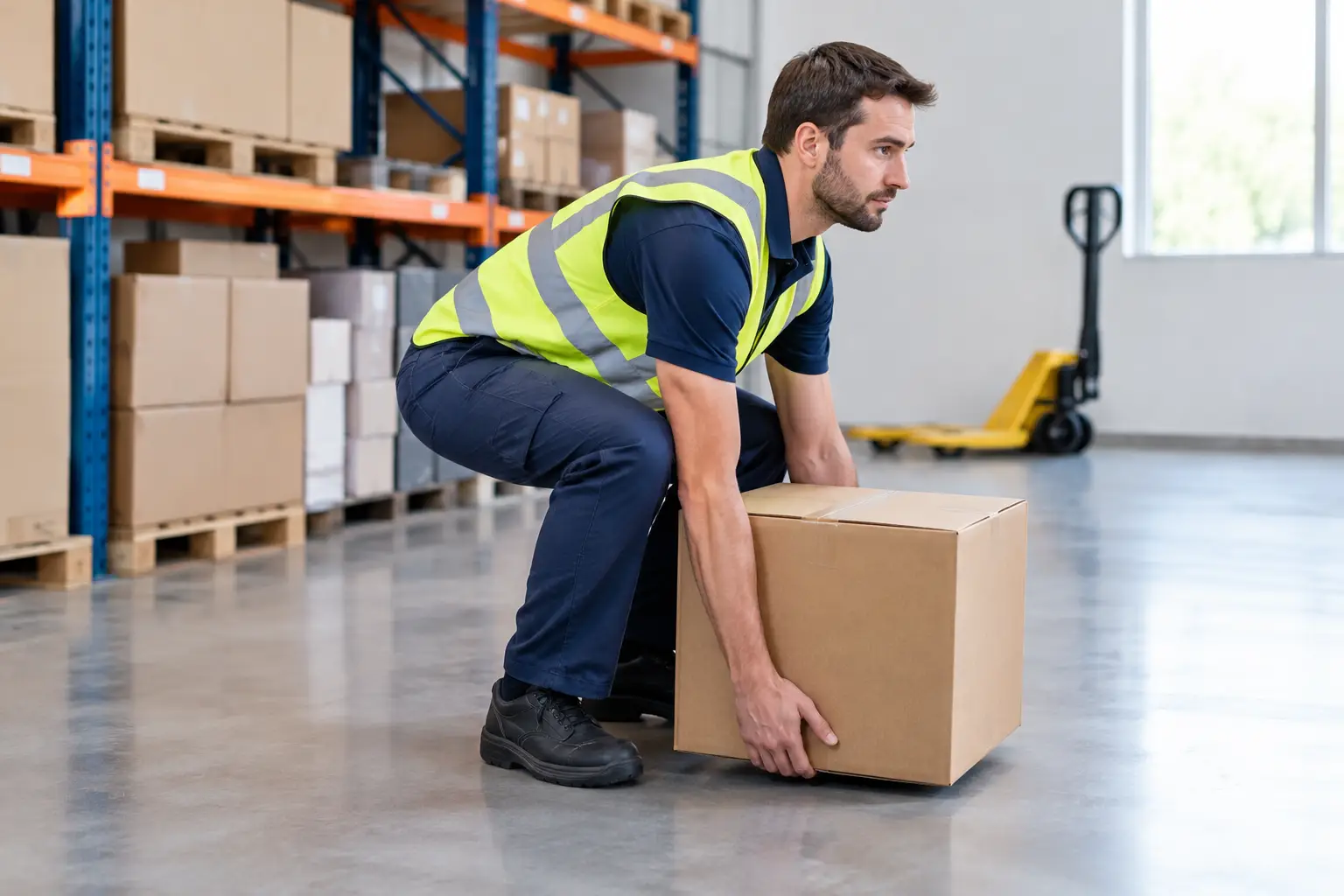
A driver should not have to climb, reach overhead or wrestle heavy restraint gear simply to get a load ready for the road. This guide to transport manual handling is for Australian fleets, owner-drivers and loading teams that want to reduce physical strain without slowing freight movements down.
Manual handling is part of transport work, but high-risk handling is not inevitable. The way freight is loaded, restrained and unloaded has a direct effect on driver safety, loading times, fatigue and the likelihood of injury. For curtain-sided trucks and tautliners, the biggest gains often come from changing the restraint process itself, rather than asking people to work harder or faster.
Where transport manual handling risks start
In freight operations, manual handling risk is rarely caused by one big lift alone. It usually builds through repeated actions across a shift: lifting gates and bars, carrying straps, pulling restraints tight, reaching across pallets, working above shoulder height, climbing on and off truck decks, and handling equipment in poor weather or low light.
A task can look routine while still placing a driver under strain. Repetition, awkward postures and time pressure matter. So does the working environment. A restraint that is manageable at a well-lit depot can become a much higher-risk task on uneven ground at a customer site, beside traffic or in rain.
For fleet operators, the cost is not limited to a possible injury. Manual handling problems can lead to restricted duties, delayed runs, workers compensation claims, equipment damage and difficulty retaining experienced drivers. A safer loading process is therefore an operational decision, not just a workplace health and safety exercise.
Assess the task before changing the equipment
The first step is to observe how loads are actually being secured. Written procedures are useful, but they do not always reflect what happens when a vehicle is late, a site is crowded or freight arrives in an awkward configuration.
Watch the full job from arrival to departure. Note where the driver reaches, bends, twists, climbs and carries. Look for moments when a person has to force equipment into position, use body weight to tension a restraint or improvise because the correct gear is out of reach.
A practical assessment should consider the load, the restraint equipment, the truck body and the location. Heavy or unstable freight increases the consequence of a mistake, while a poorly planned restraint layout can add unnecessary handling. The right control is not always the same for every run. A metro multi-drop vehicle, for example, may need quick access and frequent restraint adjustments, while an interstate tautliner may prioritise a consistent system for securing long runs of palletised freight.
Ask drivers where the job creates strain. They generally know which straps snag, which bays are difficult to reach and which customer sites make loading harder. Involving drivers also makes it more likely that an improved process will be used correctly rather than worked around.
Design out unnecessary handling
The strongest manual handling control is to remove unnecessary physical effort from the task. This may mean changing the loading sequence, improving access to equipment or selecting a restraint arrangement that can be operated from a safer position.
For curtain-sided trucks, loose straps can create a familiar set of issues. They may need to be carried, thrown over or fed around freight, then retrieved and stowed after delivery. Every extra movement adds time and creates another opportunity for overreaching, tripping or getting caught between the load and the truck body.
A fixed or integrated restraint system can reduce that handling when it is correctly specified for the truck and the freight task. Systems that keep equipment located along the body can help minimise time spent carrying and searching for restraints. Accessories such as an extendable pole with hook may also allow drivers to position equipment without climbing or stretching into awkward areas.
This is not a claim that one product suits every load. The complete load restraint arrangement must be appropriate for the cargo, vehicle, restraint points and journey. Correct installation, condition of equipment and the applicable legal requirements still matter. However, reducing the need to manually manage loose, heavy or hard-to-reach gear is a sensible place to start.
Keep the load plan practical
A good load plan should make restraint easier, not create a second problem after the freight is on board. Place freight with load distribution, stability and delivery sequence in mind. Leave sufficient access for restraints to be fitted and checked without a driver squeezing between pallets or reaching across unsecured freight.
Where possible, standardise the arrangement for common freight types. When drivers know where restraints will sit and how they will be operated, they can work more consistently. Standardisation also makes training clearer and pre-start checks quicker.
Use a hierarchy of controls, not a lifting reminder
Telling workers to “lift properly” is not a complete control for transport manual handling. Good technique has value, but it does not remove an awkward, repetitive or heavy task. Fleets should work through stronger controls first.
- Eliminate handling that does not need to occur, such as carrying loose gear from one end of the vehicle to the other.
- Substitute unsuitable equipment with a restraint method better matched to the truck body and usual freight.
- Use engineering controls, including correctly installed tracks, restraint hardware and tools that reduce overhead reaching or climbing.
- Improve administrative controls through load plans, training, inspection routines and realistic delivery schedules.
- Use personal protective equipment as a final layer, including suitable gloves and footwear for grip and foot protection.
The hierarchy is useful because it shifts the focus from blaming a driver’s technique to improving the system they work in. A driver who is fatigued, working in rain or under schedule pressure needs a process that remains safe in real operating conditions.
Safe loading and restraint practices for drivers
Before loading starts, inspect the truck body, deck, restraint points and equipment. Look for damaged tracks, frayed webbing, worn hooks, bent fittings or anything that may affect the restraint arrangement. Do not assume equipment is serviceable because it was acceptable on the previous run.
During loading, keep clear communication with forklift operators and other workers. Confirm the load sequence before pallets are placed. Once freight is positioned, secure it in line with the applicable loading performance requirements and the restraint system’s instructions. Curtain sides are not, by themselves, a substitute for a suitable load restraint arrangement.
Avoid climbing on freight or using unstable items as steps to reach restraints. If access requires overreaching, find a safer method. This could involve changing the order of work, repositioning the truck, using suitable access equipment or using a purpose-designed handling tool.
Before departure, conduct a final check from both sides where safe to do so. Confirm restraints are correctly positioned, tensioned as required and protected from sharp edges where necessary. Check that nothing is loose on the deck and that doors, curtains and associated hardware are secured.
The task does not end once the vehicle leaves the depot. Loads can settle during transit, particularly after the first section of a journey. Drivers should check the restraint arrangement at appropriate intervals and whenever they have reason to believe the load may have shifted. Site rules, traffic conditions and safe parking locations must guide when and where those checks occur.
Train for the job drivers actually do
Transport manual handling training works best when it is practical and vehicle-specific. A generic classroom session cannot show a driver how to manage a difficult curtain-side bay, a particular restraint track or the access limits of a specific body configuration.
Use demonstrations on the truck types in the fleet. Show the correct loading sequence, how to inspect equipment, how to position restraints and when to stop and escalate a problem. New drivers need supervision until they can complete the task safely, while experienced drivers benefit from refreshers when equipment, freight profiles or procedures change.
Training should also give people permission to speak up. If a load cannot be safely restrained with the available equipment, the correct response is not to improvise. It is to pause, seek direction and make the arrangement safe before travelling.
Measure safety and productivity together
The best control measures improve safety without creating a bottleneck at the dock. Track loading and unloading times alongside manual handling reports, damaged equipment, restraint defects and driver feedback. This shows whether a change is genuinely helping the operation.
A faster process is only a benefit if it remains controlled. Equally, a safe process that adds unnecessary minutes to every stop can create pressure elsewhere. The aim is a repeatable system that reduces physical effort, supports correct restraint and keeps vehicles moving.
For tautliner and curtain-side fleets, StrapNGo’s patented Australian-made load restraint system is designed to support safer, lower-labour freight restraint practices. Its suitability should always be assessed as part of the complete vehicle, freight and load restraint arrangement.
The practical test is simple: when a driver approaches a load, the job should be clear, controlled and achievable without unnecessary strain. Build the restraint process around that standard, and safer work becomes part of every run rather than an extra task at the end.