
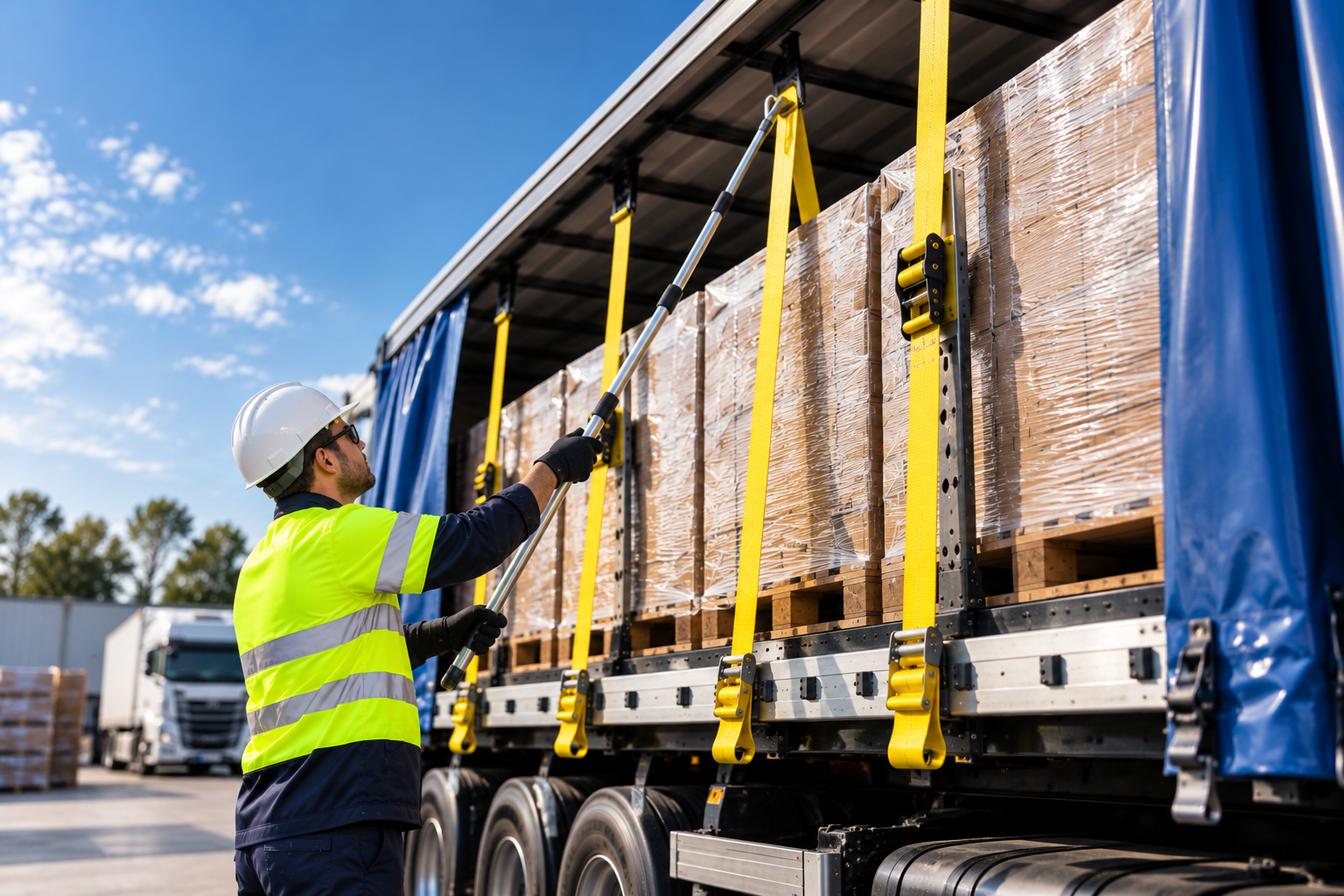
How Drivers Can Avoid Falls During Load Restraint
Load restraint is an essential part of road transport. However, securing freight can also expose drivers to safety risks.
Drivers may need to reach, stretch or move around large vehicles while handling restraint equipment. In some situations, they may also climb onto trailers or loads to position straps.
Improving load restraint safety starts with reviewing how drivers complete these everyday tasks.
Why Falls Are a Risk During Load Restraint
Truck and trailer environments can present several hazards.
Surfaces may become wet, slippery or uneven. Drivers may also work around pallets, straps, curtains and other equipment.
Working at height can increase the consequences of a slip or loss of balance. For this reason, transport operators should look for practical ways to reduce unnecessary climbing.
Keep Load Restraint Tasks at Ground Level
Where possible, drivers should complete load restraint tasks from ground level.
This reduces the need to climb onto trailers or freight simply to position a strap.
Businesses should review their current loading procedures. If drivers regularly climb to complete routine tasks, there may be a safer and more efficient approach.
Reduce Repetitive Strap Throwing
Traditional load restraint often involves manually throwing straps over freight.
A driver may repeat this movement many times during a working day. Tall or awkward loads can make the task even more difficult.
Using suitable equipment to position straps can make the process more controlled.
The StrapNGo Load Restraint System helps drivers manage restraint straps on compatible curtain-sided trucks and trailers. It provides an alternative to repeatedly throwing loose straps over the load.
Inspect Equipment Before Use
Good load restraint safety also depends on the condition of the equipment.
Drivers should inspect straps and restraint components before use. They should look for visible wear, cuts, fraying or other damage.
Any unsuitable equipment should be addressed according to the operator’s safety and maintenance procedures.
Regular checks can help identify problems before the vehicle begins its journey.
Keep the Loading Area Clear
A tidy loading area can help reduce trip and fall hazards.
Loose straps, tools and other equipment should not create unnecessary obstacles around the vehicle.
Keeping restraint equipment organised can also make it easier for drivers to complete their work efficiently.
Use the Right Equipment for the Task
Transport operators should consider how equipment design affects everyday driver movements.
A good restraint process should secure the freight while also considering how the driver performs the task.
StrapNGo is designed to help drivers position and manage straps from ground level on compatible curtain-sided vehicles.
This can reduce unnecessary climbing and repetitive strap throwing while creating a more organised restraint process.
Improve Load Restraint Safety with StrapNGo
Safer loading starts with good procedures, suitable equipment and consistent driver practices.
Transport businesses should regularly review how drivers secure freight. Small changes to everyday processes can help reduce unnecessary movements and improve efficiency.
The StrapNGo Load Restraint System offers a practical solution for compatible curtain-sided trucks and trailers.
Explore StrapNGo’s load restraint solutions or contact the team to discuss your fleet requirements.