
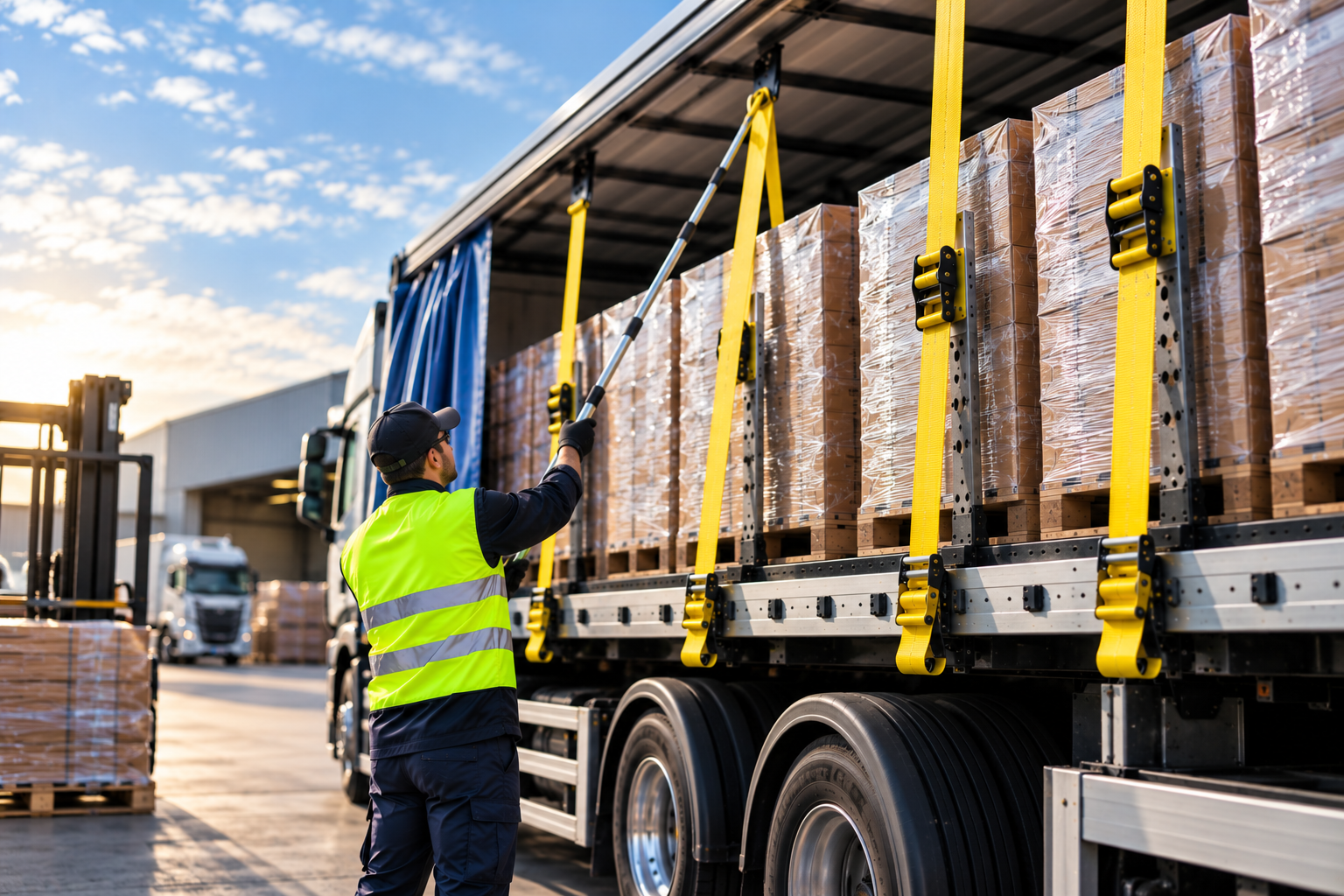
How StrapNGo Reduces Loading Time
Time matters in transport. Drivers may secure and release loads several times throughout the working day. Small delays during each loading cycle can quickly add up.
Traditional load restraint methods often involve manually throwing straps over freight. Drivers may need several attempts to position each strap correctly.
StrapNGo provides a more organised approach. The system helps drivers manage restraint straps efficiently while working from ground level.
Where Is Time Lost During Load Restraint?
Securing freight involves several steps. Drivers need to position the load, prepare their equipment, place the straps and tension each restraint correctly.
Manual strap throwing can add another step to this process.
A strap may land in the wrong position or fall between the freight. The driver then needs to retrieve it and try again.
This can slow down the loading process, especially with tall or awkward loads.
A More Efficient Way to Position Straps
The StrapNGo Load Restraint System helps drivers guide restraint straps across freight without repeatedly throwing them by hand.
The system keeps the straps positioned along the curtain-sided vehicle and ready for use.
Drivers can then manage the straps from ground level and move through the restraint process in a more controlled way.
This helps remove unnecessary movements from everyday loading tasks.
Keep Restraint Equipment Organised
Organisation can also affect loading time.
Loose straps may become tangled, misplaced or difficult to retrieve. Drivers then spend additional time preparing equipment before they can secure the freight.
StrapNGo keeps restraint straps integrated with the system.
This gives drivers a consistent location for their equipment and helps streamline preparation for each load.
Reduce Repetitive Movements
Efficiency does not simply mean working faster.
A good process should also remove unnecessary steps.
Repeatedly throwing straps, retrieving unsuccessful throws and walking around the vehicle can make load restraint more demanding than necessary.
StrapNGo simplifies how drivers position their straps. This can create a smoother workflow while reducing repetitive manual handling.
Benefits Across a Transport Fleet
Saving time on one loading task may seem small. However, the benefit can become more significant across frequent deliveries and multiple vehicles.
A more consistent restraint process can help businesses improve:
- Loading efficiency
- Driver workflow
- Equipment organisation
- Fleet consistency
- Turnaround between loads
The exact time saved will depend on the vehicle, freight and loading conditions.
Retrofit or Include StrapNGo in a New Build
Transport operators do not necessarily need to replace their existing vehicles to improve their restraint process.
StrapNGo can be retrofitted to compatible curtain-sided trucks and trailers. Businesses can also incorporate the system into suitable new vehicle builds.
This gives operators flexibility when introducing StrapNGo across their fleet.
Make Every Loading Cycle More Efficient
Improving transport efficiency often starts with reviewing everyday tasks.
If drivers spend unnecessary time throwing, retrieving and organising restraint straps, there may be a better way to complete the job.
The StrapNGo Load Restraint System provides a practical solution designed around real-world loading operations.
Explore the StrapNGo Load Restraint System or contact the StrapNGo team to discuss your fleet requirements.