
A load can look settled when the curtains are closed and still be one hard brake application away from shifting. That is the problem with tautliners. The curtain is not the restraint, and anyone working around curtain-sided trucks knows that understanding how to restrain loads in tautliners properly is not optional – it is a safety, compliance and productivity issue.
For fleet operators, owner-drivers and workshop managers, the challenge is rarely just whether a load can be restrained. It is whether it can be restrained consistently, with minimal labour, without exposing drivers to unnecessary manual handling and roadside risk. That is where method matters.
What makes load restraint in tautliners different
A tautliner gives you fast side access and efficient freight handling, but that flexibility comes with a trap. Because the curtain encloses the load, it can create a false sense of security. In normal operation, the curtain is there to protect the freight and provide weather cover. It is not designed to stop load movement unless the body and restraint system have been specifically engineered for that purpose.
That means the real restraint has to come from the truck body, the anchor points, the tracks, gates, straps or other approved restraint equipment being used. If the load shifts under acceleration, braking or cornering, the curtain alone should never be expected to hold it.
This is why tautliner load restraint needs a system approach. The freight, the body design, the restraint hardware and the loading method all have to work together.
How to restrain loads in tautliners safely
The safest approach starts before a single pallet goes on the deck. You need to know the weight of the freight, how it is packaged, whether it can move internally, how high it will be stacked and how it will behave in transit. A stable pallet of shrink-wrapped cartons is one thing. Uneven machinery, steel, mixed freight or awkward loads are another.
The next step is matching the restraint method to the freight type. That sounds basic, but it is where many problems begin. Operators often rely on what is available rather than what is appropriate. A generic strap arrangement might hold one load securely and be completely unsuitable for the next.
Good restraint in a tautliner usually comes down to three fundamentals. First, keep the load stable and evenly distributed. Second, prevent forward, rearward and sideways movement. Third, use restraint equipment that is rated, correctly fitted and compatible with the body.
If the load is not positioned properly, no amount of strapping will fully compensate. Heavy freight should sit where axle loads remain legal and the centre of gravity stays as low and balanced as possible. Uneven placement increases the chance of movement and affects vehicle handling.
Restraint methods that work in real operations
In day-to-day freight work, there is no single restraint method that suits every load. It depends on the freight profile, delivery schedule and how often drivers need to access the body.
Traditional webbing straps are still common, but they come with trade-offs. They can be effective when used correctly, though they often require repeated climbing, reaching and manual tensioning. That slows the job down and increases physical strain, especially on multi-drop runs.
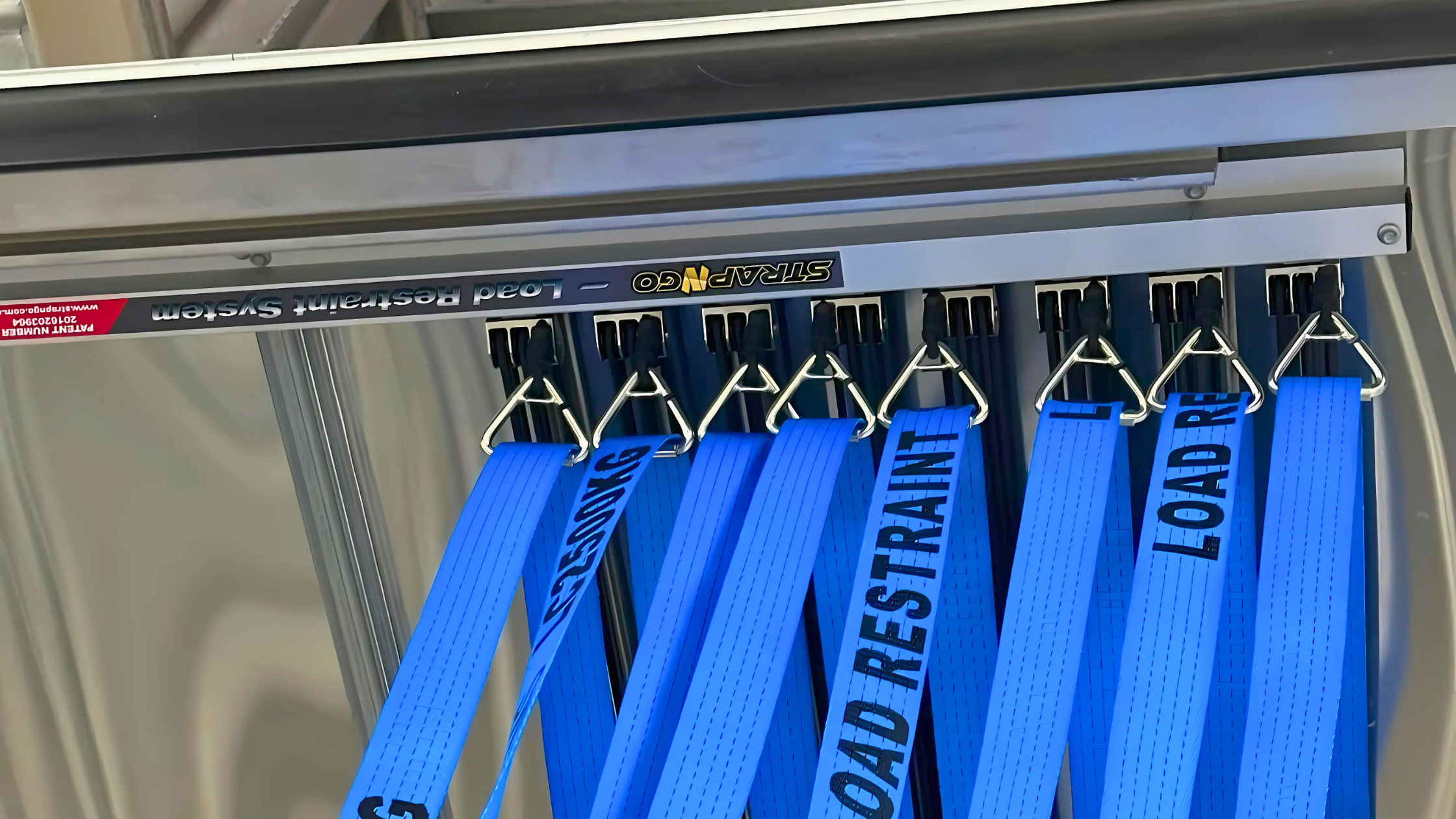
Load-rated internal restraint systems offer a more controlled method. When a tautliner is fitted with a purpose-built track and restraining setup, the driver can secure freight with less handling and less need to work in unsafe positions. In practical terms, that can reduce loading time while improving consistency across the fleet.
This is where a patented system designed specifically for curtain-sided trucks can make commercial sense. StrapNGo, for example, is built around the realities of tautliner work – safer restraint, minimal labour and faster operation. For businesses managing driver risk and turnaround times, that kind of setup is not just a hardware decision. It is an operational one.
Compliance is part of the job, not an add-on
If you are asking how to restrain loads in tautliners, compliance has to be part of the answer. Australian operators are working in an environment where load restraint failures can lead to damaged freight, vehicle incidents, roadside defects and chain of responsibility exposure.
A compliant restraint method is not simply one that feels secure. It needs to align with recognised load restraint principles and be suitable for the forces the load will experience on the road. Braking, swerving and rough surfaces all place stress on restraint equipment. If the system is makeshift, worn, incorrectly positioned or not rated for the task, the weak point will show up when the vehicle is under pressure.
This is also why inspection matters. Straps, tracks, buckles, curtains, anchor points and body components should be checked regularly. A sound restraint method on paper can still fail in service if equipment is damaged or installation quality is poor.
Common mistakes when restraining loads in tautliners
Most load restraint failures are not caused by one dramatic mistake. They usually come from routine shortcuts that become normal. Curtains being treated as a restraint barrier is one. Another is relying on too few restraint points for mixed or unstable freight.
Loose freight spacing is another problem. When pallets have room to build momentum, even a moderate shift can overload the restraint system. Poorly wrapped pallets also create issues because the packaging gives way before the restraint can do its job.
Driver access is often overlooked as well. If securing the load requires awkward climbing, overreaching or repeated handling, the process becomes harder to do properly under time pressure. Over time, operators start looking for faster workarounds. That is when safety drops away.
The better approach is to make the right method the easy method. If the restraint system is quick to use, easy to reach and designed for the truck body, drivers are far more likely to use it consistently.
Productivity and safety are linked
There is a tendency in some operations to treat load restraint as a compliance cost. In practice, a poor restraint process costs more. It adds labour, increases loading time, creates injury risk and makes every stop more difficult than it needs to be.
A well-designed tautliner restraint setup improves productivity because it removes friction from the loading process. Drivers spend less time wrestling with equipment. Forklift loading can be completed with fewer interruptions. Multi-drop work becomes more manageable. Workshop teams also benefit when restraint hardware is integrated cleanly into the body rather than added as an afterthought.
There is no real trade-off here between speed and safety when the system has been chosen properly. The right setup gives you both. The wrong one forces drivers to choose between doing the job quickly and doing it safely.
Choosing the right restraint setup for your fleet
The right answer depends on your freight task. A metro pallet fleet doing frequent stops has different needs from an interstate operator carrying heavy or irregular freight. Truck body design matters too, as does compatibility with the makes and models already in the fleet.
For procurement and workshop teams, it makes sense to look at restraint systems as a whole-of-life decision. Consider installation quality, ease of driver use, replacement parts, reliability in Australian conditions and whether the system can be rolled out consistently across different bodies. Australian-made equipment with local installer support is often the practical choice because downtime, servicing and fitment support all matter once the trucks are on the road.
It is also worth asking one direct question: does this setup reduce risk for the driver while helping the business load faster? If the answer is no, it is probably not the right system for a modern tautliner operation.
Training still matters, even with a better system
No restraint system fixes poor loading practices on its own. Drivers, loaders and supervisors still need clear procedures. They need to know how different freight types should be restrained, what a compliant setup looks like and when to stop a load from leaving.
The best systems support that training by making the process repeatable. When restraint points are consistent and the method is straightforward, it is easier to train staff and easier to spot when something has been done incorrectly. That helps across fleets with multiple drivers, subcontractors or depots.
For operators under constant delivery pressure, that consistency is valuable. It reduces guesswork and helps build safer habits into ordinary freight movements, not just high-risk jobs.
A tautliner only works well when the load inside it is controlled. Get that right, and you protect the driver, the freight, the vehicle and the business at the same time.