A manual restraint vs track system decision is not simply a choice of hardware. For a tautliner operator, it affects how long a vehicle sits at the dock, how often drivers work at height or beside live traffic, and how consistently freight is secured across every run. The right setup must suit the load, the body and the people using it every day.
Manual straps and traditional restraint equipment still have a place in Australian freight. They are familiar, flexible and readily available. But familiarity does not remove the physical work, roadside exposure or variation that can come with securing a load by hand. A track-based system changes the process by putting the restraint hardware where the operator needs it and reducing the handling required to tension and release it.
Manual restraint vs track system: the practical difference
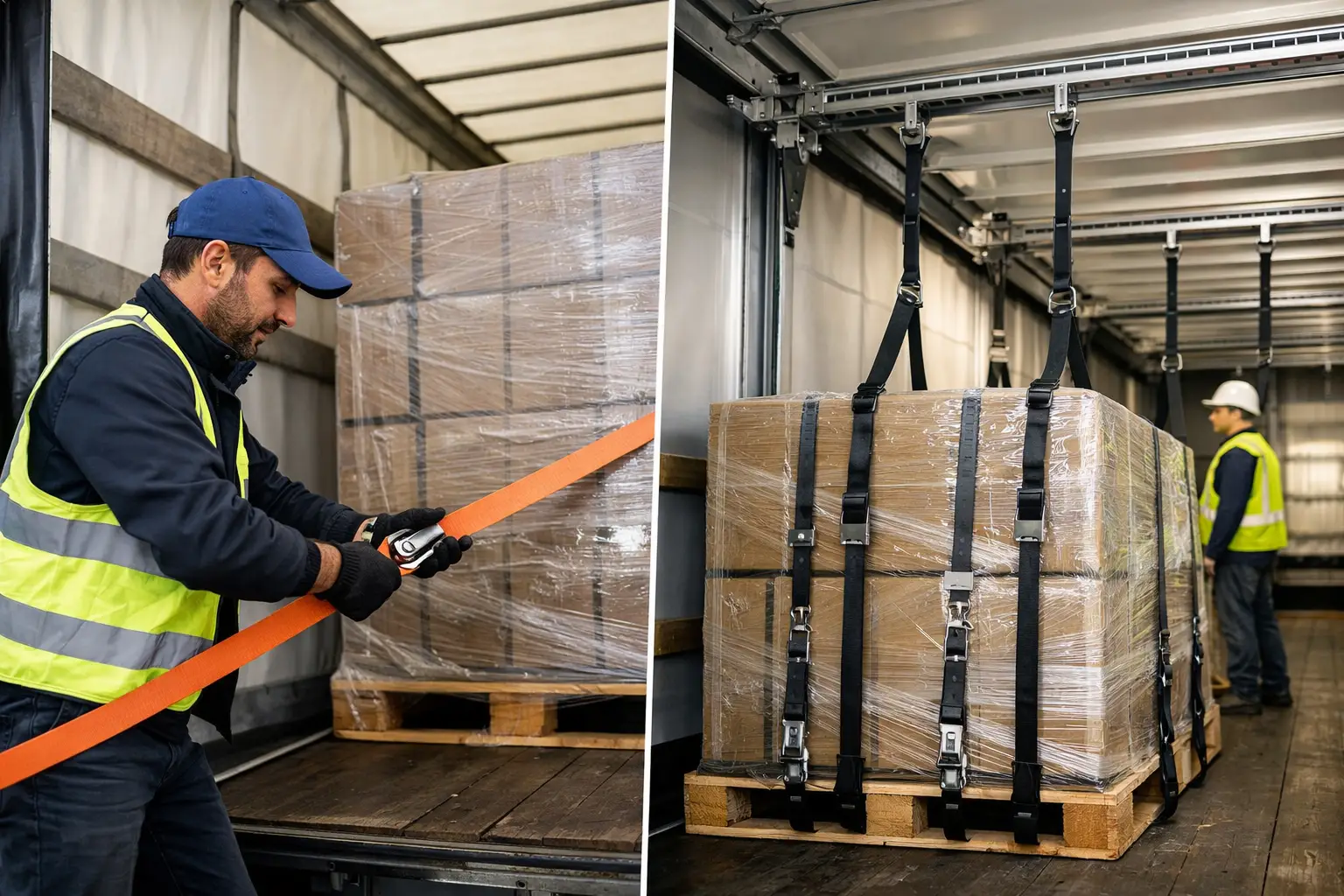
Manual restraint generally relies on straps, ratchets, ropes, gates or other equipment being retrieved, positioned, tensioned and stowed by the driver. Depending on the load and vehicle body, that may mean climbing, reaching across freight, moving around the outside of the truck and managing loose equipment in changing weather and site conditions.
A track system is fixed to the truck body and provides designated mounting points for compatible restraint equipment. In a curtain-sided truck or tautliner, a purpose-designed track arrangement can allow the driver to position and secure the restraint from a more controlled location. The equipment remains part of the vehicle setup rather than being handled as separate loose gear on every job.
Neither approach removes the need to assess the load. Freight still needs to be positioned correctly, restraint equipment must be suitable for its rated use, and drivers must follow the vehicle’s load restraint procedures. The difference is the amount of manual handling and process variation required to get the job done.
Where manual restraint can cost time and expose drivers
The time spent on an individual strap may seem minor. Across multiple drops, mixed loads and a full fleet, it adds up quickly. A driver may need to find the right strap, feed it into position, operate a ratchet, check tension, then repeat the process at every unloading point. At the end of the run, the equipment needs to be released, rolled or stowed ready for the next load.
That work can also introduce avoidable risk. Ratchet handles, loose straps and awkward reaches are common parts of manual restraint work. So are uneven ground, rain, poor lighting and the pressure to turn a vehicle around quickly. For drivers making metropolitan deliveries or regional runs with frequent stops, the same movements are repeated all day.
Manual systems can be effective when the load profile is simple, access is good and the restraint method is used correctly. They can also be the sensible option for irregular freight where a fixed arrangement cannot provide the required versatility. The issue for fleet operators is whether the standard process depends too heavily on individual technique, physical effort and available time.
Consistency matters across a fleet
A restraint method that works well for an experienced driver may be less reliable when used by relief staff, new employees or contractors. Different people can tension straps differently, choose different anchor points or store equipment in different places. Those differences make training and daily checks harder to standardise.
A properly specified track system supports a repeatable process. Drivers know where the equipment belongs, where it connects and how it is operated. This does not replace driver training or pre-start checks. It does make it easier to set a clear fleet procedure and reinforce it across vehicles.
How a track system improves the loading process
A track system is most valuable when it is designed around the work being done. In a tautliner, that means considering the body layout, load height, number of drops, common freight types and the driver’s access around the vehicle. A system that is quick to use but poorly matched to the operation will not deliver its full benefit.
With the right setup, the driver can secure freight with less climbing, less reaching and less time handling separate straps. Track-mounted restraint components are available when needed and are not left loose in the body or tucked away in a toolbox. Complementary hardware, such as a bungee unit and an extendable pole with hook, can further reduce the need to work in awkward positions.
The commercial benefit is straightforward. Less time spent setting up and packing away restraint equipment can improve turnaround at loading docks and delivery sites. Lower physical demand can help reduce fatigue over long shifts. A more orderly process also gives supervisors a clearer basis for training, observation and corrective action.
For operators using curtain-sided trucks in multi-drop distribution, those gains are often more meaningful than the time saved on one load. The restraint process is repeated at every stop. Removing small delays and unnecessary handling from each cycle can improve the productive time available across the day.
Safety and compliance are not separate questions
Load restraint is a safety obligation, not a convenience feature. A load that moves in transit can affect vehicle stability, damage freight, injure people during unloading and create serious risk for other road users. Equipment selection should always be considered alongside the load restraint requirements that apply to the vehicle, freight and journey.
Manual restraint and track systems both need correct use, inspection and maintenance. Webbing can wear, hooks can deform, tracks can be damaged and vehicle bodies can change over time. A fixed system should be inspected as part of the vehicle’s regular maintenance program, particularly around mounting points and areas exposed to forklifts or freight movement.
The practical advantage of a track system is control. Designated components and connection points can reduce improvisation. That matters when a driver is working under time pressure or when the vehicle is loaded differently from the previous day. However, a track system is not a blanket solution for every load. Freight with unusual dimensions, concentrated weight or specific restraint requirements may need additional measures.
Choosing the right system for your operation
Start with the freight, not the product. Review what is carried most often, how it is loaded, how many times it is unloaded, and where drivers are expected to work. Palletised freight on regular distribution runs creates different requirements from machinery, building products or mixed general freight.
Then look at the truck body. Track location, available clearance, curtain operation, internal fit-out and access all need to be assessed before installation. A system should integrate with the body rather than create new pinch points, obstructions or maintenance issues. This is why installation through experienced truck body builders and fitters is important.
Finally, assess the total operating cost. The purchase price of a manual setup can look lower, but it is only one part of the calculation. Include driver time, fatigue exposure, replacement straps, damage from loose equipment, training consistency and the impact of delays at customer sites. For a vehicle that loads once a week, the outcome may differ from a tautliner working every weekday across multiple stops.
Questions worth asking before you specify
Ask whether drivers regularly climb or overreach to secure a load. Ask how many minutes are spent on restraint at each stop, and whether different drivers follow the same method. Review near misses, strain injuries and feedback from drivers who do the work. These answers usually show whether the current process is genuinely efficient or simply accepted because it has always been done that way.
Also confirm that the proposed system is suited to the truck make, body configuration and intended freight task. Australian-made, patented systems such as StrapNGo are designed specifically for tautliners and curtain-sided trucks, but the final specification should still reflect the vehicle and operation in front of you.
A better restraint process starts at the body build stage
The best time to consider a track system is before a new truck enters service or when a body is being modified. Early planning allows the system to be installed cleanly, matched to the operating task and included in driver induction from day one. Retrofitting can also be practical, provided the body condition, layout and mounting requirements are assessed properly.
The aim is not to replace one task with another. It is to give drivers a safer, more consistent way to secure freight while keeping trucks moving. If your current restraint process relies on repeated manual effort, loose gear and workarounds at every stop, it is worth reviewing whether the truck body can do more of the work for you.