
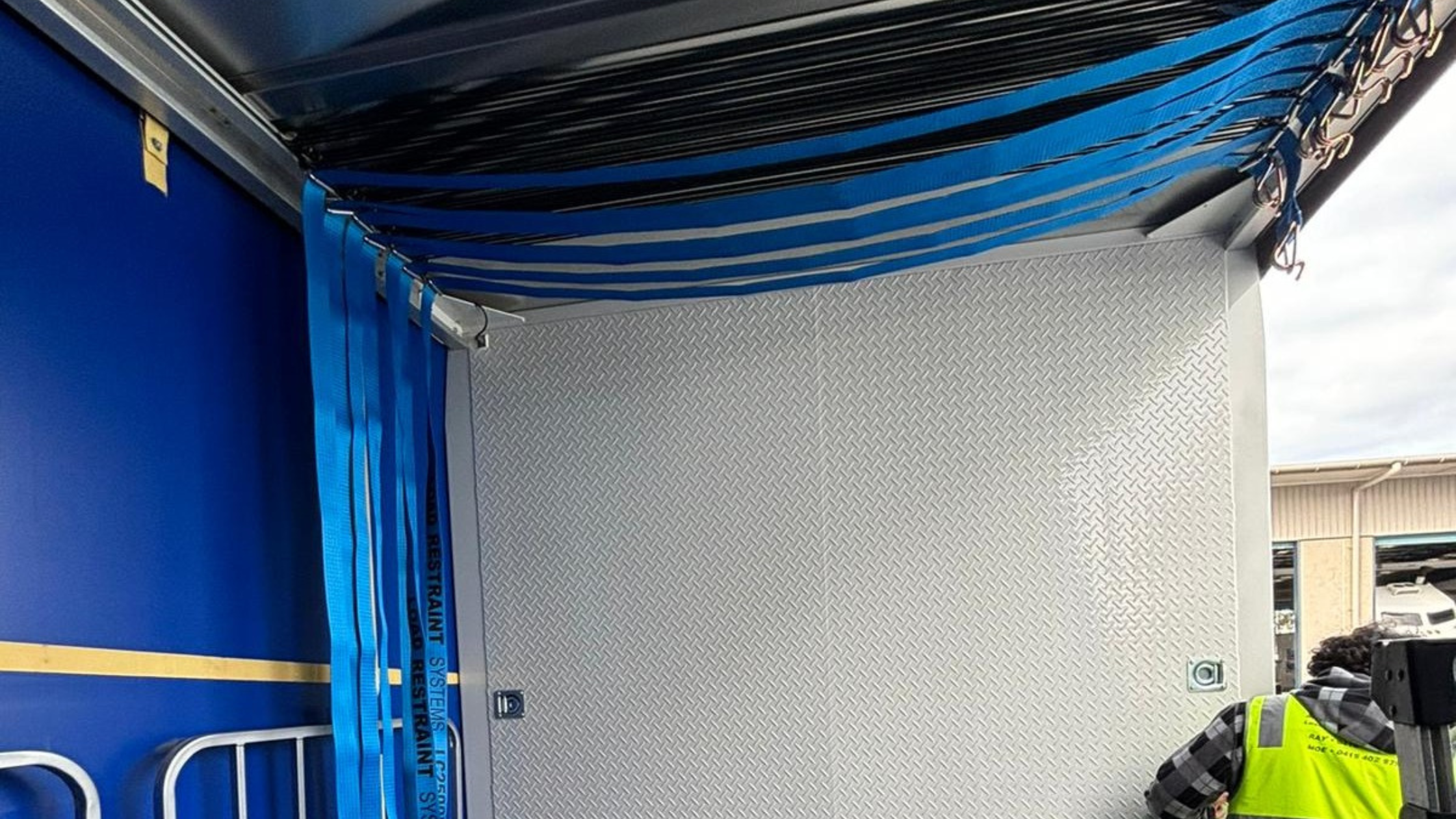
One awkward load shift at a customer site can turn a routine delivery into an injury, a damaged consignment or a compliance problem. That is why safer freight loading methods matter well before the truck leaves the yard. For operators running tautliners and curtain-sided trucks, the loading method itself has a direct impact on driver safety, labour time and how consistently freight is restrained across the fleet.
The problem is not just whether freight is tied down. It is how that restraint is applied, who has to climb, reach or strain to do it, and how repeatable the process is under real working conditions. In transport, a method that looks fine on paper can fail quickly when drivers are under time pressure, loading in poor weather or working alone on uneven ground.
What safer freight loading methods actually look like
A safer method reduces exposure to risk during every stage of loading and restraint. That includes less reaching above shoulder height, less climbing onto trailers, less handling of heavy straps and fewer situations where the driver is working roadside or in traffic-exposed areas for longer than necessary.
For curtain-sided bodies and tautliners, safer freight loading methods usually have three things in common. They keep the restraint equipment accessible from ground level, they reduce manual effort, and they make the restraint process more consistent from one load to the next. That consistency matters because safety systems are only useful when drivers can apply them properly every time, not just when conditions are ideal.
This is where there is a clear trade-off. Some restraint setups are familiar and cheap to install, but they rely heavily on manual handling and driver technique. Others require better hardware and planning up front, but they reduce labour and improve safety over the life of the truck. For most fleets, the second option is where the long-term value sits.
Why traditional restraint practices create risk
A lot of loading injuries do not come from a major incident. They come from repetition. Pulling straps across broad loads, climbing to get angles right, reaching into awkward spaces and working around moving forklifts all add up. Even when the load is ultimately secure, the process may still expose the driver to unnecessary risk.
With side-loading operations, timing is part of the issue. Drivers often need to get freight restrained quickly so the truck can move on. Under pressure, people take shortcuts. They overreach instead of repositioning. They climb where they should not. They drag equipment rather than using a method designed for access and control.
There is also the compliance side. If the restraint method depends too much on individual effort, results vary between drivers, depots and shifts. That inconsistency is where fleets can run into trouble. A safer system should support the right behaviour without relying on perfect conditions or exceptional physical effort.
Safer freight loading methods for tautliners and curtain-siders
The best approach is usually to design safety into the truck body and restraint process rather than trying to manage risk only through training. Training matters, but equipment and layout matter just as much.
Ground-operated restraint systems
A restraint system that can be used from ground level changes the loading task immediately. It cuts down climbing, reduces shoulder and back strain, and gives drivers better control when securing freight. For tautliners, this is one of the strongest improvements a fleet can make because side access is already part of the operating model.
A ground-operated system also tends to be quicker. That matters commercially. When the safer method is also the faster method, drivers are more likely to use it properly every time. Productivity and safety are not competing priorities here. In a well-designed setup, they support each other.
Integrated tracks and restraint hardware
Loose equipment creates its own problems. Straps get misplaced, damaged or tangled. Drivers improvise. Loading takes longer. Integrated tracks and dedicated hardware bring order to the task and make it easier to apply restraint where it is actually needed.
This does depend on the freight profile. Fleets carrying mixed palletised freight, packaged goods or general distribution loads often benefit most from integrated systems because the loading pattern repeats often enough to justify a more structured setup. If the freight is highly irregular, you may still need flexibility in the restraint arrangement. Even then, reducing loose gear and improving access usually pays off.
Extendable tools that reduce strain
Where drivers still need to position straps or restraint points across the load, extendable handling tools can make a genuine difference. The point is not convenience for its own sake. It is reducing awkward reaches, minimising climbing and helping the driver place restraint equipment accurately without putting themselves in a poor position.
Small changes like this are easy to overlook, but they matter on multi-drop work and repetitive loading days. Over a month or a year, reduced strain is not a minor benefit. It affects injury risk, fatigue and how sustainable the task is for experienced drivers.
Loading speed matters, but not at the expense of control
It is common to hear that fast loading creates risk. Sometimes that is true. More often, the real issue is rushed loading with poor equipment. There is a difference.
A safer freight loading method should remove wasted movement. It should shorten the time the driver spends exposed on site and reduce the number of handling steps needed to secure the load. That is not cutting corners. That is improving the process.
For fleet operators, this is where commercial value becomes clear. If restraint takes less labour, drivers can turn around faster without being pushed into unsafe shortcuts. If loading is more predictable, scheduling improves. If the method is less physically demanding, drivers are less likely to avoid proper restraint because the task is hard work at the end of a long shift.
Choosing the right method for your operation
There is no single setup that suits every freight task. A metro distribution fleet working palletised freight has different needs from a regional carrier moving mixed industrial loads. The right question is not which method sounds safest in theory. It is which method delivers safer outcomes under your actual operating conditions.
Start with the basics. Look at where your drivers are climbing, where they are overreaching, how often they are handling loose straps, and how long restraint takes on a normal job. If a process relies on strength, height or workarounds, it is a candidate for improvement.
Then look at repeatability. Can different drivers secure the same load using the same process with the same result? If not, the method may be too dependent on individual technique. In freight operations, repeatability is one of the strongest signs that a system is practical.
Truck compatibility matters as well. Restraint systems need to suit the body type, the freight task and the fleet mix. For operators running brands such as Isuzu, Iveco, Fuso, Hino, Sitrak, UD Trucks, Mercedes-Benz or Scania, fitment and installer support should be part of the decision, not an afterthought. A safer method has to work in the workshop and on the road.
Why engineered systems outperform improvised fixes
When fleets try to solve loading risk with piecemeal changes, results are mixed. A new strap here or a revised procedure there may help, but it rarely changes the physical demands of the job. Engineered systems do more because they address the loading task as a whole.
That is why purpose-built restraint systems continue to gain ground in Australian transport. They offer a more controlled way to secure freight inside curtain-sided trucks while reducing labour and improving driver safety. StrapNGo is one example of this shift – a patented Australian-made system designed specifically to help operators secure loads with minimal labour while improving safety and productivity.
The main point is broader than any one product. If your current restraint method still depends on awkward handling and driver effort, there is a limit to how safe and efficient it can become. Better engineering usually delivers better habits because it makes the correct method the practical one.
Building safer loading into everyday operations
The strongest safety gains usually come from making the safer option the easiest one. Drivers should not need extra time, extra strength or extra luck to secure a load properly. The equipment should support the task from the ground up.
For operations managers and workshop teams, that means treating load restraint as part of vehicle design and productivity planning, not just a compliance item. For owner-drivers, it means looking hard at how much physical effort goes into every load and whether that effort is really necessary.
Freight loading will always involve variables. Load shape changes. Sites vary. Weather turns. But that is exactly why safer methods matter. The more pressure the job puts on people, the more the system needs to carry its share of the work.
If a loading method reduces strain, shortens exposure time and helps drivers secure freight the same way every time, it is doing more than protecting cargo. It is making the whole operation easier to run safely.