
A load can look fine at the gate and still become a problem by the first roundabout. That is the reality with curtain side truck load restraint. If the restraint method relies on awkward manual handling, inconsistent placement, or drivers climbing and reaching in poor roadside conditions, the risk sits with the driver and the business every single trip.
For fleets running tautliners and curtain-sided trucks, load restraint is not just a compliance item. It affects turnaround times, fatigue, injury exposure, freight damage, and how consistently work gets done across different drivers, depots and delivery points. The best systems reduce movement in transit without creating more manual effort than the task should require.
Why curtain side truck load restraint needs a different approach
A curtain is not a restraint system. That point still gets missed in day-to-day operations, especially where freight types vary and pressure on loading speed is high. Curtains are there to contain and protect the load from the elements. They do not replace properly engineered restraint.
That matters because curtain-sided bodies are built for access and productivity. They allow fast side loading by forklift and suit a wide range of freight, from palletised goods to mixed industrial loads. But that same access creates a challenge. If restraint depends on drivers throwing straps, reaching across loads, climbing onto decks, or working too close to live traffic, the job may be getting done at a higher physical and operational cost than necessary.
In practical terms, the right restraint method for a curtain sider needs to do three things well. It must restrain the load effectively, it must be repeatable across shifts and sites, and it must reduce the labour involved in securing freight. Miss one of those and the process starts to break down.
The real costs of poor restraint practices
When operators think about load restraint, they often think first about enforcement and liability. That is fair enough. A restraint failure can have serious consequences on the road. But in many businesses, the day-to-day costs show up well before any formal breach.
The first is driver safety. Manual restraint methods can involve shoulder strain, repetitive movement, climbing, awkward posture and exposure to traffic or unstable ground during roadside adjustment. None of that is theoretical. It is part of the normal working day for many drivers, especially in metro multi-drop work and regional freight where conditions change fast.
The second cost is lost time. A few extra minutes per load, repeated across a fleet, becomes a significant productivity issue over a week. Delays at loading docks and delivery sites do not just affect one truck. They disrupt scheduling, increase idle time and put pressure on the next job.
Then there is inconsistency. One experienced driver may secure a load efficiently and correctly every time. Another may use a slower method or position restraints differently. When the process depends heavily on individual technique, businesses carry more variation than they need to.
What good load restraint looks like in a curtain sider
Good restraint is not about adding more gear for the sake of it. It is about using a system that matches the body type, the freight task and the reality of transport work in Australia.
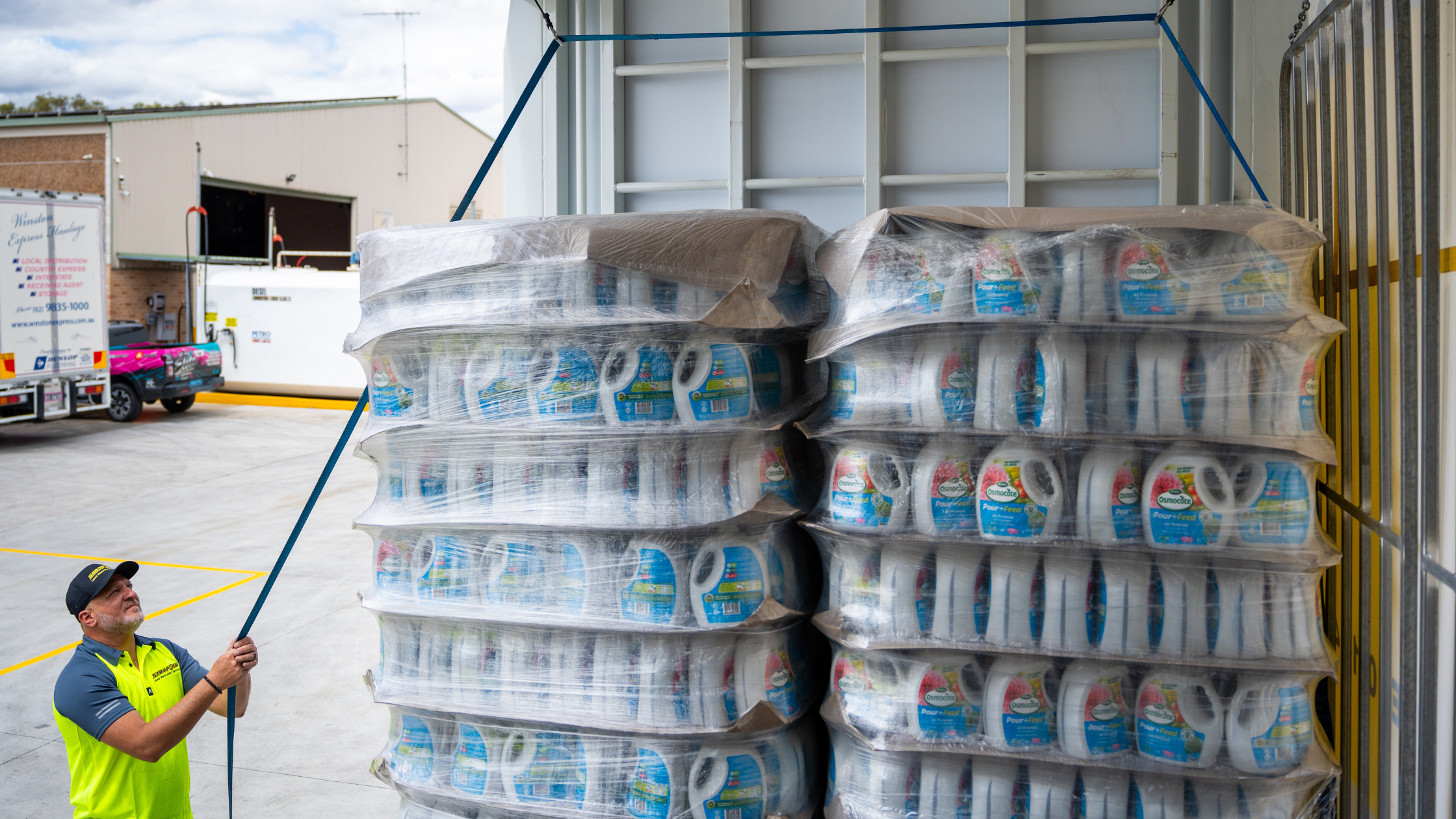
For most curtain-sided operations, a sound restraint solution should support access from ground level where possible, avoid unnecessary climbing and minimise the need to throw straps over freight. It should also fit the truck body cleanly and allow the driver to secure loads without fighting the equipment.
That is where integrated systems have an advantage over ad hoc methods. When the track, strap position and operating hardware are designed to work together, the process becomes faster and more controlled. Drivers are not improvising with every load. They are following a repeatable method that reduces effort and improves consistency.
There is still no one-size-fits-all answer. Freight type matters. Palletised FMCG work is different from steel, timber, machinery or mixed industrial consignments. Load height, packaging quality, delivery frequency and forklift access all change the restraint task. But the principle is the same – the system should make the safe method the easy method.
Safety and productivity are not competing priorities
Some operators still treat safety controls as if they automatically slow the job down. In load restraint, that is often the wrong assumption. A better designed system can improve safety and productivity at the same time.
If a driver can secure freight from a safer position with less reaching, less climbing and less manual handling, the task usually gets done faster as well. That is not a marketing line. It is basic workflow. Fewer awkward movements, fewer corrections and less time spent setting up each restraint point means shorter loading and unloading cycles.
This is one reason purpose-built restraint systems are getting more attention from fleet managers and truck body builders. They are not only looking at whether a load can be restrained. They are looking at how many labour-intensive steps are built into the process and whether those steps are still acceptable across a full fleet.
Choosing a curtain side truck load restraint system
If you are assessing options, start with the operating environment rather than the catalogue. Ask where loads are being secured, who is doing it, and how often. A metro distribution fleet doing multiple drops a day will have different priorities from a linehaul operator with longer runs and fewer touchpoints.
The next question is compatibility. A restraint system has to work with the truck body and the freight task, not create extra workshop modification or interfere with loading access. For many fleets, compatibility with common body configurations and major truck brands is a practical requirement, not a nice-to-have.
Build quality also matters. Restraint hardware is used in dirty, repetitive, high-wear conditions. Cheap components can become an operational problem quickly if they jam, stretch, degrade or need frequent replacement. Australian-made equipment has appeal here for a reason. Buyers want known standards, supply confidence and local support when trucks are on the road and earning.
Then look at installation and support. A good system is only useful if it can be fitted properly and rolled out across vehicles without creating downtime headaches. Working with established truck body builders and stockists makes that process more straightforward, especially for larger fleets or staged fleet upgrades.
Why patented, integrated systems are gaining ground
Patented systems tend to attract attention for one simple reason – they solve a specific operational problem in a more practical way. In curtain-sided freight, that usually means reducing the physical effort of restraining loads while keeping the process secure and consistent.
An integrated restraint setup using matched components such as track, strap assemblies, bungee units and handling tools can remove much of the trial-and-error from daily loading. Drivers are not piecing together a method from separate parts. They are using equipment designed to work as a system.
That becomes more valuable as fleets scale. What works for one careful owner-driver may not translate neatly to twenty vehicles and a rotating driver pool. Standardised restraint methods are easier to train, easier to audit and easier to maintain over time.
For Australian operators focused on both compliance and throughput, that balance is hard to ignore. A patented Australian-made system such as StrapNGo speaks directly to that need – safer restraint with minimal labour, fitted into the normal realities of freight work rather than added as an afterthought.
Where businesses usually get the decision wrong
The most common mistake is judging restraint purely on upfront cost. That can be misleading. If a cheaper method adds time to every load, increases injury risk or results in damaged freight, it is not actually the lower-cost option.
Another mistake is assuming all drivers will keep using a cumbersome process perfectly under pressure. They will not. When deadlines tighten and site conditions are ordinary, difficult systems invite shortcuts. Better equipment reduces the temptation to take them.
There is also a tendency to separate workshop decisions from operational decisions. In reality, procurement, workshop teams, body builders and drivers all need a say. If the gear fits the truck but slows the job, or if it works in theory but is awkward in practice, the fleet carries that inefficiency for years.
A practical standard worth aiming for
The strongest load restraint setups do not rely on heroic effort from drivers. They rely on sound equipment, repeatable process and a truck body designed to support the task properly. That is the benchmark curtain-sided operations should be aiming for.
If your current method involves unnecessary climbing, heavy manual handling or too much variation between drivers, that is usually a sign the system is doing less work than it should. The right restraint setup makes the job safer, faster and more consistent without adding complexity where it is not needed.
For fleets, owner-drivers and body builders, that is the real value in getting curtain side truck load restraint right. Not just passing inspection, but building a safer, more productive operation that holds up under daily pressure.