
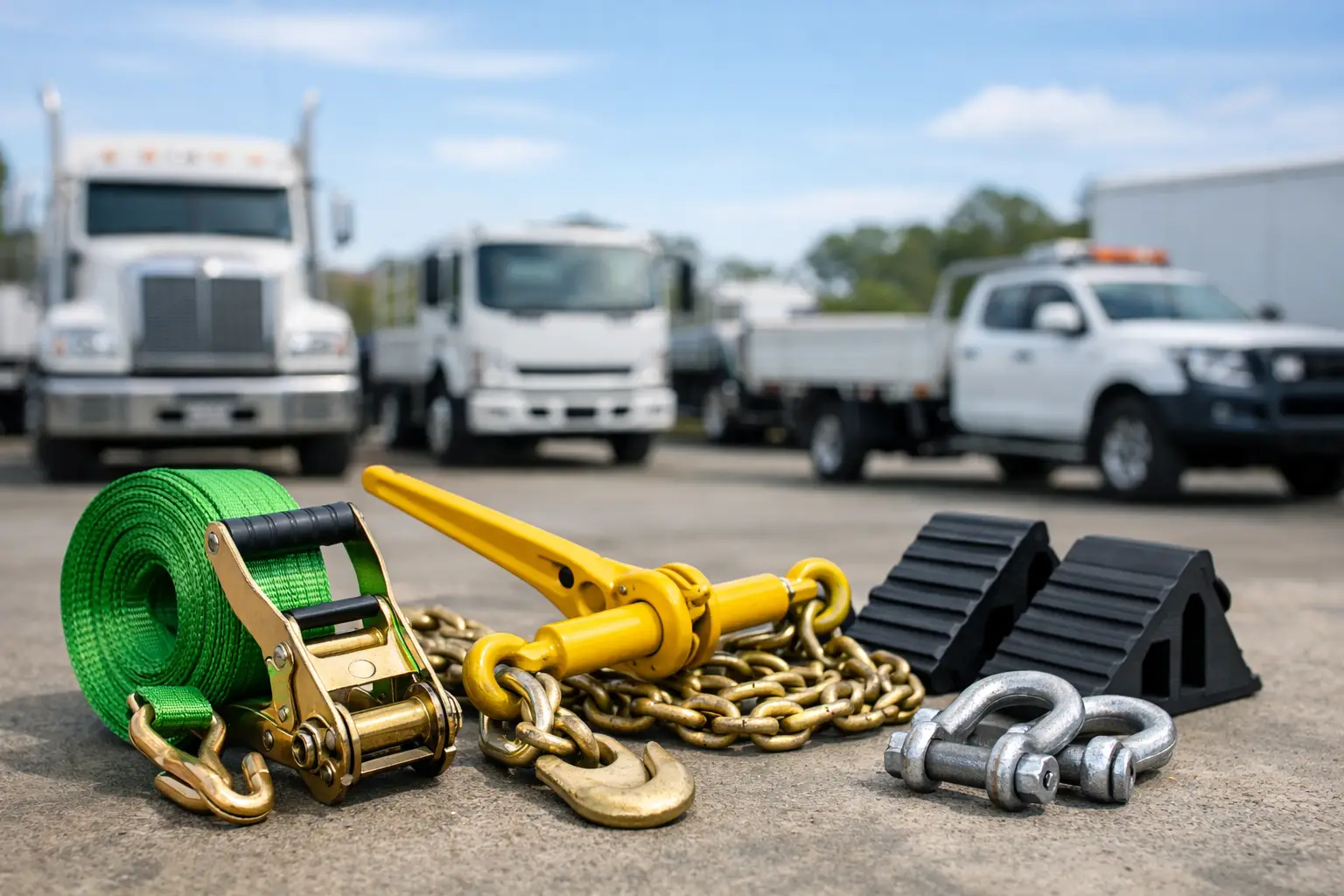
A restraint system is only useful if drivers will use it correctly, every time, under real freight conditions. That means it must suit the truck body, the load and the pace of the run. Australian made restraint equipment gives fleet operators a practical way to specify for local operating conditions while keeping safety, labour and uptime firmly in view.
For tautliners and curtain-sided trucks, freight restraint is not a box to tick at dispatch. It is a daily task that can place drivers beside moving traffic, stretch loading times and create unnecessary manual handling. The right system changes that work at the truck.
Why Australian made restraint equipment matters
Local manufacture is about more than where a product is assembled. For transport operators, it can mean a system designed around Australian freight work, supported by people who understand local truck bodies, loading practices and the need to keep vehicles earning.
A fleet may be carrying palletised general freight one day, building products the next and mixed consignments after that. Restraint equipment needs to perform consistently through frequent loading cycles, variable weather and the hard knocks of commercial transport. Material quality, track fitment, component replacement and installation support all affect whether the system remains dependable over its working life.
It also makes a difference when a vehicle is off the road for a body fit-out, repair or replacement part. Operators need clear answers, available hardware and installers who can work with the body builder or workshop. A restraint system that looks good on paper but is difficult to fit or service can quickly become a productivity issue.
The real cost of manual restraint
Traditional restraint methods often require drivers to climb, reach, pull straps across a load, reposition equipment and repeat the process at every stop. Each action may seem minor, but the exposure adds up across a shift, a week and an entire fleet.
The immediate concern is manual handling. Repetitive pulling, awkward reaching and working around freight can contribute to strain and fatigue. There is also the roadside risk. Where a driver must access the far side of a truck or work in a tight loading area, the job takes longer and can bring them closer to forklifts, pedestrians and passing vehicles.
There is a commercial cost as well. If a restraint process needs two people when one should be enough, or adds several minutes to each load and unload, those minutes are multiplied across runs. For owner-drivers, that delay cuts directly into the working day. For larger fleets, it affects delivery windows, labour planning and vehicle utilisation.
A better restraint method should reduce unnecessary movement without reducing control over the load. Faster is only an improvement when the freight remains properly secured and the process is repeatable.
What to look for in a curtain-sided truck system
Not every restraint solution suits every vehicle or freight profile. Start with the truck body and the work it performs, rather than selecting hardware in isolation. A system for a metropolitan multi-drop operation may have different demands from one fitted to an interstate tautliner.
A practical operating method
The best systems make the safe method the easy method. Drivers should be able to position and secure the restraint with minimal labour and without unnecessary climbing, reaching or walking around the vehicle.
For curtain-sided applications, a track-based system can keep the equipment located where it is needed. When paired with purpose-designed hardware, it helps create a more controlled loading process than loose items that need to be found, carried and stowed after each use.
An extendable pole with hook, for example, can allow a driver to operate equipment from a more practical position. That is not a replacement for sound loading procedures or correct assessment of the freight. It is a way to remove avoidable physical effort from a repetitive task.
Fitment that works with the body
Compatibility matters. The track, restraint components and mounting method need to suit the truck body construction and intended load space. Early discussion with the body builder or installer avoids last-minute compromises and helps ensure the system is fitted for the way the vehicle will actually operate.
Fleet specifications should also consider existing vehicle makes and replacement cycles. A solution that can be installed across common truck platforms makes it easier to build consistent operating procedures, driver training and maintenance practices. This is particularly valuable where a fleet includes brands such as Isuzu, Iveco, Fuso, Hino, Sitrak, UD Trucks, Mercedes-Benz and Scania.
Components built for daily use
Restraint equipment is handled constantly. Small details make a difference: how easily a component can be positioned, whether it stays orderly inside the body, and how simply worn parts can be identified and replaced.
A complete system may include the restraint itself, track, bungee unit and operating pole. These items should be considered as one working arrangement. Focusing on a single component while overlooking storage, access or operation can leave drivers with a process that is still slow and awkward.
Safety and productivity should be assessed together
Safety improvements are sometimes treated as a compliance expense, while productivity is treated as a separate operations target. For load restraint, they are closely connected. A process that reduces awkward movement and unnecessary handling can help drivers work more safely and complete loading tasks more efficiently.
The trade-off is that a new system requires proper specification, installation and driver familiarisation. Do not assume a new piece of equipment will deliver its full benefit on day one simply because it is fitted to the truck. Drivers need to understand when and how to use it, supervisors need to reinforce the process, and the fleet needs to inspect equipment as part of normal vehicle checks.
The outcome is consistency. When every driver uses the same straightforward method, there is less reliance on individual workarounds. That supports safer habits, cleaner handovers between drivers and more predictable loading times.
Questions to ask before you specify
Before choosing Australian made restraint equipment, assess the work rather than relying on broad product claims. Ask how often the vehicle is loaded, what freight it typically carries, where drivers perform restraint tasks and which parts of the current process create delays or discomfort.
It is worth walking through a loading cycle with the people who do the work. A workshop manager may focus on fitment and serviceability. An operations manager may focus on turnaround time. Drivers will identify the awkward reaches, poor access points and situations where conventional methods make the job harder than it needs to be. All three views are useful.
Then consider support after installation. Can the system be fitted through established truck body builders? Are replacement components available? Can equipment be standardised across the fleet? These questions are especially relevant when adding vehicles over time or operating across multiple depots.
A system is only as good as its daily use
Load restraint still depends on correct freight placement, appropriate restraint for the load and regular inspection. No equipment removes the need for trained drivers and sound procedures. What it can do is make those procedures easier to follow under normal working pressure.
StrapNGo’s patented system is designed for this purpose: safer and more secure freight restraint in tautliners and curtain-sided trucks, with minimal labour. It is an Australian-made approach built around the practical realities of fleet work, from body-builder installation to day-to-day driver operation.
When the next truck is being specified, do not leave restraint equipment until the final stage of the build. Bring it into the conversation with the body builder, workshop and drivers early. A well-planned system can make every load cycle safer, simpler and more productive from the first day on the road.