
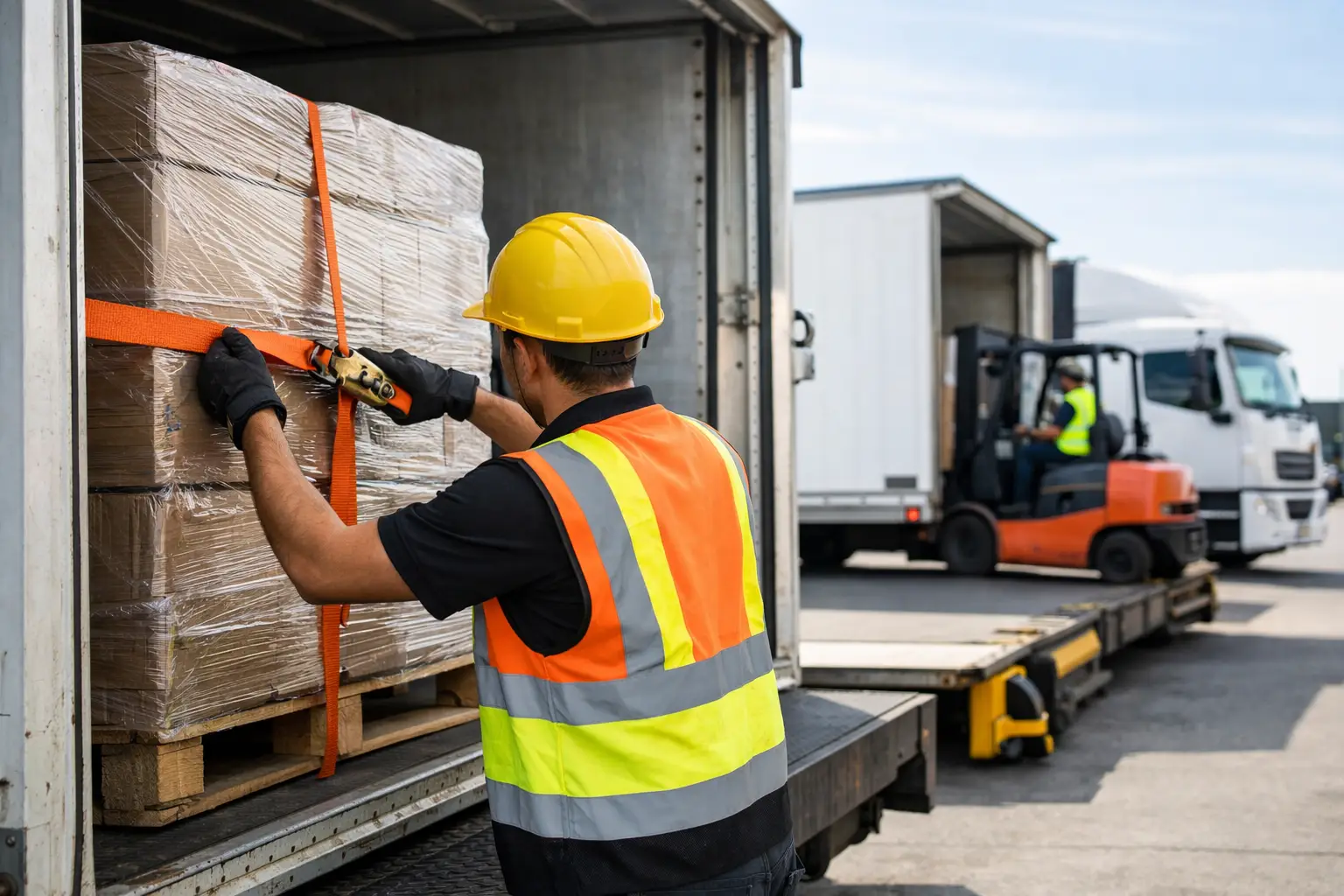
A driver standing on a tray edge, stretching to throw a strap over a high load, is not just losing time. They are exposed to a fall, a shoulder strain and an uncontrolled load restraint task. The top freight loading safety upgrades address these routine risks at their source, making it easier to secure freight properly without adding steps to an already tight run schedule.
For Australian fleets running tautliners and curtain-sided trucks, the best upgrades are rarely the most complicated. They are the ones that reduce manual handling, give drivers a repeatable process and stay reliable through daily freight work. The right combination depends on load type, truck body configuration, delivery locations and how often the vehicle is loaded each day.
Start with the loading task, not the product
Before purchasing equipment, examine where drivers are physically working hardest. Watch a full load and unload cycle: collecting restraint gear, positioning it, tensioning the load, checking it and packing it away. The hazards are often built into familiar habits – climbing, reaching, walking beside live traffic, handling loose straps or trying to secure freight in poor weather.
A useful upgrade should remove a step, reduce force or put the driver in a safer position. If it only shifts the task somewhere else, its safety value may be limited. Fleet managers should also consider whether the system is practical for relief drivers, regional operators and subcontractors. Safety equipment that requires specialist knowledge or excessive setup is less likely to be used consistently.
Top freight loading safety upgrades worth prioritising
1. Track-mounted load restraint systems
A fixed, track-mounted restraint system is one of the most effective upgrades for curtain-sided vehicles. Rather than carrying, throwing and recovering loose straps, the restraint is positioned where it is needed inside the truck body. This reduces the need for drivers to climb, overreach or work from unsafe positions beside the vehicle.
For tautliners, an integrated system also creates a more orderly loading area. Restraint equipment is less likely to be left on the floor, tangled under pallets or damaged by forklifts. The operational benefit matters: when the gear is ready to use, drivers can secure freight with less labour and fewer delays at each stop.
The system still needs to be selected for the vehicle and freight task. Track placement, curtain clearance, load heights and required restraint capacity all need to be considered during installation. A properly engineered arrangement is more valuable than a one-size-fits-all fit-out.
2. Extendable poles with hooks
An extendable pole with a hook allows a driver to retrieve or position restraint equipment from the ground or a safer working position. It is a straightforward improvement, but it addresses a common source of injury: reaching above shoulder height or climbing to access a strap.
Poles are particularly useful where loads vary in height, vehicles are loaded at different sites or drivers need to work around awkward freight. They should be durable enough for commercial use and stored securely so they are always available when needed. A pole that goes missing after a week will not improve safety.
This upgrade does not replace a proper restraint system. It supports one. Used with track-mounted equipment, it helps drivers maintain a controlled process without unnecessary climbing or stretching.
3. Improved load restraint hardware and tension control
Load restraint is only effective when the hardware is in good condition and suitable for the job. Worn webbing, damaged hooks, bent fittings and unreliable tensioners can lead to poor restraint performance as well as sudden release injuries during loading and unloading.
Upgrade programs should include a practical inspection process. Drivers need to know what damage looks like, where to quarantine faulty equipment and how to obtain replacements without taking shortcuts. Clear identification and accessible storage make this easier than relying on memory or a loose pile of gear in the toolbox.
Where a fleet is moving from manual, loose restraint methods to an integrated system, the goal is not simply to add stronger components. It is to make correct tensioning and positioning easier to achieve every time. That is where safety and productivity work together.
4. Safer access around the truck body
Not every loading hazard is inside the curtain. Access to the truck, the loading dock and the work area deserves the same attention. Non-slip steps, stable handholds, adequate lighting and clean walking surfaces can reduce the likelihood of slips and falls during early starts, night deliveries and wet weather.
The best access upgrade depends on the work environment. A metro distribution vehicle making frequent dock deliveries has different risks from an interstate tautliner loaded in open yards. In either case, operators should avoid designing a process that relies on drivers standing on tyres, rails, pallets or other improvised footholds.
Good housekeeping is part of this upgrade. Loose dunnage, straps, shrink wrap and rubbish create trip hazards quickly. Allocate a storage location for loading equipment and make it part of the end-of-job check.
5. Load-area lighting and visibility aids
Poor visibility changes a simple loading task. Drivers may not see damaged webbing, unstable freight, gaps between pallets or obstructions on the floor. Forklift operators can also struggle to judge clearances inside a dark truck body.
Well-positioned LED load-area lighting helps drivers inspect the restraint setup before departure and supports safer work during night operations. Lighting should be protected from freight damage and located so it does not create glare for forklift operators. If vehicles regularly work in poorly lit yards, external work lighting and high-visibility markings around access points may also be justified.
Visibility upgrades are often low-cost compared with the consequences of an avoidable incident. They are especially worthwhile when they support a defined pre-departure check rather than being treated as an add-on.
6. Forklift interface and freight stability controls
The restraint system cannot compensate for poor loading practice. Pallets, stillages and other freight must be positioned to suit the vehicle, axle requirements and the characteristics of the load. Uneven weight distribution, damaged pallets and unsupported gaps can create instability before the driver begins securing the load.
Work with customers, warehouse teams and forklift operators to establish clear loading expectations. This may include designated freight positions, use of suitable dunnage, load plans for repeat work and a process for reporting damaged pallets. Drivers should not be expected to solve a poor load arrangement alone at the end of the dock.
For irregular or mixed freight, allow more time for assessment. Fast loading is only productive when the result can be restrained safely. A rushed load that needs rework at the gate or, worse, shifts on the road costs more than a controlled loading process.
Installation and training determine the result
Even the best equipment can underperform if it is fitted poorly or introduced without training. Installation should account for the truck body, curtain operation, track alignment and the way the vehicle is actually loaded. For fleet roll-outs, consistent installation across similar vehicles makes driver training and inspections more straightforward.
Training should be practical and vehicle-based. Show drivers how to position the restraint, use the extendable pole, identify damage and complete checks before departure. Then let them perform the task themselves. A short demonstration is useful, but hands-on repetition is what builds confidence and exposes issues in the process.
Supervisors also need to reinforce the standard. If a driver reports a damaged component, awkward load or unsafe site condition, the response should support the correct decision rather than reward getting the job done at any cost. This is how safe loading becomes a normal operating practice.
Choosing upgrades for your fleet
Prioritise changes based on exposure. A vehicle loaded once a week with consistent palletised freight may benefit first from better lighting and hardware control. A tautliner completing multiple loads daily, with drivers repeatedly handling straps at height, has a stronger case for an integrated restraint system and extendable pole.
Consider whole-of-life value, not just purchase price. A low-cost item that is difficult to use, easily damaged or regularly bypassed can create more cost through downtime and injury risk. Australian-made equipment, dependable installation support and readily available replacement parts all matter when the truck is an income-producing asset.
StrapNGo’s patented, Australian-made load restraint system is designed for this practical reality: safer freight restraint in tautliners and curtain-sided trucks with minimal labour. It can be installed through truck body builders and stockists across Australia, helping fleets standardise a safer method across compatible truck bodies.
The most useful next step is to assess one representative loading task with the people who do it every day. Identify where the driver climbs, reaches, carries or improvises, then choose the upgrade that removes that exposure first. A safer loading process should make the right way the easiest way to work.