A restraint system is only useful if drivers will use it properly, on every load, under real depot and roadside conditions. This tautliner track system review looks at what fleet operators should assess before fitting a track-mounted restraint solution to curtain-sided trucks: driver safety, loading speed, body compatibility, installation quality and long-term operating value.
For tautliner operators, the issue is rarely whether freight needs restraint. It is whether the current method asks too much of the driver, takes too long during a busy run, or creates avoidable exposure to falls, overreaching and manual handling strain. A well-designed track system can address those issues, but only when it suits the freight task and is installed as part of a properly considered load restraint setup.
What a tautliner track system changes
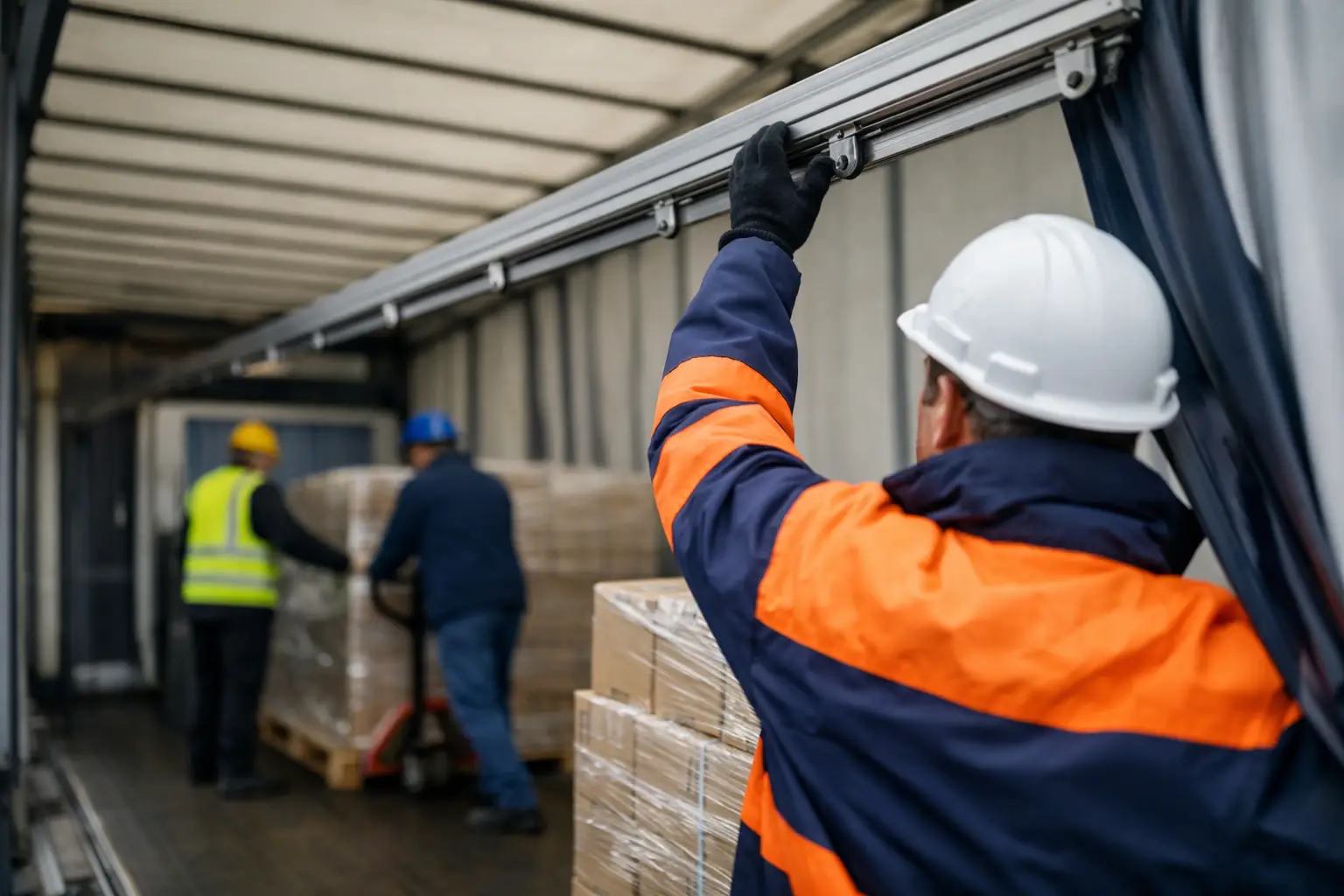
A tautliner track system provides a fixed mounting point along the truck body for load restraint hardware. Rather than relying on a driver to climb, stretch across a load or repeatedly manage loose equipment, the restraint can be positioned and operated from a safer working location.
The practical benefit is consistency. The track gives the system a defined place in the body, while the restraint hardware is designed to move to the required position for the load. For multi-drop work, palletised freight and mixed daily consignments, that can reduce the time spent setting up and removing restraint equipment.
It does not remove the need for drivers to assess each load. Freight shape, weight, load placement, packaging condition and the direction of likely movement still determine what restraint is required. However, it can make the correct process easier to repeat.
Tautliner track system review: the criteria that matter
A track system should be reviewed as a working fleet asset, not as an isolated piece of hardware. The cheapest initial option is not always the lower-cost choice once downtime, driver fatigue, damage and loading delays are considered.
Driver safety and manual handling
This is the first test. Traditional restraint methods can require drivers to work around open curtains, reach over freight, handle straps at awkward angles or climb where the risk is not justified. Those tasks add up over a shift, particularly for drivers completing frequent deliveries.
A track-mounted system should reduce unnecessary climbing and limit difficult reaches. Look closely at how the driver accesses the restraint, how it is released and returned, and whether an extendable pole or similar tool allows operation from ground level. The safest design is one that reduces exposure without complicating the loading process.
The system also needs to remain practical in poor weather, low light and busy loading areas. Hardware that is difficult to find, operate with gloves, or return to its storage position will quickly become a source of frustration. When that happens, process discipline can suffer.
Loading speed and labour requirements
Time saved on a single restraint action may appear minor. Across several vehicles, multiple loads and five or six working days, it becomes significant. A system that allows a driver to position restraint efficiently can reduce labour at the dock and help vehicles leave on schedule.
That said, loading speed should not be assessed in isolation. A fast system that does not suit the freight profile can create rework or encourage poor restraint decisions. The better question is whether it enables safe and secure restraint with minimal labour for the jobs the truck actually performs.
For a general freight operator, flexibility is especially valuable. Loads change throughout the week. The restraint system should support the normal range of pallet heights, load positions and delivery sequences without requiring a different workaround each day.
Track and component quality
The track is a structural part of the solution. It needs suitable material quality, secure mounting and a design that stands up to repeated movement of restraint hardware. Check the finish, fixing method, end stops and how the system behaves when exposed to dust, moisture and day-to-day freight operations.
The bungee unit, hooks and any moving components also deserve close attention. They need to be easy to inspect and maintain, with clear signs of wear or damage. Components that are difficult to replace or inspect may create downtime later, particularly in a high-use fleet.
Australian-made equipment can be a practical advantage here. Local manufacture and local product knowledge can make support, replacement parts and installation coordination more straightforward than relying on an unknown imported system with limited after-sales backing.
Compatibility with the truck body
A track system must suit the body builder’s construction, curtain arrangement and internal layout. It should not interfere with the normal operation of curtains, roof gear, internal protection or other restraint equipment already used in the truck.
Compatibility should be confirmed before purchase, not assumed from a photo or a broad vehicle description. Fleet operators running Isuzu, Iveco, Fuso, Hino, Sitrak, UD Trucks, Mercedes-Benz or Scania vehicles may have different body specifications across the fleet, even when the trucks appear similar from the outside.
This is where an experienced installer or truck body builder adds value. They can assess mounting locations, body condition, clearance requirements and the practical working height for drivers. A correct installation supports performance. A poor installation can compromise it.
Suitability for the freight task
No restraint system suits every load in the same way. A tautliner carrying stable palletised freight on metro distribution work has different needs from a vehicle hauling irregular industrial product, tall lightweight goods or mixed consignments across regional routes.
Before committing to a system, review a representative week of loads. Consider the heaviest freight, the lightest but most unstable freight, common load gaps and the number of delivery stops. Also consider who loads the truck. A system should work for the driver receiving the load as well as the team dispatching it.
A good track-based setup can complement other restraint measures, but it should be selected within the wider load restraint plan. The goal is not to fit more equipment. The goal is to control load movement safely and efficiently.
Installation and fleet rollout
Installation is not an afterthought. It determines whether the system is positioned for safe use, fitted securely and accepted by drivers. The best rollout starts with a pilot vehicle or a small group of vehicles performing typical work.
During the trial, gather feedback from drivers, workshop staff and loaders. Ask where the hardware is easiest to use, whether it clears the freight types carried, and whether the operating method remains simple at the end of a long shift. Direct driver feedback is operational evidence, not a box-ticking exercise.
Training should be equally practical. Drivers need to understand the intended use of the system, pre-start inspection points, correct positioning and the limits of the equipment. A short demonstration beside a loaded truck is generally more useful than a lengthy theory session.
StrapNGo is designed specifically for tautliners and curtain-sided trucks, combining track hardware, a bungee unit and an extendable pole with hook to support lower-labour restraint operation. Its patented Australian-made design and installation availability through truck body builders and stockists make it a relevant option for fleets seeking a purpose-built system rather than a generic adaptation.
The trade-offs to consider
A track system requires upfront investment, installation time and driver familiarisation. Older truck bodies may need closer inspection before fitment, and a fleet with highly unusual freight may need a more tailored restraint plan. These are not reasons to avoid the system. They are reasons to assess it properly.
There is also a difference between fitting equipment and changing a process. If dispatch teams load inconsistently, or drivers are under pressure to leave before completing restraint checks, new hardware alone will not solve the underlying issue. The strongest results come when the system, loading procedure and driver training all support one another.
For fleets with frequent loading cycles, manual handling exposure or a strong focus on standardising safe work, the productivity case is often clear. For a vehicle that rarely changes loads or operates with specialist fixed freight, the benefit may depend more on the specific body layout and restraint requirements.
What a worthwhile system should deliver
The best outcome is not simply a neater truck body. It is a repeatable restraint process that helps drivers work more safely, helps vehicles turn around faster and gives fleet managers confidence that equipment is suitable for the task.
When reviewing a tautliner track system, inspect the hardware, verify body compatibility and put the operating method in the hands of the people who will use it every day. The right system should make safe restraint the easier option on every load, not another job drivers have to work around.