
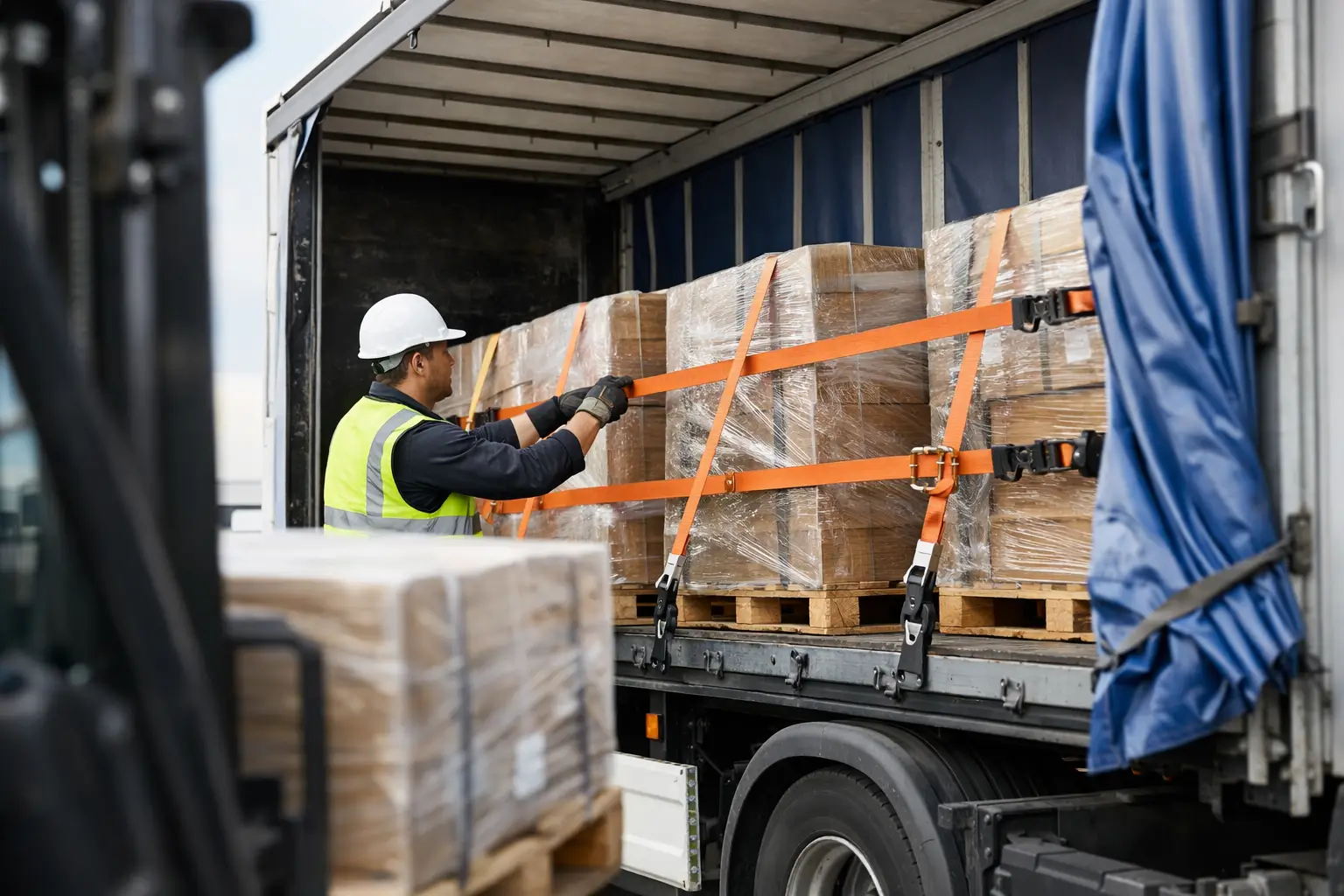
A curtain-sided body makes freight access fast, but the curtain is not a load restraint system. Load safety depends on what happens inside the truck body: how freight is positioned, how it is restrained, who applies the restraint and whether the system remains effective for the full journey.
For fleet operators and drivers, this is not paperwork or a box to tick before departure. A moving load can place people at risk during loading, unloading, roadside checks and emergency braking. It can also damage freight, delay deliveries and leave a vehicle off the road when it should be earning.
Load safety starts before the first restraint is fitted
A safe load begins with a clear plan for the freight being carried. Weight, shape, packaging, centre of gravity and unloading sequence all affect the restraint method. A palletised general freight load may need a different approach to machinery, building products, steel, drums or awkward mixed consignments.
Start by confirming the vehicle is suitable for the task. Check the load area is clean, dry and free from loose packaging, damaged dunnage or other items that could reduce friction or create an unstable base. Inspect the restraint track, fittings, straps, gates and anchor points before loading starts. A damaged component should not be left in service because the vehicle is needed for the next run.
Load distribution matters just as much as restraint. Freight needs to sit within the vehicle’s rated limits and be positioned to support stable handling and braking. Heavy items generally belong low and correctly located over the available load area, not stacked where they can shift or concentrate weight in one section of the body.
The unloading order also deserves attention. Loading the final delivery first may save time at the depot, but it can leave the driver dealing with exposed or poorly supported freight at an earlier stop. Plan the sequence so each delivery can be made without compromising the stability of the remaining load.
The real risks are often at the side of the truck
Manual restraint tasks can expose drivers to more than a moving load. Traditional strap handling may involve climbing, reaching overhead, working around tensioned equipment or accessing the side of the vehicle in traffic areas. These are everyday tasks, which is exactly why the risk can become normalised.
A safer system reduces the need for drivers to climb onto trailers or stretch into unsafe positions to secure freight. It should allow restraint work to be completed from a practical standing position, while keeping the driver clear of pinch points and moving equipment.
This is especially relevant for curtain-sided trucks and tautliners operating on busy sites. Drivers may be working on uneven ground, in rain, poor light or tight loading bays, often while managing delivery pressure. A method that works well only in ideal conditions is not a reliable method for day-to-day transport.
Lowering manual handling exposure also supports productivity. Fewer awkward movements, less climbing and simpler restraint handling can reduce the time required at each stop. The benefit is not rushing the job. It is making the safe method the efficient method.
Choosing the right restraint method
There is no single restraint arrangement that suits every freight task. The right method depends on the load, the truck body and the forces the restraint needs to manage. Blocking, bracing, direct restraint, top-over restraint, load-rated containment and friction management can each have a place when properly selected and applied.
The key question is whether the restraint prevents the load from moving in the directions it may travel under normal transport conditions, including braking, acceleration, cornering and road vibration. A strap placed over freight may look secure while still allowing forward, rearward or sideways movement if there is insufficient restraint capacity or the load has room to build momentum.
For curtain-sided operations, purpose-designed internal restraint systems provide a practical way to control freight without relying on the curtain. Track-mounted systems can be positioned to suit the load and used in combination with appropriate freight placement and other restraint measures.
StrapNGo is designed specifically for tautliners and curtain-sided trucks, using a patented system that helps secure freight with minimal labour. Its track, bungee unit and extendable pole with hook are intended to make restraint handling safer and more practical for everyday operations.
Compatibility and installation quality matter. A restraint system must suit the truck body, be installed correctly and be used within its intended operating limits. For fleet managers, standardising equipment across compatible vehicles can also make training, inspections and replacement parts easier to manage.
A practical load safety routine for every run
Good restraint equipment does not replace a disciplined process. Drivers need a routine that is simple enough to apply on a busy shift and detailed enough to identify problems before the truck leaves the site.
Before departure, assess the freight as loaded. Confirm it is stable, evenly positioned where required and supported by suitable packaging, dunnage or blocking. Check that restraint equipment is correctly engaged, appropriately tensioned and free from twists, cuts, damage or signs of wear. Make sure loose gear, pallets and packaging have not been left where they can move during transit.
Then consider what could change on the road. Freight can settle after the first few kilometres, particularly where loads include soft packaging, uneven surfaces or mixed materials. A sensible check after the initial stage of the journey can identify loss of tension or movement early, before it becomes a larger problem.
At delivery, do not release restraints immediately. Check the load first. Freight can lean against restraint equipment after transport, and removing a strap or gate without understanding the load condition can expose the driver and nearby workers to sudden movement. Open the body and release restraints in a controlled order, keeping people clear of the likely movement path.
Training makes equipment effective
A restraint system is only as reliable as the people and processes around it. Drivers need practical instruction on how to assess different loads, select the correct restraint method, identify damaged gear and deal with shifted freight safely. A toolbox talk is useful, but hands-on training in the actual truck body is where the process becomes repeatable.
Training should be consistent across drivers, including relief drivers and new starters. It should also cover the reasons behind the procedure. When drivers understand how forces act on a load, they are more likely to recognise why a shortcut is unsafe, even when the freight appears stable at the depot.
Workshop and operations teams have a role as well. Scheduled inspections help identify worn straps, damaged tracks, missing fittings and body damage before these faults affect a load. Keep restraint equipment clean, stored correctly and replaced when it no longer meets the required condition.
Productivity and compliance work together
Some operators treat safety measures as an unavoidable delay. In practice, poor load restraint is usually the more expensive option. A shifted load can mean a missed delivery window, damaged customer freight, recovery costs, incident reporting, vehicle repairs and pressure on the driver who has to manage the problem.
A well-designed load safety process supports a more predictable operation. Drivers know where equipment is, how to use it and what checks are expected. Loading teams can work to a consistent method. Fleet managers gain greater confidence that restraint practices are being applied across different vehicles and runs.
The balance is practical. Overcomplicating every load can waste time, while treating every load as routine can create unacceptable risk. The right approach matches the restraint method to the freight, maintains the equipment and gives drivers a safe way to do the job properly.
Every trip starts with a load that needs to arrive in the same condition it left. Give drivers restraint equipment that suits the vehicle, a process they can apply under real working conditions and the time to check their work before the wheels turn.