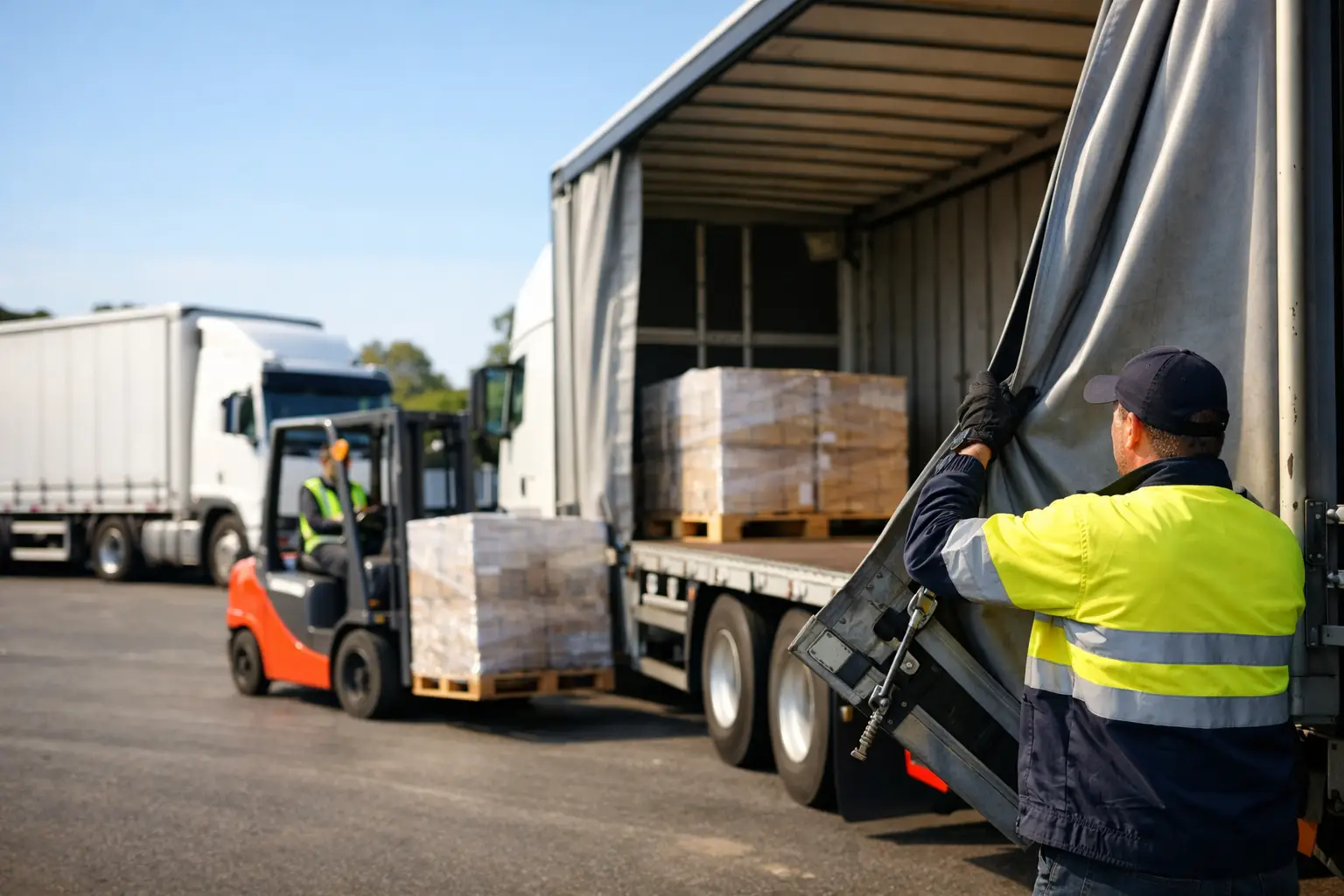
A curtain-sided truck can be loaded quickly and still be unsafe. The difference often comes down to the equipment available at the point of loading, and whether drivers can secure freight without climbing, overreaching or wrestling with loose straps. The best tools for curtain loading help crews control the load from the ground, reduce manual handling and keep the job moving when every stop matters.
For Australian fleets, the right setup is not simply a collection of straps and accessories. It is a working system that suits the freight, the truck body, the loading environment and the people using it day after day.
What makes a curtain-loading tool worth fitting?
A useful curtain-loading tool must do more than make the task easier on a good day. It needs to perform reliably in rain, dust, low light and busy depots, while standing up to repeated use across local, regional and interstate work.
Start with the risk you are trying to remove. A driver climbing on tyres or trailer components to reach a restraint point has a fall risk. A driver throwing straps over unstable freight or working between a forklift and the load is exposed to avoidable hazards. Manual handling also adds up. Repeated lifting, pulling and stretching can cause injuries that affect both the driver and the operation.
The best equipment reduces these exposures without creating a slower process. It should be easy to inspect, straightforward to use and compatible with the vehicle body and the freight being carried. It must also support the load restraint method required for that load. No tool replaces proper load assessment, restraint planning or the operator’s responsibility to check that freight is secure before travel.
Best tools for curtain loading: the practical essentials
1. A purpose-built load restraint system
The central tool is the restraint system itself. For tautliners and curtain-sided trucks, a system designed around the body’s track and restraint points gives operators a more controlled way to secure freight than relying on loose, manually handled gear alone.
Look for equipment engineered for commercial use, with quality components, clear operating methods and a fit-for-purpose installation. A system should allow restraints to be positioned efficiently along the body, then tensioned to suit the load. It also needs to work with the truck rather than interfere with access, curtains or normal loading practices.
Patented systems such as StrapNGo are designed specifically to reduce the labour involved in securing freight in tautliners. The value is practical: drivers can carry out restraint tasks with less climbing and less physical strain, while fleets gain a consistent process across suitable vehicles.
The trade-off is that a properly integrated system requires planning at the start. Vehicle type, track layout, load profile and installer capability all need consideration. That upfront work is worthwhile when the truck is performing regular multi-drop work or handling freight that needs frequent restraint adjustment.
2. Load restraint track and compatible hardware
A quality track is the foundation of a repeatable restraint setup. It provides defined locations for compatible fittings, helping operators position equipment where it is needed instead of improvising around the load.
Track selection depends on the truck body, the intended restraint method and the type of work. A fleet carrying palletised general freight may need a different arrangement from one transporting steel, building products or irregular industrial items. The track must be installed correctly and checked as part of normal vehicle maintenance.
Compatible hardware matters just as much. Hooks, fittings, end components and tensioning gear need to suit the track and be rated for their intended use. Mixing components that do not belong together can lead to poor engagement, damage or an unreliable restraint point. Standardising approved hardware across the fleet also makes inspections faster and replacement parts easier to manage.
3. An extendable pole with hook
An extendable pole with hook is one of the most practical tools on a curtain-sider. It lets the operator reach overhead fittings and restraint components from ground level, reducing the need to climb or stretch beyond a safe working position.
This is especially useful where the body height makes upper track access difficult, or where drivers would otherwise need to reach across freight. The pole should be long enough for the truck body and strong enough for regular commercial use, while remaining manageable for the driver to control.
A pole is not a substitute for safe technique. Drivers still need clear footing, adequate space around the vehicle and a stable load. But it can remove a common source of unnecessary risk: working at height for a task that can be completed from the ground.
4. Bungee units for controlled restraint handling
Bungee units can improve the way restraint equipment is managed during loading and unloading. They help keep components controlled and accessible, rather than hanging loose, dropping onto the deck or becoming tangled with curtains and freight.
That may sound like a small detail, but repeated delays add up across a fleet. A driver who can quickly locate and operate the right restraint gear is less likely to take shortcuts. Controlled equipment also reduces the chance of damaged straps, snagged curtains and trip hazards around the work area.
Choose bungee equipment that is designed to work with the restraint system and vehicle body. It should not obstruct curtain operation or create a new snag point. As with any elastic or tensioned component, regular inspection is essential. Remove damaged units from service rather than waiting for a failure during a busy load.
5. Rated straps, chains and edge protection
Even a well-designed curtain-loading setup still relies on the correct restraint for the freight. Rated straps remain suitable for many palletised and general freight applications, provided they are selected, positioned and tensioned correctly. Chains may be required for heavier or more demanding loads. Edge protection helps prevent straps being cut or damaged where they pass over sharp or abrasive cargo.
The key is to treat these as load-specific tools, not universal answers. A strap that is suitable for wrapped pallets may not be appropriate for machinery with sharp edges or a load that can move under braking. Curtains are generally not load restraints. They protect the load from the weather and contain the work area, but the freight still needs independent restraint appropriate to the transport task.
Keep restraint gear clean, dry where possible and easy to inspect. Webbing with cuts, fraying, burns, chemical damage or unreadable identification should be removed from service. The cost of replacing suspect gear is minor compared with the cost of a load shift, damaged freight or injury.
6. Lighting, PPE and exclusion controls
Loading tools are only effective when drivers can see what they are doing and work without being placed in the path of mobile plant. Good internal and external lighting is particularly valuable for early starts, night work and enclosed depot bays. It helps operators inspect tracks, fittings, straps and load edges before the curtains are closed.
PPE should suit the task and site requirements. High-visibility clothing, safety boots, gloves and eye protection can all be relevant, but PPE is the last line of defence. The better control is an organised loading area with clear communication between the driver, forklift operator and loader.
Use exclusion zones where forklifts are operating. A driver should not be inside the loading area adjusting restraints while a forklift is placing freight, unless the site’s process specifically controls that interaction. Good equipment reduces risk, but clear separation between people and plant is what prevents many serious incidents.
Choosing equipment for your fleet
The right combination depends on the work. A single owner-driver doing mixed regional deliveries may prioritise simple gear that can be operated quickly and checked easily. A large distribution fleet may benefit more from a standardised installed system, common hardware and driver training that produces the same loading process across every depot.
Before buying, assess the truck bodies you operate, common load dimensions, loading frequency and the points where drivers currently lose time or take risks. Speak with the truck body builder or an experienced installer about track placement, system compatibility and future servicing. Equipment that fits properly from the start is easier to use, easier to maintain and more likely to be used correctly.
The strongest curtain-loading setup is the one drivers will use every time, even on the last drop of a long shift. Give them equipment that keeps them on the ground, keeps restraint gear under control and makes the safe method the quickest method.