
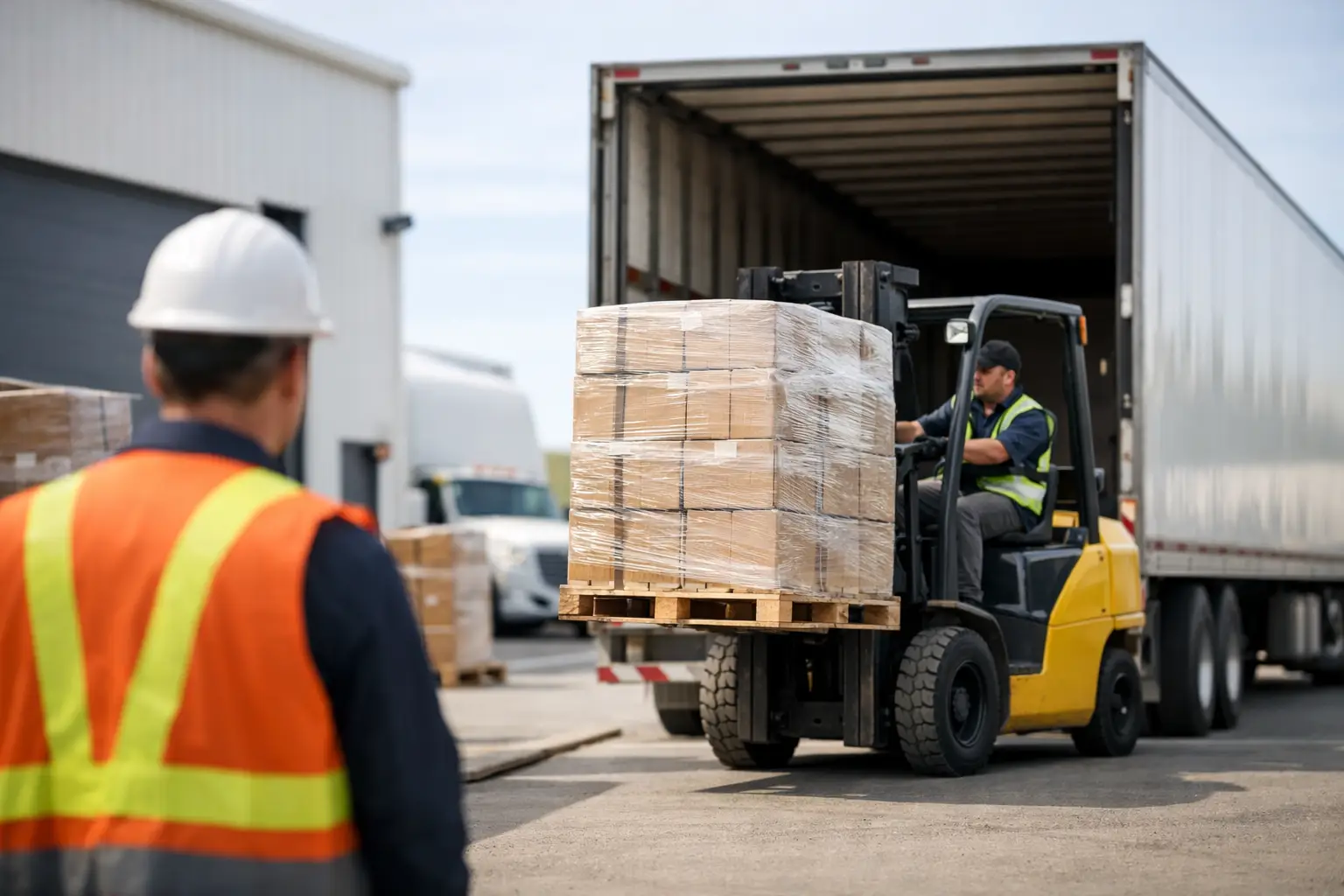
A freight loading demonstration video should do more than show a truck being loaded. For fleet operators, workshop managers and drivers, it needs to show whether a restraint method reduces risk, saves time and works reliably in the conditions crews face every day.
A polished video can make any system look simple. The useful ones show the real loading sequence, the operator’s position, the equipment being used and the result once the freight is restrained. That is where safety and productivity claims are either proven or exposed.
What a freight loading demonstration video should show
For curtain-sided trucks and tautliners, loading is not just about getting pallets into the body. It is about securing the load without creating unnecessary manual handling, climbing, reaching or roadside exposure. A worthwhile demonstration starts with the freight in its working position and shows the restraint process from beginning to end.
Watch how the operator accesses the restraint. If they need to climb through the truck body, stretch over a load, handle loose straps repeatedly or work close to passing traffic, the task may be creating risks that are not obvious in a staged presentation. The best methods keep the driver on the ground where practical and reduce the physical effort required to secure each load.
The video should also show the system being applied to a realistic load. Empty bodies, perfectly uniform cartons and wide-open loading bays do not reflect every job. Palletised freight, mixed freight heights, partial loads and loading at a customer site all place different demands on restraint equipment.
A proper demonstration makes it clear how the equipment holds the freight in place. Look for the attachment points, the direction of restraint and whether the system is positioned correctly against the load. If a video skips from an unrestrained pallet to a finished truck with no explanation, it has missed the part that operators need to assess.
Safety is visible in the loading method
Good restraint equipment is designed to control freight movement. Good loading practice also controls the risk to the person doing the job. These two outcomes need to work together.
A driver who has to throw straps over freight or repeatedly enter and exit the truck body can lose time and increase their exposure to slips, trips and shoulder strain. The issue is not only one difficult load. It is the same movement repeated across multiple deliveries, shifts and weeks.
A demonstration should show where the operator stands while setting the restraint, tensioning it and releasing it. It should also show whether loose components can fall, snag or create trip hazards. This matters at a depot, but it matters even more when loading or unloading in a tight customer yard, on uneven ground or beside a live traffic area.
For a curtain-sided truck, the curtain is generally not a load restraint device on its own. The video should focus on the internal restraint method rather than giving the impression that closing the curtains completes the safety task. Freight must be restrained according to the load, vehicle and operating requirements of the job.
Look for minimal manual handling
The strongest demonstration videos show a method that reduces unnecessary handling without hiding the work involved. An extendable pole and hook, for example, can allow an operator to position a restraint from ground level rather than climbing or reaching across the load.
That does not mean every load is identical. Tall, irregular or mixed freight may require a different restraint arrangement. But the equipment should make the routine task easier, more controlled and less physically demanding for the driver.
Productivity needs to be measured in real tasks
Loading speed is often presented as a simple race against the clock. In transport operations, the better question is whether the process reduces labour across the full job.
Consider the time spent finding straps, carrying them to the load, throwing them over freight, untangling them, tensioning them and packing them away after delivery. Then consider the delays caused when a driver needs help to complete a restraint task safely. Small steps add up quickly across a multi-drop run or a large fleet.
A useful video shows how many actions are required to restrain a standard load. It should show the loading process at working pace, not only a fast-cut highlight reel. This gives fleet decision-makers a clearer view of where time is saved and whether that saving can be repeated across their operation.
There are trade-offs. A simpler system may be quicker for common pallet freight but require planning for unusual loads. A fleet carrying varied products may need more than one restraint option. The right question is not whether one method replaces every other option. It is whether it improves the majority of daily loading tasks while maintaining a safe and secure outcome.
Check how the equipment fits the truck body
A restraint system must suit the vehicle body as well as the freight. For tautliners and curtain-siders, the track location, available clearance, load height and access method all affect how the system performs.
A freight loading demonstration video should identify the hardware that makes the system work. That may include the track, restraint unit, bungee component and handling pole. Seeing each component in use helps a workshop manager or body builder assess installation requirements and ongoing maintenance needs.
Pay attention to whether the video shows the system in a typical curtain-sided body, not an isolated product display. The restraint needs to be accessible without interfering with normal loading, curtain operation or other equipment in the truck.
Installation quality also matters. A system may look straightforward on video, but correct fitment is essential. Established truck body builders and experienced installers can assess the body configuration, position the hardware appropriately and ensure the operator can use it as intended.
Questions to ask after watching
A good video should leave practical questions, not vague impressions. Ask whether the system suits the freight normally carried, whether drivers can operate it safely at delivery sites and whether it can be installed across the relevant vehicles in the fleet.
Also ask how it performs on partial loads. Freight often changes position throughout a run as deliveries are made. A restraint method needs to remain practical when the body is no longer full and the load arrangement changes.
Finally, consider training. Even equipment designed for minimal labour needs drivers to understand correct placement, use and inspection. A clear demonstration can support training, but it is not a substitute for site procedures, load-specific assessment or operator instruction.
What a complete demonstration does not replace
Video is a valuable way to see a system in action, particularly when assessing equipment for several vehicles. It cannot determine the correct restraint arrangement for every load. Load weight, dimensions, centre of gravity, packaging strength, deck condition and delivery sequence all influence the job.
Operators should continue to follow their company procedures, applicable load restraint requirements and vehicle manufacturer guidance. Damaged equipment, worn hardware or an unsuitable restraint arrangement should be addressed before the vehicle leaves.
This is where a practical system earns its place. It should help drivers complete the right process more consistently, rather than asking them to take shortcuts when the day is busy. StrapNGo’s patented Australian-made system is built around that operational reality: safer freight restraint for curtain-sided trucks and tautliners, with less manual effort in the routine loading task.
The best demonstration video leaves you with a clear picture of the working day. You should be able to see the driver’s movements, the equipment’s role and the finished restraint without guesswork. If it can show that process clearly on the type of freight your operation carries, it gives you a sounder basis for the next conversation with your drivers, workshop or truck body builder.