
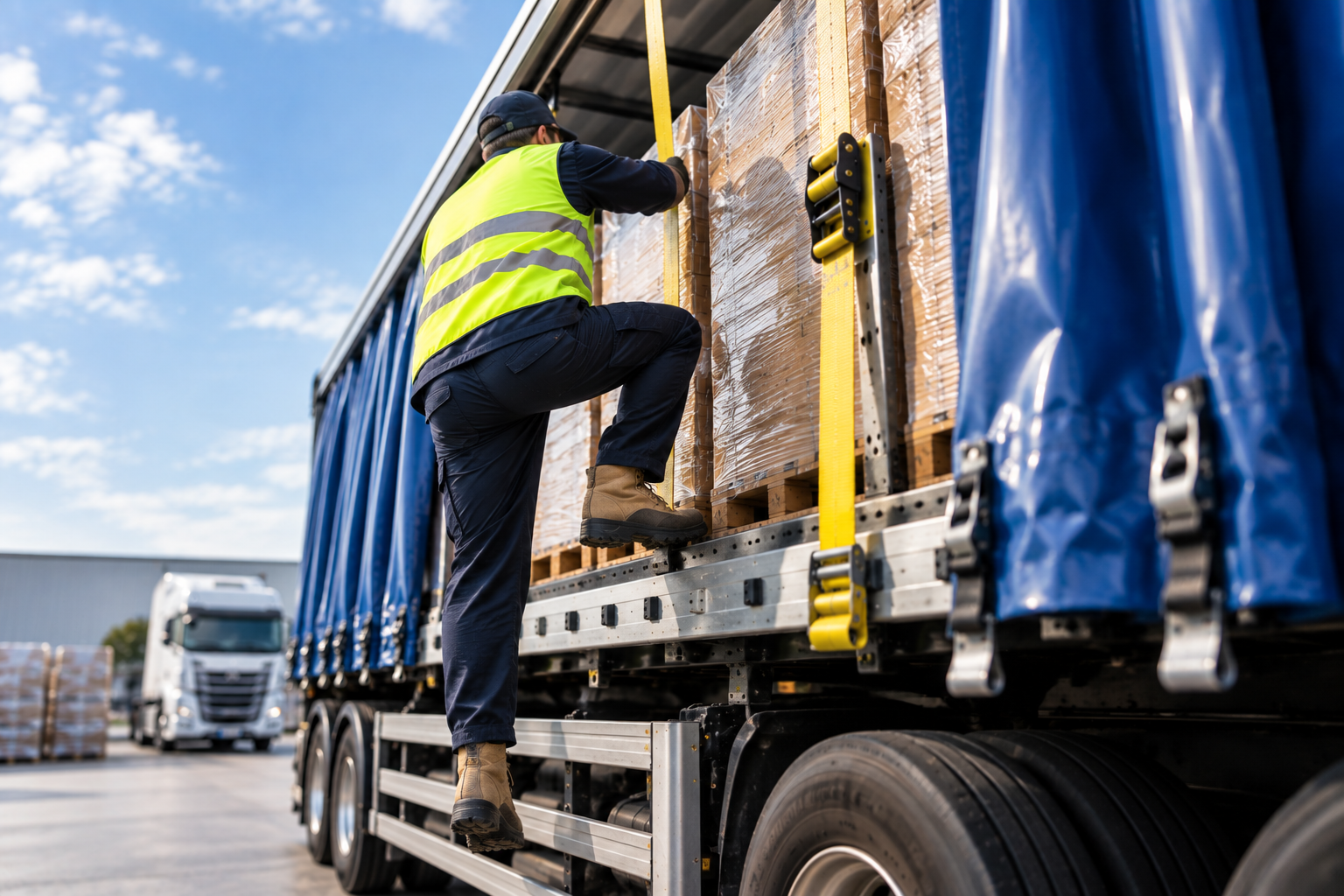
Why Climbing Trailers Creates Safety Risks
Loading and securing freight is a routine part of transport work. However, some traditional load restraint methods can require drivers to climb onto trailers or loads.
This can expose drivers to unnecessary fall risks. Wet surfaces, uneven footing and awkward movements can make the task even more hazardous.
Transport operators should review these everyday activities and look for safer ways to complete load restraint tasks.
Why Do Drivers Climb Onto Trailers?
Drivers may climb onto a trailer for several reasons. They may need to position a restraint strap, adjust freight or retrieve equipment.
Tall and awkward loads can make these tasks more difficult from the ground.
However, climbing should not become the default solution simply because it has always been part of the loading process.
Better procedures and suitable equipment can help reduce the need for drivers to leave ground level.
Falls Can Happen Quickly
A driver does not need to be working at a significant height for a fall to cause an injury.
Truck and trailer surfaces can become slippery due to rain, dirt, oil or other contaminants. Drivers may also have limited space to position their feet safely.
Carrying or handling equipment while climbing can add another challenge.
For these reasons, businesses should consider ways to reduce unnecessary climbing during load restraint.
Keep Drivers on the Ground Where Possible
One practical approach is to design load restraint procedures around ground-level work.
Drivers should have suitable equipment that allows them to position and manage restraint straps without climbing onto freight whenever possible.
This can simplify the task while reducing exposure to fall hazards.
It can also create a more consistent process across a transport fleet.
Reduce Manual Strap Throwing
Throwing straps over high loads can also create challenges.
A strap may not land in the correct position on the first attempt. The driver may then need to retrieve it and throw it again.
Repeated throwing can add unnecessary movements to the loading process.
A purpose-designed restraint system can provide drivers with a more controlled way to position their straps.
How StrapNGo Can Help
The StrapNGo Load Restraint System helps drivers manage restraint straps on compatible curtain-sided trucks and trailers.
The system allows drivers to guide straps across the load from ground level. This reduces reliance on repeated manual strap throwing and unnecessary climbing.
Drivers can keep restraint equipment organised and accessible throughout the loading process.
StrapNGo can also be fitted to compatible existing curtain-sided vehicles or incorporated into suitable new builds.
Build a Safer Load Restraint Process
Improving driver safety involves more than responding to hazards after they occur.
Transport operators should regularly review how drivers complete routine tasks. They should identify unnecessary climbing, reaching and repetitive movements.
Suitable equipment and clear procedures can help create a safer and more efficient working environment.
The goal is simple: secure the load while keeping the driver safely on the ground wherever possible.
Improve Your Load Restraint Process with StrapNGo
StrapNGo provides practical load restraint solutions for curtain-sided trucks and trailers.
Explore the StrapNGo Load Restraint System or contact the StrapNGo team to discuss a solution for your fleet.