
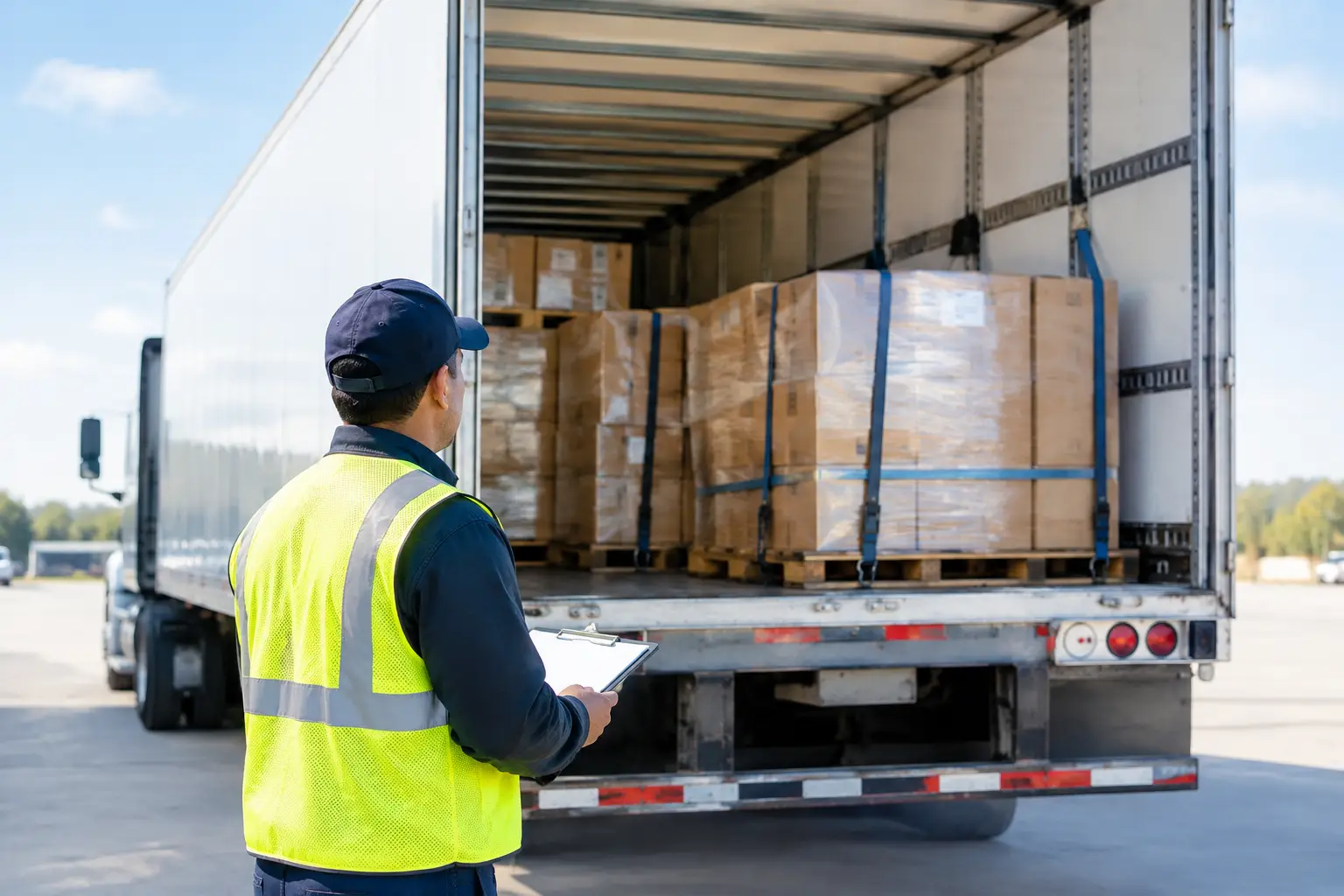
A load can be perfectly placed on the floor and still be unsafe once the truck moves. Freight loading is not finished when the forklift backs away. It is finished when the load is restrained for the trip, the driver can close up safely, and the vehicle can leave without creating unnecessary risk for people, freight or other road users.
For curtain-sided trucks and tautliners, that final stage often creates the biggest pressure. Drivers may be working beside traffic, managing schedules, climbing around freight or handling heavy straps repeatedly throughout a shift. A better loading process reduces those exposure points without compromising the restraint arrangement.
Freight Loading Starts Before the Truck Arrives
Safe, productive loading begins with the job plan. The freight dimensions, mass, packaging, centre of gravity and delivery sequence should be understood before loading starts. This is particularly important with mixed consignments, where the fastest way to fill a body is not always the safest way to unload it later.
Load distribution matters. Excess weight on one axle group can create a compliance problem even where the total vehicle mass is within limits. High or uneven freight can also affect stability, particularly through corners, roundabouts and evasive manoeuvres. Place heavier items low and position the load to support appropriate axle loading and vehicle stability.
The condition of the freight matters just as much. Pallets with damaged boards, split cartons, loose shrink wrap or unstable product stacks need attention before they enter the truck. Restraint equipment is not a substitute for sound packaging. If a pallet has already started to lean, applying more force to it can worsen the problem rather than solve it.
Delivery order also deserves a clear plan. Freight that comes off first should be accessible without requiring the driver to move or disturb other loads. This reduces double handling, saves time at the drop and avoids the temptation to travel with a partly unsecured load after an earlier delivery.
Build the Load for the Forces It Will Face
A truck load must be restrained against the forces generated during normal transport. Braking, acceleration, cornering, rough road surfaces and sudden avoidance manoeuvres can all move freight. The restraint method must suit the type of freight, the vehicle body, the anchor points and the direction of likely movement.
Curtains are valuable for weather protection and containment, but they are not automatically a load restraint solution. Whether a curtain-side arrangement contributes to restraint depends on its design, rating and the complete load restraint setup. Operators should not assume that closing the curtains makes a load secure.
The NHVR Load Restraint Guide provides practical direction for assessing load restraint arrangements. It should be used alongside applicable legal requirements, vehicle manufacturer information and site procedures. The correct arrangement depends on the load. A palletised general freight run, a tall lightweight retail load and a dense machinery consignment do not present the same restraint challenge.
Avoid relying on one control where several are needed. Blocking, bracing, dunnage, friction, rated restraint equipment and sensible load placement may all form part of the solution. The aim is not simply to stop a load from falling over. It is to prevent unacceptable movement in every relevant direction during transport.
Check the Restraint Equipment, Not Just the Load
Straps, tracks, buckles, hooks and anchor points take real forces over long working lives. Before loading, inspect equipment for cuts, fraying, corrosion, bent hardware, damaged stitching, deformation and signs of incorrect use. Equipment that is worn, modified or damaged should be removed from service in line with the business process and manufacturer guidance.
It is equally important to confirm that the restraint equipment is suitable for the task. Using an available strap because it is nearby is not the same as using a suitable restraint arrangement. Consider the lashing capacity, the angle of restraint, the strength of the anchor points and how the load can move under braking or cornering.
Reduce Manual Handling During Freight Loading
Manual handling is a daily reality for many drivers, but repetitive heavy work should not be treated as unavoidable. Throwing straps over high loads, climbing onto decks and reaching across freight can expose drivers to shoulder, back and fall risks. These risks rise when loading occurs in poor weather, low light or confined spaces.
The practical question is simple: can the driver secure the load from a safer position with less reaching, lifting and climbing? A system that supports ground-level operation can reduce exposure while keeping the loading task moving. This is where equipment design has a direct operational effect, not just a safety statement on paper.
For tautliners and curtain-sided trucks, a track-mounted restraint system can help drivers place and manage restraints more efficiently than traditional throw-over methods. StrapNGo’s patented Australian-made system is designed to support safer load restraint with minimal labour, using purpose-built components including track, bungee units and an extendable pole with hook.
That does not remove the need for competent loading decisions. Any system must be correctly installed, used as intended and assessed as part of the overall restraint arrangement. Freight type, truck body configuration, restraint points and applicable requirements still determine whether a load is adequately secured.
Make the Loading Area Work for the Driver
Good equipment cannot fully compensate for a poor loading environment. Site traffic, forklift movements, pedestrian access and parked vehicles all influence the risk around a truck. Drivers need enough clear space to open curtains, access restraint points and complete checks without working in the path of mobile plant.
Where possible, separate pedestrian and forklift movements. Establish a clear loading sequence so the driver, loader and forklift operator know who is responsible for each stage. Miscommunication is a common source of risk, especially when a driver assumes loading is complete while the forklift operator is still making adjustments.
Lighting is another practical control. A rushed restraint check at the end of a late shift can miss a twisted strap, an unsecured pallet or hardware that has not seated correctly. Adequate lighting around docks, yards and vehicle sides helps people see the details that determine whether freight stays where it belongs.
Weather changes the job too. Rain can reduce grip underfoot and make straps harder to handle. Wind can move curtains unexpectedly. On regional and interstate runs, drivers may also be securing or checking freight well away from a controlled depot. Procedures need to work in those real conditions, not only in an ideal loading bay.
Use a Final Check That Is Actually Useful
The last check before departure should be deliberate, not a quick look from the cab. Walk the vehicle and check that freight is stable, restraint equipment is correctly positioned and tensioned, anchor points are engaged, curtains and doors are properly secured, and no loose items remain on the deck or around the body.
Look for obvious movement potential. Can a pallet slide into a gap? Is a high item able to tip? Has a restraint been placed over a sharp edge without protection? Is equipment rubbing against a corner, curtain or incompatible surface? Small issues become expensive and dangerous once the truck is on the road.
Rechecking is also required during the journey when conditions change. The need and frequency will depend on the freight, route, road conditions and company procedure. A sensible stop after the first part of a trip can identify settlement in a load before it becomes a serious shift. Drivers should have the time and authority to address an issue properly.
Productivity Comes From Repeatable Safe Work
Fast freight loading is not about asking drivers to work harder or skip checks. It comes from repeatable methods: suitable equipment, sensible load planning, clear responsibilities and a restraint process that does not force unnecessary climbing or manual handling.
For fleet operators, that can mean fewer delays at dispatch, less rework at delivery, reduced damage exposure and a safer working day for drivers. For owner-drivers, it can mean finishing a securement task with less physical strain and greater confidence in the load behind the curtains.
The right question at every load is not, “Can we get this truck moving now?” It is, “Will this freight still be safe and secure after the first hard brake, the next roundabout and the full day on the road?”