
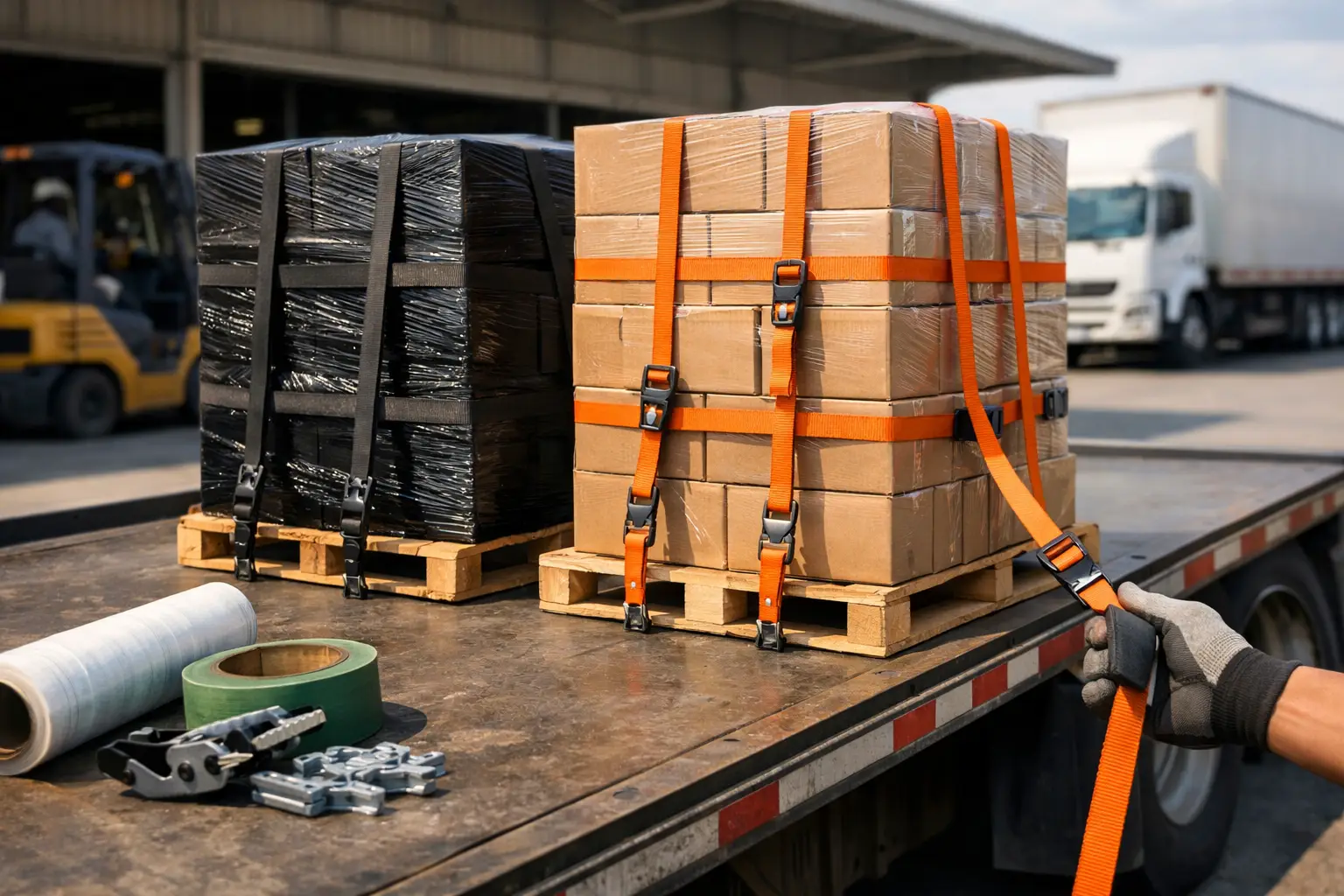
A pallet that looks stable on the dock can become a serious hazard once the truck brakes, turns or travels over uneven roads. The best ways to secure pallets are not about adding more restraint at random. They start with a sound load plan, suitable equipment and a method drivers can apply safely on every job.
For Australian fleet operators and owner-drivers, pallet restraint needs to protect people as well as freight. A load that shifts can damage product, affect vehicle handling, delay deliveries and expose drivers to unnecessary manual handling risks. The right approach keeps the load contained, restrained and practical to unload at the other end.
1. Start with pallets that are fit for transport
Load restraint cannot compensate for a damaged or poorly built pallet. Before loading, check the pallet deck, bearers and boards for damage, splitting or excessive movement. A compromised pallet can collapse under tension or allow the load to lean, even when the restraint system itself is correctly applied.
The product on the pallet also needs to be stable. Cartons should be stacked square, with heavier items at the base and no overhang that can catch on adjacent freight or curtains. Where appropriate, use stretch wrap, shrink film, corner boards or banding to create one stable unit load. These materials help hold product together, but they are not a substitute for securing the pallet to the vehicle.
Pallet condition matters most with mixed freight. A solid, evenly packed pallet behaves predictably. An uneven pallet carrying loose cartons, awkward shapes or top-heavy product needs a different loading position and more positive restraint.
2. Build a load plan before the first pallet goes in
The best pallet restraint process begins before the forklift enters the body. Consider the weight, dimensions, delivery sequence and compatibility of each pallet. Heavy pallets should generally be positioned low and evenly distributed to support vehicle stability and avoid placing excessive force on lighter freight.
Keep pallets tight together where the load design allows it. Gaps create room for movement, especially during braking and cornering. If gaps cannot be avoided due to delivery order, freight type or partial loads, use suitable blocking, filling material or restraint methods designed to stop pallets moving into the open space.
For curtain-sided trucks and tautliners, do not treat the curtain as the primary restraint. Curtains are designed to protect freight from weather and provide side enclosure. The load still requires a compliant, fit-for-purpose restraint arrangement inside the body.
A practical load plan also considers unloading. Freight that must come off first should be accessible without forcing a driver to climb, reach over unstable pallets or remove restraints while standing in an exposed roadside location. Efficient loading is safer loading when it reduces unnecessary handling.
3. Use the right restraint method for the load
Different pallet loads call for different restraint methods. Ratchet straps, load-rated tracks, gates, nets, load bars and purpose-designed restraint systems all have a place, depending on the freight, truck body and operating conditions.
Straps are widely used because they are flexible and familiar. They can be effective when they are correctly rated, positioned over or around stable freight, tensioned appropriately and protected from sharp edges. However, conventional straps can create repetitive work when drivers are securing multiple pallets across several drops. They can also require drivers to work at height or reach across the load if the arrangement is not well designed.
Load bars and gates can be useful for creating positive restraint against pallet faces, particularly where freight is uniform and the body is fitted with suitable track. Their effectiveness depends on correct placement, compatible track and adequate load rating. They must be inspected for damage, deformation and secure engagement before use.
A fixed, purpose-designed system can reduce the number of manual steps involved in pallet restraint. StrapNGo provides a patented Australian-made solution for tautliners and curtain-sided trucks that helps drivers restrain freight with minimal labour while supporting safer loading practices. The right system should suit the truck body, the freight profile and the daily workflow, rather than adding complexity to it.
4. Restrain pallets against forward, rearward and sideways movement
A pallet does not only move sideways. Under heavy braking, freight can surge forward. During acceleration or travel on steep grades, it may move rearward. Roundabouts, uneven roads and avoidance manoeuvres can create significant lateral force.
This is why restraint needs to address the likely directions of movement, not simply hold a pallet in place visually. A single strap placed loosely over a load may not prevent a pallet from sliding, tipping or separating from adjacent freight. The arrangement must be capable of restraining the load under normal transport forces and must be applied in line with the equipment manufacturer’s instructions and applicable load restraint requirements.
Pay close attention to tall or top-heavy pallets. These may need additional containment or a lower position in the load. Pallets containing drums, liquid containers, machinery parts or irregular product deserve particular care because the centre of gravity may not be obvious.
5. Keep restraint equipment in serviceable condition
Damaged restraint gear is not a minor workshop issue. Frayed webbing, bent hooks, worn ratchets, cracked tracks and distorted fittings can reduce the capacity of the entire arrangement. Equipment should be inspected before use and removed from service when it is damaged or cannot operate as intended.
Straps should be checked for cuts, abrasion, contamination and damaged stitching. Hardware should engage fully with the vehicle’s anchor points or track. Tracks need secure installation and should be kept clear of dirt or debris that prevents fittings from locking into place.
It is also worth checking the truck body itself. Anchor points, headboards, side structures and flooring all contribute to safe restraint. If the body has been damaged by forklifts, impact or corrosion, have it assessed before relying on it to restrain freight.
A simple pre-start check saves time compared with dealing with damaged cargo, a failed restraint or an incident on the road.
6. Reduce manual handling and roadside exposure
The safest restraint system is one drivers can use correctly without unnecessary strain. Reaching over high pallets, climbing onto decks, handling heavy straps repeatedly and working beside live traffic all increase risk.
Look for ways to complete restraint from a safer working position. Equipment such as extendable poles, guided straps and accessible track systems can reduce the need to climb or stretch. This matters on multi-drop work, where small handling tasks are repeated dozens of times across a shift.
Roadside loading and unloading deserves its own planning. If a driver needs to release restraints before opening a curtain, make sure the load cannot shift towards them. Establish a clear process for checking load stability, managing exclusion zones and communicating with forklift operators. No delivery deadline justifies releasing a restraint while freight is unstable.
7. Train for the real job, then check the result
A restraint system is only as effective as the person using it. Drivers, loaders and supervisors need practical training on the equipment fitted to the fleet, including how to identify damaged gear, apply restraints, assess unusual loads and respond when a load has moved.
Training should use the actual truck body and common freight types, not just a generic demonstration. A driver handling beverage pallets, building materials or industrial components faces different challenges from one carrying uniform boxed goods. Make the process clear enough that it can be followed under time pressure without shortcuts.
Supervisors should also check completed loads from time to time. This is not about catching people out. It is how a business finds recurring gaps such as loose straps, unsuitable pallet placement, worn equipment or loading patterns that make restraint difficult. A short review after an issue can prevent the same problem appearing across the fleet.
Secure pallets by making the safe method the easy method
Pallet restraint works best when it is built into the loading process, not left until the truck is ready to leave. Sound pallets, a considered load plan, correctly rated equipment and a method that limits manual handling will protect freight and give drivers a safer job.
The practical test is simple: can the load be secured consistently, checked easily and released safely at every delivery point? If the answer is no, the process needs attention before the truck is on the road.