
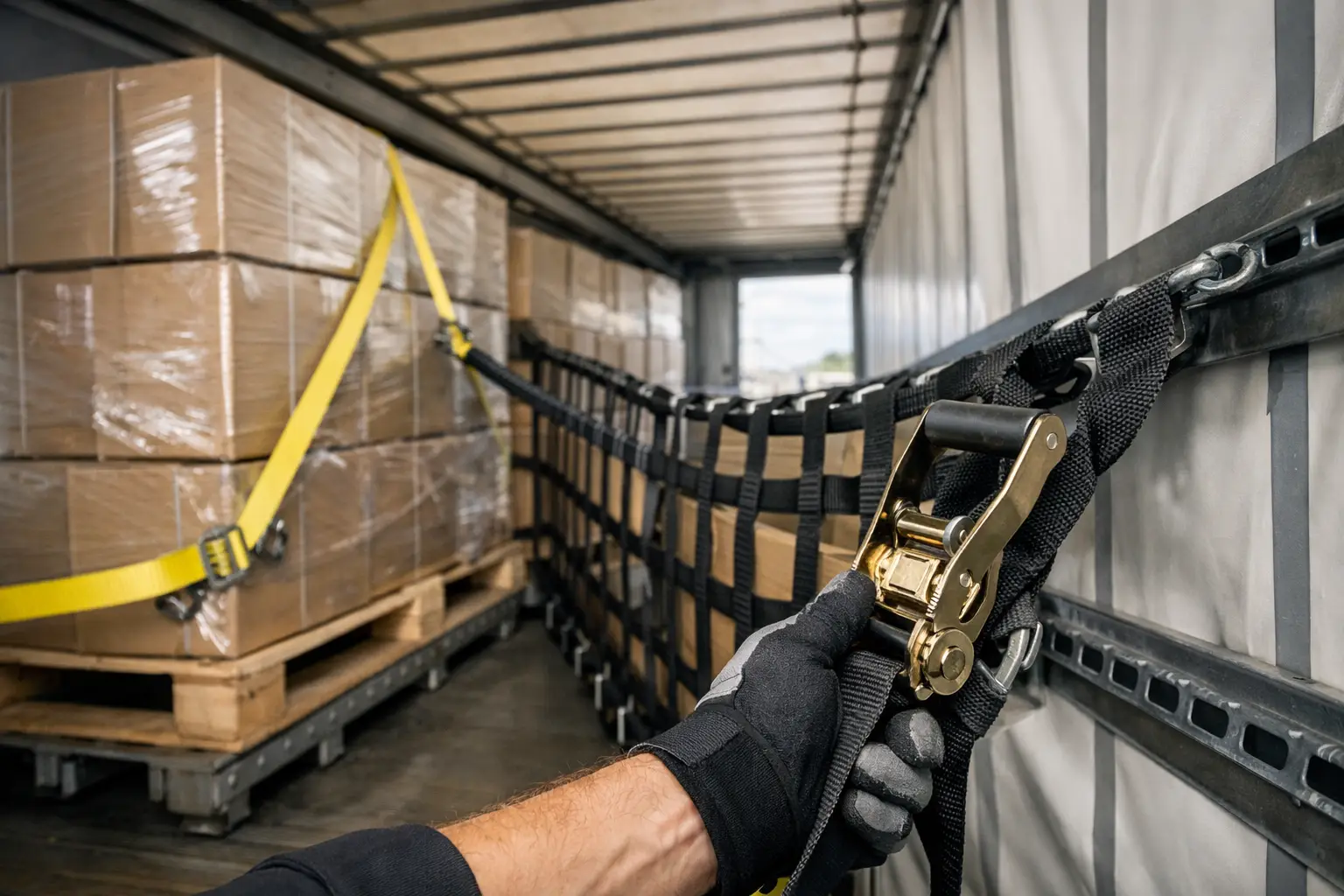
A curtain-side truck can be loaded, sheeted and ready to leave while the freight inside is still capable of moving. That is the real test of internal freight restraint: not whether the load looks secure at the depot, but whether it remains controlled through braking, cornering, uneven roads and multiple deliveries.
For Australian fleet operators, owner-drivers and transport managers, load restraint is a safety obligation with direct consequences for productivity. A restraint method that takes too long, requires repeated climbing or puts drivers beside moving traffic can create risk before the truck has travelled a kilometre. The right internal system should secure freight effectively while reducing the physical effort required on every load.
What Internal Freight Restraint Does
Internal freight restraint controls the movement of freight within the truck body. In tautliners and curtain-sided vehicles, it provides a practical way to restrain pallets, cartons, stillages and other compatible loads without relying on the curtain as the primary restraint method.
The purpose is straightforward. Freight needs to be prevented from sliding, tipping, rolling or shifting in a way that affects vehicle stability, damages product or creates a hazard when the curtain is opened. The restraint arrangement must suit the load, the vehicle and the conditions of transport.
A curtain is there to protect the load from the weather and provide enclosure. It is not automatically a substitute for a properly designed load restraint method. Operators need to consider the forces generated in normal transport, particularly forward forces under braking and sideways forces through turns or evasive manoeuvres.
That is why the restraint system should be part of the loading plan, not an afterthought once the pallets are already on the deck.
Why Manual Methods Can Slow a Fleet Down
Traditional internal restraint often means handling straps, reaching over freight, climbing into the body, moving around open curtains and repositioning equipment at each stop. Any one task may seem minor. Across a full day of pick-ups, deliveries and mixed loads, it becomes a significant labour and safety issue.
Manual handling exposure is not limited to heavy lifting. Reaching above shoulder height, twisting to tension a strap, working from an unstable position and repeatedly entering and exiting the truck body all add up. Drivers can also be exposed to passing vehicles, poor weather and uneven ground when loading roadside or in tight customer yards.
The operational cost is just as real. If restraint takes several extra minutes per stop, a multi-drop vehicle loses productive time quickly. Delays can then flow into missed booking windows, driver fatigue and pressure to rush the final loads of the day.
This does not mean every conventional strap arrangement is unsuitable. For a low-frequency operation with consistent freight and easy access, it may remain practical. But for fleets running tautliners on regular distribution work, the better question is whether the existing process asks drivers to do more manual work than necessary.
A Better Approach to Internal Freight Restraint
A purpose-designed internal freight restraint system brings the restraint point to where the operator can use it safely and efficiently. Rather than having to climb into the vehicle or throw straps over freight, the system can be operated from the ground using installed track, a retractable bungee unit and an extendable pole with hook.
The result is a more controlled loading process. The operator can position the restraint across the load, apply tension and complete the task with less climbing, less reaching and fewer unnecessary movements around the truck.
For curtain-sided trucks, this approach is particularly useful because access is one of the main advantages of the vehicle type. There is little value in fast side loading if the restraint process then requires the driver to climb across the deck to finish the job.
StrapNGo is designed specifically for tautliners and curtain-sided trucks, using a patented Australian-made system that supports safe, low-labour freight restraint. Installed through truck body builders and stockists across Australia, it can be configured to suit the working layout of the vehicle rather than forcing a generic process onto the operator.
Safety Starts Before the Truck Moves
Good restraint practice starts with assessing the freight before loading begins. The load type, weight, packaging, pallet condition, centre of gravity and delivery sequence all affect the right restraint arrangement.
A stable, square pallet of uniform cartons is different from irregular machinery, long product or freight with a high centre of gravity. Some loads need more than one form of control. Blocking, containment, direct restraint and friction can all have a place depending on the job.
The truck itself also matters. Restraint equipment must be compatible with the truck body, fitted correctly and used within its intended capacity. Tracks, fittings and anchor points need regular inspection for wear, damage, deformation or loose hardware. A restraint system is only as dependable as the vehicle structure and fittings supporting it.
Drivers should not be expected to make assumptions at the loading dock. Clear loading procedures, appropriate training and equipment that is simple to operate make it easier to apply the same standard every time. That consistency is valuable when a fleet has different drivers, changing freight and demanding schedules.
Check the load at each stop
A load can change during the run. Removing freight from the rear may leave gaps, alter support for remaining pallets or change the way restraint is applied. For multi-drop work, the driver should check that the remaining freight is still secure before continuing.
This is especially relevant where the load has been exposed to repeated braking, rough roads or delivery sites with sloping access. A quick check is far easier than dealing with shifted freight behind an opened curtain.
Productivity Is More Than Faster Loading
When transport businesses talk about productivity, the focus often goes straight to loading time. That matters, but the wider benefit of a well-designed restraint process is reduced disruption.
Less manual handling can mean fewer awkward tasks at the end of a long shift. Easier operation can help drivers complete restraint correctly without shortcuts. Ground-level access can reduce the time spent climbing in and out of the truck body. These improvements support a safer workday while keeping the vehicle moving.
There is also a recruitment and retention benefit. Professional drivers notice whether equipment makes their job harder or helps them get it done properly. Fleets that invest in practical safety equipment send a clear message that driver time and wellbeing are taken seriously.
For workshop and operations managers, standardising restraint equipment across compatible vehicles can simplify training and inspections. It can also give replacement drivers a familiar system to work with, rather than a different arrangement in every truck.
Selecting the Right System for Your Fleet
The right internal freight restraint setup depends on the freight task. Start with the truck type and body configuration, then consider the loads carried most often, the number of drops, loading locations and who will operate the equipment.
A metropolitan distribution fleet may prioritise speed and frequent side access. An interstate operator may place more emphasis on maintaining restraint across long distances and variable road conditions. A mixed fleet needs a system that can be installed consistently across different vehicle makes and body designs.
Compatibility should be checked early, particularly when ordering new equipment or planning a body build. A system suited to major truck brands such as Isuzu, Iveco, Fuso, Hino, Sitrak, UD Trucks, Mercedes-Benz and Scania gives fleets more flexibility as vehicles are replaced or added.
It also pays to involve the people who use the trucks. Drivers can identify where current loading methods create delays, awkward reaches or unnecessary climbing. Body builders and workshop teams can confirm the best installation position and ensure the equipment integrates properly with the truck body.
Make Restraint Part of the Daily Standard
The best restraint system is the one drivers can use correctly, every load and every shift. Keep the process practical: inspect equipment, assess the load, apply the appropriate restraint, recheck after deliveries and report damaged components before the truck returns to service.
For fleet operators, the opportunity is clear. Internal freight restraint should protect the load, but it should also protect the person securing it. Choose equipment that fits the truck, suits the freight task and helps drivers complete the job safely without wasting time at the side of the road.