
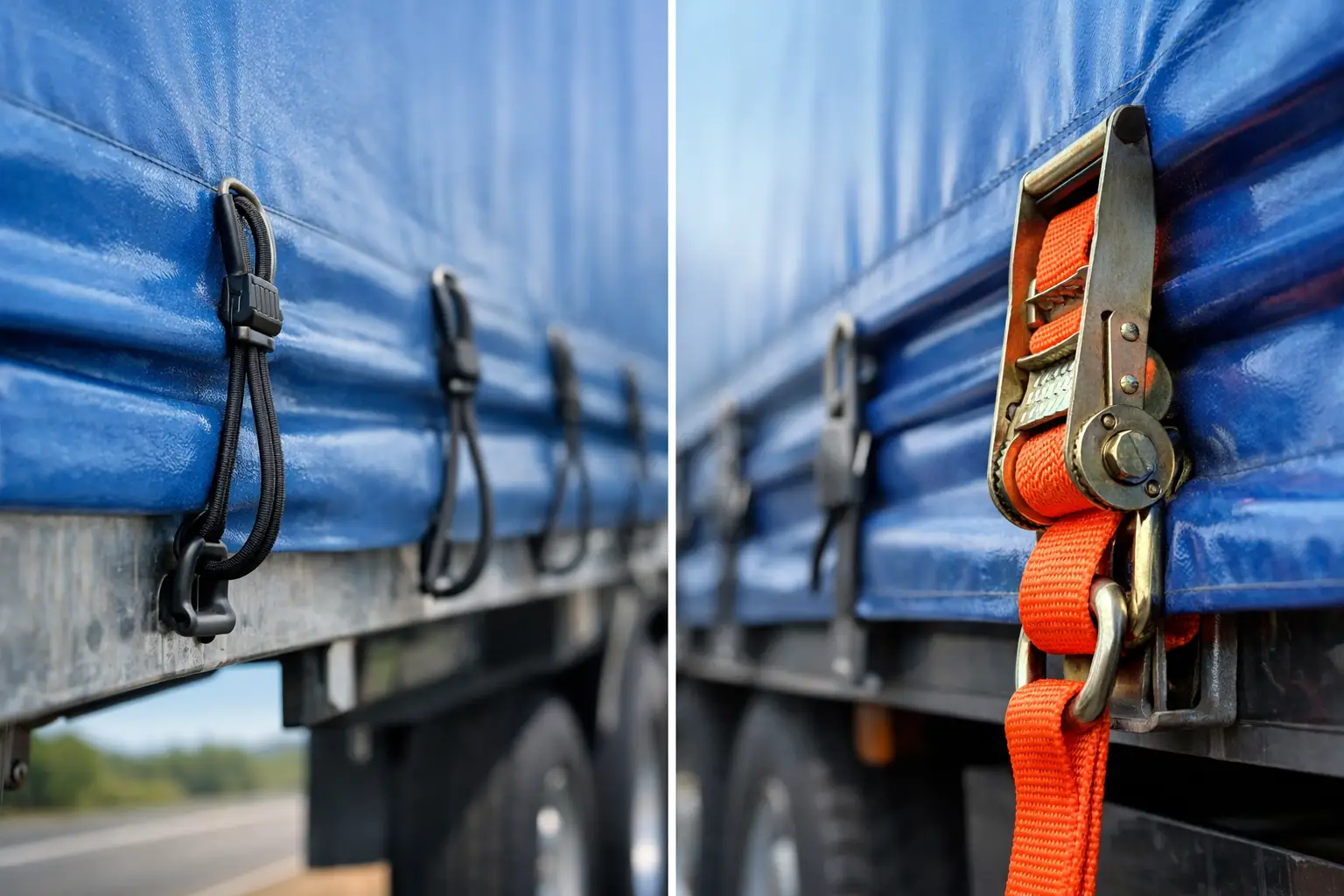
A driver standing on the side rail, reaching above shoulder height to throw and tension a ratchet strap, is dealing with more than a slow loading process. They are managing manual handling, working-at-height exposure and pressure to get the truck back on the road. The choice between bungee units versus ratchet straps matters because the restraint method affects how safely and consistently that job is done every day.
For curtain-sided trucks and tautliners, neither option is automatically right for every load. Ratchet straps remain a proven and necessary restraint method for many freight tasks. A purpose-designed bungee unit system can, however, remove repetitive handling steps and improve loading efficiency where the freight, truck body and operating process are suited to it.
Bungee Units Versus Ratchet Straps: The Core Difference
A ratchet strap is manually positioned over or around freight, connected to an approved anchor point, then tightened with a ratchet. Its strength is flexibility. It can be applied in different configurations to suit awkward shapes, mixed loads and individual restraint requirements.
A bungee unit is part of a fixed load restraint arrangement. In a tautliner application, the unit is generally installed with compatible track and restraint hardware inside the truck body. The bungee provides controlled tension, while an extendable pole with hook allows the operator to engage or release the restraint from ground level in many operating situations.
The difference is not simply elastic tension versus mechanical tension. It is a difference in workflow. Ratchet straps rely on the operator carrying, throwing, tensioning, releasing and stowing each strap. A fixed bungee-based system is designed to keep the restraint equipment where it is needed, ready for the next load.
Where Ratchet Straps Still Make Sense
Ratchet straps are widely used because they are adaptable. For irregular freight, one-off jobs, open-deck applications and loads requiring a specific lashing arrangement, they give operators options a fixed system may not.
They are also familiar. Most drivers know how to inspect a strap, identify damage and operate a ratchet. That familiarity is useful, but it should not be mistaken for a risk-free process. A strap can be twisted, incorrectly routed, poorly tensioned or attached to an unsuitable point. Hardware, webbing and anchor locations all require inspection before use.
Ratchets also have a place as supplementary restraint. A tautliner carrying mixed freight may need a combination of methods, depending on the load layout, load weight, movement risk and the restraint plan. The curtain itself is generally not a load restraint device, so the freight must be properly restrained inside the body.
The trade-off is labour. Across a full shift, manually fitting multiple straps creates repetitive reaching, pulling and winding. If a driver is climbing, stretching or working close to traffic to complete the task, the cost is not just measured in minutes.
Why Bungee Units Suit Repetitive Tautliner Work
For fleets moving regular palletised or unitised freight in curtain-sided bodies, a bungee unit can make daily restraint work more controlled and efficient. The equipment remains mounted in the truck, reducing the need to retrieve loose straps, untangle webbing or find somewhere to stow it after unloading.
When paired with correctly installed track and compatible restraint components, the operator can secure the load with less physical handling. An extendable pole with hook can further reduce the need to climb or reach into difficult positions. That is a practical safety improvement for drivers completing the same task many times a day.
A fixed system also supports consistency. The equipment is in a known position and the operating sequence can be standardised across a fleet. This helps with driver training, pre-start checks and supervision, particularly where multiple drivers use the same vehicle.
StrapNGo’s patented Australian-made system is designed around this type of tautliner operation: safe and secure freight restraint with minimal labour. It is not intended to replace sound load planning. It is intended to make a suitable restraint process easier to carry out correctly, shift after shift.
Productivity Is More Than Faster Loading
Saving time on each restraint point can add up over a day, but productivity is broader than speed. A system that reduces climbing, handling and setup can help drivers maintain a steady loading routine without unnecessary physical strain.
It can also reduce the time lost to damaged or misplaced loose straps. Webbing dragged across the ground, caught in doors or left exposed to weather is more likely to create inspection and replacement work. Fixed components still need regular inspection, but they are less likely to disappear from the truck between jobs.
For fleet operators, the real question is whether the system reduces avoidable work without compromising restraint performance. On repeat freight runs, that answer is often clear. On highly variable work, the answer may be a combination of fixed restraint equipment and ratchet straps kept available for specific loads.
Safety Considerations for Both Methods
No restraint system should be selected on convenience alone. The load must be assessed before it is secured. Weight, dimensions, packaging, friction, centre of gravity, available restraint points and the likely forces during braking, cornering and acceleration all affect the required method.
A bungee unit must be installed as part of an engineered, compatible system and used within its intended application. Track condition, fixings, hooks and restraint hardware need routine inspection. If equipment is bent, worn, damaged or not operating as intended, it should be taken out of service until it is checked or replaced.
Ratchet straps require the same discipline. Inspect webbing for cuts, abrasion, burns, contamination and stitching damage. Check ratchets, hooks and anchor points for distortion, corrosion or cracking. Never assume a strap is acceptable because it was used yesterday.
Most importantly, the selected arrangement must meet applicable load restraint requirements and the vehicle’s operating conditions. A safer operating method is valuable only when it provides adequate restraint for the actual load.
Choosing the Right Method for Your Fleet
Start with the work your trucks do most often. If your tautliners carry similar palletised freight on regular distribution runs, a fixed bungee unit system may offer a strong safety and productivity case. It can reduce manual handling and create a more repeatable process for drivers.
If your vehicles carry changing, oversized or irregular loads, ratchet straps will likely remain essential. Their flexibility is difficult to replace when every load presents a different challenge. This does not mean the fleet must choose one method exclusively. Many operators benefit from a primary fixed system for common freight, with ratchet straps available where the load plan calls for them.
Also consider the truck body. Retrofitting or specifying a system during body construction should be planned with an experienced installer or truck body builder. Correct track placement, hardware compatibility and access for the driver will determine whether the system delivers the intended result in real operating conditions.
Questions Worth Asking Before You Specify
Before making a decision, assess how often drivers manually tension straps, whether they climb or overreach during loading, and how much time is spent handling loose restraint gear. Review the freight profile across the fleet rather than basing the decision on an unusual job.
Ask whether the system will work across your truck makes and body configurations, how it will be inspected and maintained, and what driver instruction is required. A restraint solution should fit the operation, not force drivers to work around it.
The best choice is the one that gives your drivers a clear, repeatable way to restrain the loads they carry most often. Where a bungee unit system fits that work, it can turn a repetitive manual task into a safer, more productive part of the loading routine.