
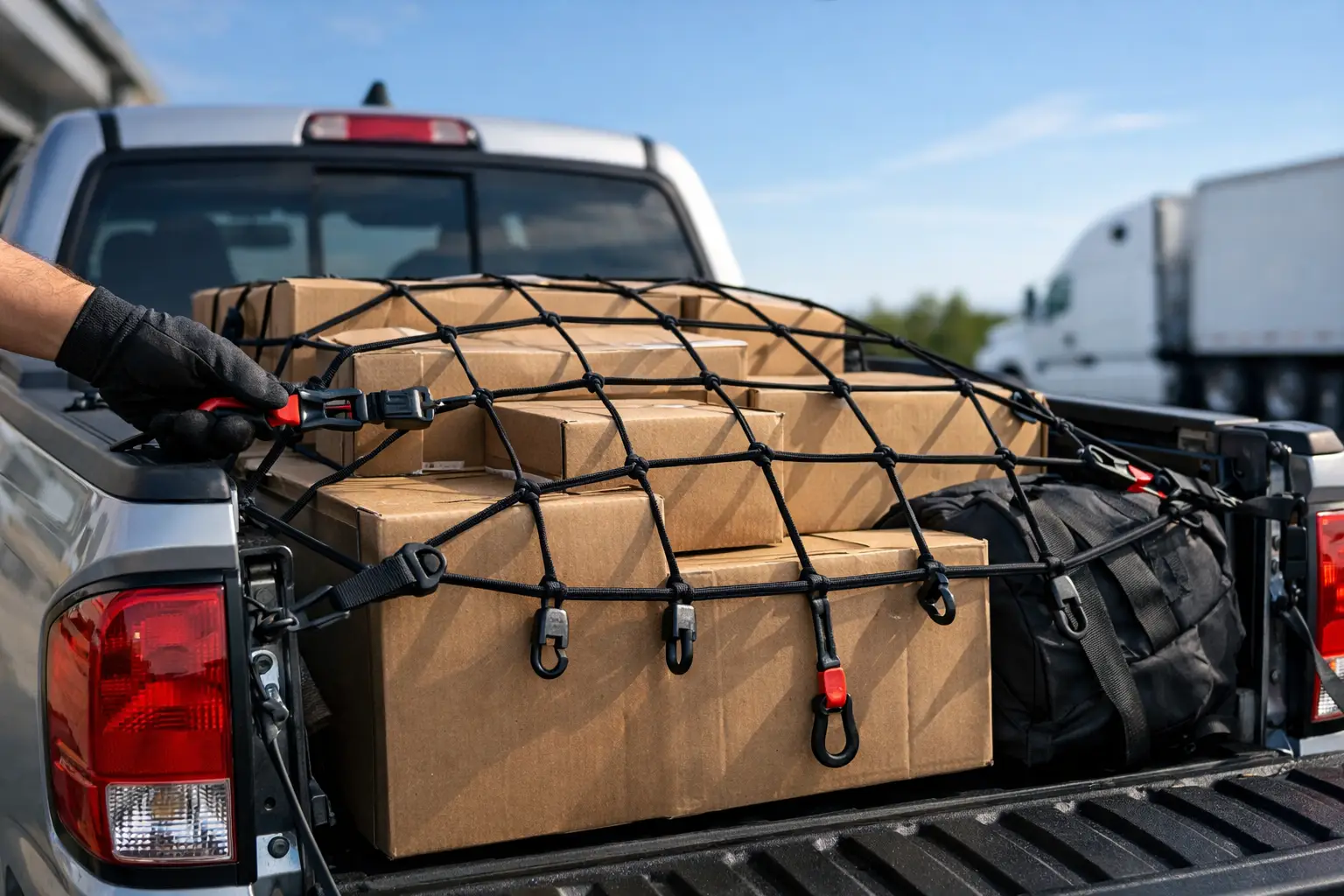
A bungee system is only useful if it saves time without creating another handling risk. The best truck bungee systems for tautliners and curtain-siders keep restraint equipment accessible, reduce the need to climb or reach across a load, and support a consistent loading process from the first stop to the last.
For fleet operators, the decision is not about fitting another accessory to the truck body. It is about reducing strain on drivers, improving turnaround times and helping crews secure freight properly under real operating conditions. That means wet yards, tight delivery windows, mixed loads and drivers who need equipment that works every time.
What a truck bungee system needs to do
In a curtain-sided truck, bungees and associated restraint hardware can play an important part in managing straps and keeping equipment positioned for use. The right system should make it easier for the driver to access and deploy the restraint arrangement without unnecessary manual handling.
A practical setup starts with a purpose-designed bungee unit, correctly installed track and a means of reaching the equipment from ground level where possible. The components need to work together. A quality bungee on its own will not solve a poor loading process, just as a good track is of limited value if the driver still has to stretch, climb or work in an unsafe position to use it.
The system must also suit the truck body and the freight task. A local distribution truck carrying consistent palletised loads has different demands to an interstate tautliner handling irregular industrial freight. In both cases, restraint arrangements must be appropriate for the load and meet the operator’s safety and compliance requirements.
Best truck bungee systems: what separates them
The best truck bungee systems are built around repeatable, lower-labour use. They should allow drivers to manage straps efficiently while keeping the equipment controlled and out of the way when not in use.
A purpose-designed bungee unit
Look for a unit designed specifically for commercial truck use, rather than a general-purpose elastic tie-down adapted for the job. The bungee needs to hold and return equipment predictably through repeated daily use. It should be manufactured from quality materials that can stand up to vibration, weather, dust and the constant movement associated with freight work.
The attachment method matters as much as the elastic component. A poorly fitted unit can interfere with curtains, straps or load-space access. A well-designed unit keeps the working area orderly and supports the intended restraint process.
Compatible track and mounting hardware
Track provides the fixed mounting point that makes the system usable in a tautliner or curtain-sided body. It must be suited to the vehicle’s construction and installed in the correct position for the loading method.
There is no one placement that suits every truck. Body dimensions, curtain configuration, freight profile and existing restraint equipment all affect the installation. This is why fleet operators should work with experienced truck body builders or installers, rather than treating the job as a simple bolt-on purchase.
Ground-level operation where possible
The strongest safety benefit comes from reducing high-risk movement. If a driver needs to climb, balance on a tyre or overreach to retrieve a strap, the process has already introduced avoidable risk.
An extendable pole with hook can make a major difference here. It enables the driver to engage or retrieve the required equipment while remaining on the ground in many operating situations. That reduces physical strain and can help create a more consistent routine across the fleet.
Fit for the working environment
Australian freight operations are hard on equipment. Heat, rain, road grime, vibration and frequent loading cycles quickly expose weak components. Choose hardware made for commercial service, with a design that can be inspected easily and maintained without excessive downtime.
Australian-made systems also offer a practical advantage for local operators. Parts availability, installer support and a manufacturer that understands local truck bodies and operating conditions all matter when equipment is working across a fleet every day.
Safety is more than keeping straps tidy
A truck bungee system should support safe freight restraint, not be mistaken for freight restraint by itself. The load must still be assessed, positioned and restrained using the appropriate rated equipment and operating procedure. The bungee and track arrangement help manage that equipment and make the task safer to perform.
This distinction is important. A system that makes straps faster to access can improve productivity, but only if the driver can still complete the full restraint process correctly. Cutting corners to save a few minutes is not a productivity gain when it leads to damaged freight, a roadside issue or an injured driver.
For operations managers, the best result is a process that is easy to teach and easy to verify. Drivers should know where the equipment is, how it is retrieved, how it is returned and when to report wear or damage. Standardising the setup across similar vehicles makes this far easier than relying on individual workarounds.
Assess your truck before choosing a system
Before specifying equipment, inspect the truck body and document the actual loading task. Consider the curtain layout, available mounting locations, internal height, strap arrangement and the types of loads carried most often. Also consider who loads the vehicle. A regular depot team may develop efficient routines, while multi-drop drivers need a setup that remains practical during repeated roadside deliveries.
Ask whether the system will create clear access or add clutter. Equipment should not obstruct the curtain operation, foul on freight or create snag points. It should also be positioned so routine pre-start and load checks remain straightforward.
For mixed fleets, compatibility deserves close attention. Trucks from Isuzu, Iveco, Fuso, Hino, Sitrak, UD Trucks, Mercedes-Benz and Scania can have different body configurations, even where the freight task is similar. The body builder and restraint installer should assess each vehicle rather than assuming a single layout will work everywhere.
Installation quality affects performance
A quality product fitted poorly will not deliver the intended safety or productivity benefit. Installation needs to account for the truck body’s structure, the track location, curtain movement and the driver’s operating reach.
Professional installation through an established truck body builder or qualified stockist provides more than convenience. It helps ensure the system is fitted as intended and integrated with the vehicle’s existing equipment. It also gives fleet managers a clear point of contact for future additions, inspections or replacement components.
StrapNGo’s patented Australian-made system is designed around this practical integration, combining the bungee unit, track and extendable hooked pole to reduce manual handling in tautliner and curtain-sided applications. The value is in the complete operating method, not a single component purchased in isolation.
Do not overlook inspection and driver feedback
Bungees, hooks, tracks and mounting points should be included in regular vehicle inspections. Check for fraying, loss of elasticity, damaged hooks, loose fixings, corrosion and anything that affects smooth operation. Equipment that is difficult to use is more likely to be bypassed, so small defects should be addressed before they become a daily frustration or a safety issue.
Driver feedback is equally useful. Drivers will quickly identify whether a mounting position is awkward, whether a pole length suits the body height or whether a particular freight profile needs a different approach. A fleet that listens to this feedback can refine its setup before minor issues become normalised.
The right bungee system should make the safe method the easy method. When drivers can access, use and stow restraint equipment with minimal effort, the truck spends less time waiting in the yard and the people doing the work face fewer unnecessary risks.