
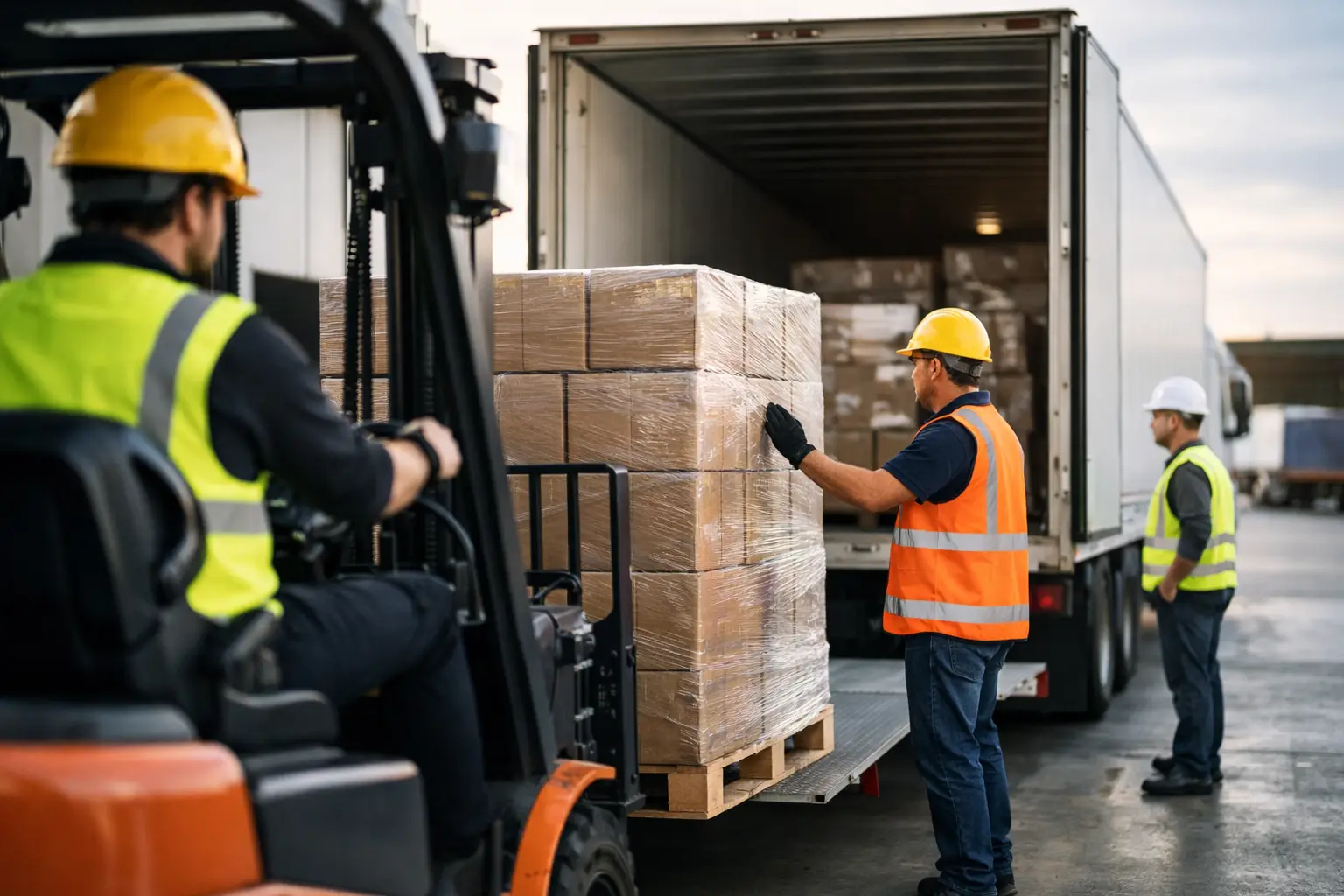
A near miss during loading rarely looks dramatic on paper. It is a driver overreaching under a curtain, climbing for a strap angle that never felt right, or rushing a reload on the shoulder because the freight was not restrained properly the first time. That is where freight loading safety lives – not in slogans, but in the repeated decisions that either reduce risk or build it into every run.
For Australian operators running tautliners and curtain-sided trucks, loading safety is tied directly to labour, turnaround time and compliance. If the restraint method is awkward, slow or physically demanding, people find workarounds. Those workarounds are where injuries, product damage and roadside exposure start costing real money.
What freight loading safety actually means on the job
Safe loading is often treated as a compliance box, but operators know better. The real standard is simple: can the freight be loaded, restrained and delivered without putting the driver, loader or other road users at unnecessary risk?
That depends on more than whether a truck carries straps. It comes down to how the restraint system works inside the body, how often workers need to climb, reach or reposition themselves, and how repeatable the process is across different freight types. A system that looks acceptable in the yard can still create risk if it relies on high manual effort, awkward body position or inconsistent strap placement.
For fleets, the strongest loading process is the one people can follow every day under pressure. If a restraint method requires too much time or too much physical strain, safety and productivity start pulling against each other. In practice, they should support each other.
The biggest freight loading safety risks in tautliners
Curtain-sided operations come with a specific set of loading hazards. The first is manual handling. Traditional restraint methods often mean repeated lifting, pulling and tensioning. Over one load that may seem manageable. Over a week, a month or a full driving season, shoulders, backs and knees tell a different story.
The second risk is working in exposed positions. Drivers and loaders can end up on uneven ground, close to traffic, or leaning into awkward spaces to retrieve straps and secure freight. That risk increases again during multi-drop work, where speed becomes part of the job and restraint is adjusted several times a day.
The third is inconsistency. Different drivers have different habits. Different freight profiles need different restraint decisions. Without a clear, built-in system, businesses rely heavily on individual judgement and experience. Experienced drivers are valuable, but safety should not depend on memory alone.
Then there is load movement. Even where a driver has made a genuine effort, poor strap placement, damaged components, uneven tension or rushed loading can allow freight to shift in transit. Once a load has moved, the next restraint check becomes more hazardous and the risk to the truck, product and public rises fast.
Why slower does not always mean safer
Some operators assume the safest method is simply the most cautious and time-consuming one. That sounds sensible, but it misses what actually happens in working fleets. If a restraint method adds too much time, people compensate somewhere else. They skip a safer sequence. They stretch to reach instead of repositioning the truck. They rush a final check because the delivery window is already slipping.
That is why loading systems need to do two jobs at once. They need to improve control of the freight, and they need to reduce the physical effort and delay involved in securing it. When those two outcomes line up, safety procedures are far more likely to be followed properly.
This is also where many businesses underestimate hidden cost. An awkward loading method might not trigger an incident every day, but it can still drive fatigue, slow depot flow, create workers’ compensation exposure and chip away at delivery performance. Those costs rarely sit neatly in one line item, but they are there.
Building a safer loading process from the truck body inward
The strongest gains in freight loading safety often come from fixing the process at truck level, not just reminding drivers to be careful. A better loading process starts with the truck body setup and the restraint equipment fitted to it.
If the restraint point is easier to access, the worker is less likely to climb or overreach. If the system allows freight to be secured with minimal labour, there is less strain and less temptation to cut corners. If the truck body is fitted with equipment designed for curtain-sided work, restraint becomes part of the operating routine rather than an improvised task.
That matters for procurement and workshop teams as much as drivers. Safety is easier to manage when restraint hardware is standardised across the fleet and compatible with the truck bodies already in service. It also makes training cleaner. Drivers should not need to relearn a completely different restraint method every time they swap vehicles.
Where equipment design makes the difference
Not all restraint gear creates the same operational result. The basic question is whether the equipment reduces handling and improves control, or simply shifts effort from one movement to another.
A purpose-built internal restraint system for tautliners can significantly lower exposure during loading because it keeps the process inside a consistent track and hardware arrangement. It also reduces the need for workers to wrestle with loose, badly positioned straps. That means better strap placement, fewer awkward reaches and less wasted motion between stops.
For fleet operators, this is where patented systems have a practical advantage when the design genuinely solves a daily problem. Australian-made equipment designed for local freight conditions is not just a branding point. It means the product has usually been developed around the real operating needs of transport businesses, truck body builders and drivers who use curtain-sided bodies every day.
A system like StrapNGo is relevant because it was built around the commercial reality that safety has to work at pace. The benefit is not theoretical. If drivers can secure freight with less physical effort and in less time, the safety result improves because the safer method becomes the easier method.
Training still matters, but it works better with the right setup
Even the best equipment will not fix a poor loading culture on its own. Drivers and loaders still need clear instruction on restraint points, load distribution, checking tension and recognising when a load profile needs extra consideration. Different freight types create different restraint demands, and no system removes the need for judgement.
But training becomes more effective when the hardware supports the procedure. It is easier to coach a repeatable process when the fleet uses the same method across multiple units. It is easier to audit. Easier to supervise. Easier to correct before bad habits settle in.
There is also a practical morale factor. Drivers are far more likely to back a safety process when they can feel the difference in the body at the end of a shift. Less pulling, less climbing and less awkward movement is not a minor convenience. It is part of injury prevention.
What operators should review right now
If you are assessing loading risk across a tautliner fleet, start by looking at what actually happens in the yard and on the road, not what the written procedure says. Watch a standard load. Watch a rushed reload. Watch a multi-drop run. The gap between policy and practice is usually where the real issues sit.
Pay attention to how often drivers work from awkward positions, how long restraint takes, whether components are easy to reach, and whether the method changes from vehicle to vehicle. Also look at fatigue points. A process may be technically compliant and still be creating unnecessary physical strain.
The right answer will depend on your freight mix, truck body setup and route profile. A metro delivery fleet has different pressure points from interstate general freight. But in both cases, the direction is the same. Reduce handling. Reduce exposure. Standardise the process. Make the safe method the efficient one.
Freight loading safety improves when operators stop treating restraint as a task at the end of loading and start treating it as part of vehicle design, fleet planning and daily workflow. That shift is usually where the biggest gains are found – not just fewer incidents, but smoother loading, stronger compliance and drivers who can get through the job with less strain.