
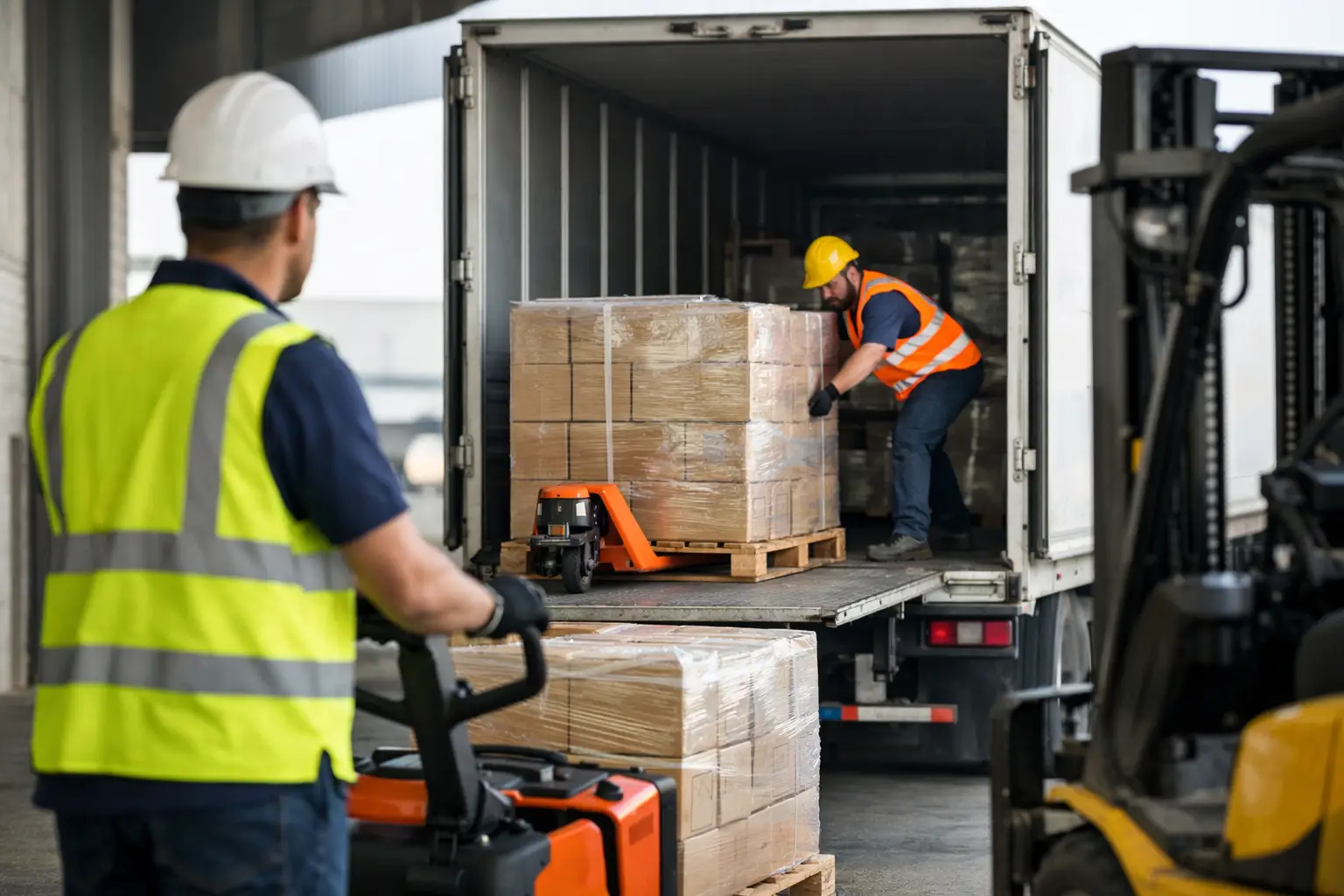
A truck can lose more time in the loading bay than it does on the road. For fleet operators and drivers running tautliners and curtain-siders, that delay usually comes down to two things – poor load planning and slow, high-effort restraint methods. If you want to know how to improve truck loading, the answer is not just to move faster. It is to make loading safer, simpler and more consistent every time the vehicle is turned around.
When loading is inefficient, the costs stack up quickly. Drivers spend longer on site, manual handling risk goes up, freight can shift in transit, and schedules start slipping across the day. On a busy fleet, those small delays become a serious productivity problem. The best loading systems reduce labour, reduce unnecessary movement, and help the driver secure freight without climbing, reaching or wrestling with restraint gear more than needed.
How to improve truck loading starts with the load plan
Most loading problems begin before the first pallet goes on. If the load sequence is unclear, the restraint process becomes reactive. Freight gets repositioned, straps are applied late, and the driver is forced to work around a layout that was never set up for safe unloading at the next stop.
A proper load plan should account for freight type, stop order, weight distribution and restraint points inside the body. Heavier items need to be positioned to support vehicle stability and axle compliance. Multi-drop freight needs to be arranged so the first delivery is accessible without disturbing the rest of the load. That sounds basic, but in practice it is where many operators lose time.
For mixed freight, consistency matters more than perfection. If your team loads similar runs differently every day, you create avoidable risk. Standard loading layouts, clear bay procedures and repeatable restraint methods give drivers a better chance of securing freight quickly and correctly.
Match the restraint method to the truck body
Not every restraint method suits a tautliner or curtain-sided truck. Traditional strap handling can be labour-intensive, especially when drivers are working roadside, in poor weather or under delivery pressure. If the restraint system is awkward to reach, slow to deploy or physically demanding, operators often end up relying on workarounds that cost time and compromise safety.
That is why the restraint method needs to match the way the truck actually works. A system designed specifically for tautliners and curtain-siders can reduce unnecessary climbing, stretching and repeated manual effort. It also helps create a cleaner loading process because the restraint equipment is already integrated into the vehicle rather than treated as loose gear that has to be managed separately.
Reduce manual handling to improve truck loading
If drivers are repeatedly pulling straps, reaching overhead, moving around unstable footing or climbing onto tyres and decks, the loading process has a safety problem. It also has a productivity problem. Physical effort slows the job down, especially across multiple stops or long shifts.
Improving truck loading often comes back to reducing touchpoints. The fewer times a driver has to reposition themselves or handle restraint gear, the better the outcome. That does not mean cutting corners. It means using equipment and procedures that allow freight to be secured with minimal labour while still meeting restraint obligations.
In practical terms, that may involve integrated track systems, restraint equipment that can be applied from safer positions, and tools that allow drivers to engage restraints without overreaching. The goal is straightforward – safe and secure freight with less strain on the person doing the work.
For many Australian operators, this is where equipment choice has a direct commercial impact. A patented restraint system built for curtain-sided trucks can help improve safety and productivity at the same time, because it addresses the real loading conditions drivers face every day.
Faster is only better when it is repeatable
Some loading methods look quick when an experienced driver is doing the job. That does not mean they are efficient across a whole fleet. If the process depends on individual technique, workarounds or physical strength, it becomes inconsistent as soon as the truck changes hands.
A better standard is repeatability. Can a new driver use the system correctly with minimal instruction? Can the same process be followed at a customer site, a depot or on the roadside? Can the freight be restrained properly even when time is tight? If the answer is no, the process is not as efficient as it seems.
Reliable loading performance comes from systems that are easy to deploy, easy to inspect and easy to use under pressure. That is how fleets reduce loading variability and protect delivery schedules.
Where loading time is usually lost
In most operations, time is not lost in one major failure. It leaks away through small inefficiencies. Drivers wait for forklifts because the load order was not clear. Freight is reworked because the restraint points were blocked. Curtains are opened and closed more than necessary. Straps need untangling, repositioning or replacing. None of this looks dramatic on its own, but together it adds cost to every run.
The fix is to look at loading as a system rather than a single task. Vehicle setup, freight placement, restraint access and driver movement all affect turnaround time. When one part is poorly designed, everything downstream slows down.
This is also why loading improvements should be measured on the floor, not assumed in the office. Watch where the driver walks. Watch how often they stop to adjust equipment. Watch where they have to reach or climb. Those are the points where productivity and safety usually intersect.
Equipment condition matters more than most fleets admit
Even a good loading process falls apart when hardware is worn, missing or inconsistent across vehicles. Damaged tracks, unreliable fittings and restraint gear that has seen better days all add hesitation to the job. Drivers compensate by taking extra time or avoiding certain restraint points altogether.
Routine inspection is not just about compliance. It is part of loading efficiency. If every truck in the fleet has the same layout and the same restraint setup, drivers spend less time working out what they are dealing with. Standardisation removes friction.
For operators managing multiple makes, compatibility also matters. Restraint systems need to fit into real fleet conditions, whether the body is on an Isuzu, Iveco, Fuso, Hino, Sitrak, UD, Mercedes-Benz or Scania. Practical fit-up and installer availability across Australia can make the difference between a solution that works on paper and one that is adopted properly.
Training should focus on real loading conditions
Toolbox talks and induction manuals have their place, but loading performance improves fastest when training reflects the actual freight task. Drivers need to know how to secure different load types, how to maintain restraint equipment, and how to work safely in variable site conditions.
That includes teaching what not to do. Rushing restraint because the site is busy, standing in unsafe positions to save a few seconds, or relying on damaged gear are all habits that creep in when the process is poorly supported. Good training reinforces a safer method and gives drivers equipment that makes the right choice easier.
For workshop managers and operations teams, this is where consultation helps. The people loading the truck every day will usually tell you where the hold-ups are. If they keep raising the same issues around strap handling, access or fatigue, those concerns are operational data. They should shape your loading setup.
How to improve truck loading without slowing the job down
The common mistake is to treat safety and speed as if they are in conflict. In well-run fleets, they support each other. A loading method that reduces manual handling, improves access and keeps restraint equipment where it should be will usually speed the task up as well.
The trade-off is that some improvements require upfront change. You may need to standardise truck bodies, upgrade restraint equipment, retrain drivers or work with body builders on a better internal setup. That takes planning and investment. But if the current process is causing delays, strain injuries, damaged freight or near misses, doing nothing has a cost as well.
The strongest results usually come from solving the loading task at the vehicle level. When the truck is fitted with a restraint system designed for safer operation inside tautliners and curtain-siders, the process becomes less dependent on effort and more dependent on good procedure. That is where productivity gains tend to hold.
StrapNGo was developed around that reality – safer restraint, minimal labour and practical use in working freight operations across Australia.
If you want better loading performance, start by looking at what your drivers have to do with their hands, their backs and their time. The right loading process should protect all three.