
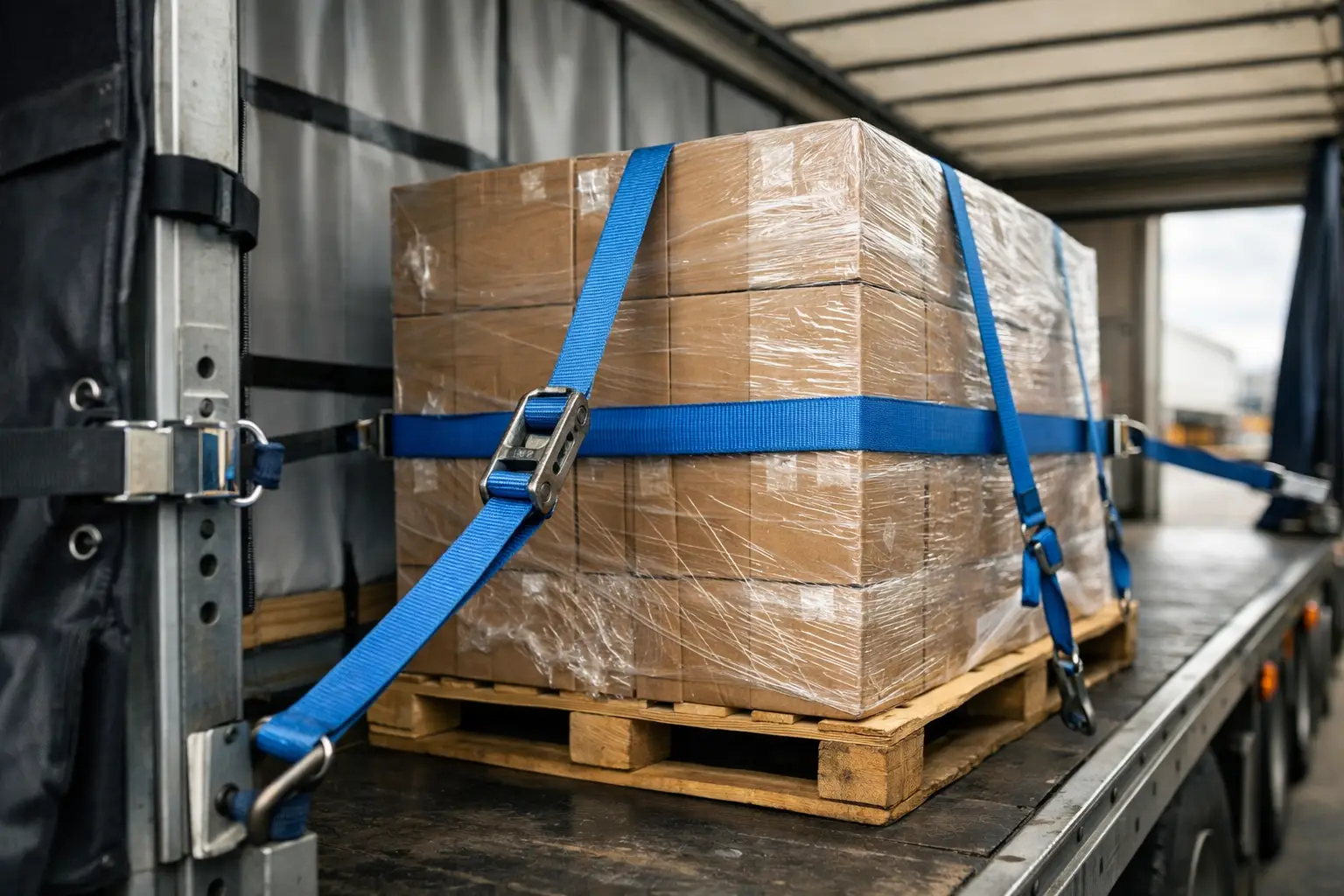
A pallet that shifts by only a few centimetres can change the whole risk profile of a load. On a tautliner, the driver may be dealing with unstable freight, a damaged curtain, extra time at the next stop and a serious manual handling task beside live traffic. A practical guide to safer pallet restraint starts with one principle: restraint must hold the load securely without making the person securing it take unnecessary risks.
For Australian fleet operators and owner-drivers, this is not simply about getting straps over freight. It is about selecting a system that suits the truck body, the load type, the delivery sequence and the people expected to use it every day. The safest process is usually the one that removes avoidable climbing, reaching, lifting and working in exposed roadside conditions.
Start with the load, not the restraint
Pallet restraint begins before the truck is loaded. Check the pallets themselves, the condition of the wrap, the stability of the stack and whether the freight is suitable to travel as loaded. A restraint system cannot correct a leaning pallet, split timber, loose cartons or product that has already moved within its packaging.
Load weight and distribution matter just as much. Place freight to maintain the vehicle’s required axle loads and keep the centre of mass as low and central as practical. Heavy pallets should not be left where they can gain momentum into an open section of the body. Where there are mixed weights, changing delivery orders or part loads, the restraint plan needs to allow for those changes rather than relying on a one-size-fits-all strap pattern.
The applicable load restraint requirements set the performance standard, but safe operation also depends on the exact freight and vehicle configuration. Dense palletised goods, lightweight boxed product, awkward overhangs and double-stacked pallets behave differently under braking, cornering and rough-road vibration. Assess each load on its own merits.
Choose restraint that matches a curtain-sided body
Curtains are weather protection. They are not a substitute for load restraint. A curtain-sided truck or tautliner needs a positive restraint method that controls forward, rearward and sideways movement in normal transport conditions.
Traditional webbing straps remain familiar and useful across many applications. However, the method can create risk when drivers need to repeatedly throw straps over high loads, climb for access, walk around the vehicle in poor conditions or reach across freight to retrieve loose webbing. Those tasks cost time, but more importantly they introduce exposure to slips, falls and shoulder strain.
A track-mounted restraint system can reduce much of that handling when it is correctly specified and installed. The system should be suited to the truck body’s structure, its intended loading pattern and the restraint forces it is designed to manage. Hardware must be in sound condition, correctly rated and fitted according to the manufacturer’s instructions.
For fleets running regular pallet freight, a purpose-designed tautliner system such as StrapNGo can keep restraint components accessible from ground level and reduce the labour involved in securing and releasing loads. The commercial benefit is straightforward: less time spent wrestling with straps can mean safer loading activity and better vehicle turnaround. It does not remove the need for a driver to inspect the load and make a sound restraint decision.
Ground-level access changes the task
The safest restraint process aims to keep the driver out of unnecessary high-risk positions. Ground-level operation can reduce the need to climb on decks, tyres or freight, and it can limit overhead throwing motions that become tiring over a long shift.
That advantage is strongest when the work area is organised. Drivers still need safe footing, clear access along the vehicle and enough space to use an extendable pole or other handling equipment without striking people, stock or infrastructure. If a site is congested, dark or exposed to moving plant, deal with those hazards before starting the restraint task.
A practical guide to safer pallet restraint
A reliable process is repeatable. It should be simple enough for regular drivers to follow under pressure, while giving them authority to stop when the load is not safe to secure. Before restraint is applied, confirm the vehicle is parked on stable ground, the brakes are applied and the loading area is controlled.
Inspect the freight first. Look for torn stretch wrap, crushed cartons, pallet feet that are not sitting squarely, gaps between units and any signs the load has shifted during forklift placement. Correct defects before the truck leaves the dock. Trying to pull an unstable pallet into position with a restraint device is not a safe substitute for reloading it properly.
Then position the restraint at the appropriate point for the pallet and load configuration. The restraint needs to engage in a way that prevents movement without damaging the product or creating an excessive angle that reduces effectiveness. Keep straps or restraint elements free of twists, sharp edges and pinch points. Where edge protection is required, use it.
Tension should be firm and controlled, not guessed. Too little tension can allow movement. Excessive tension can damage freight, deform packaging or overload components. Drivers should understand what correct engagement looks and feels like for the system they use, and supervisors should verify this through practical training rather than relying only on a written procedure.
Before closing the curtains, conduct a final walk-around. Check that restraint points are properly connected, loose ends are managed, access equipment is stowed and no pallet is leaning into a curtain. At multi-drop sites, repeat the check after each delivery. Removing one pallet may change the support and spacing of everything that remains.
Control the risks around the truck
Load restraint is often treated as a task performed at the truck, but the surrounding environment can be the greater hazard. A driver working on the traffic side of a vehicle, near a forklift lane or on uneven ground may be at risk even if the restraint system itself is well designed.
Plan the loading position so the driver can work away from traffic where possible. Use designated loading areas, maintain clear separation from forklifts and avoid restraint work while plant is operating immediately alongside the vehicle. At roadside deliveries, assess whether the task can be completed safely before opening the curtain. Poor visibility, narrow shoulders, wet surfaces and passing traffic may require a different approach or site support.
Weather deserves attention as well. Rain makes decks and footpaths slippery. Wind can move curtains unexpectedly and make loose straps harder to control. Heat and fatigue affect grip, judgement and patience. A system that minimises manual steps is valuable, but it must still be used with the conditions in mind.
Inspection and maintenance are part of restraint
A restraint system only performs as intended when its components are maintained. Drivers should inspect restraint equipment during pre-start checks and before use, looking for cuts, fraying, corrosion, bent fittings, damaged tracks, worn hooks and hardware that does not lock or release correctly.
Remove damaged equipment from service rather than making a temporary repair on the road. Small defects can become failures under load, particularly after repeated vibration and exposure to dust, water and freight-handling impacts. Keep inspection records that match the fleet’s maintenance process, and make sure replacement parts are compatible with the original system.
Truck body changes also deserve review. New flooring, repaired side structures, altered load layouts or added equipment can affect how restraint hardware works. Consult a qualified installer or truck body builder when modifying a restraint arrangement. A correctly installed system is as important as the equipment selected.
Train for judgement, not just procedure
A driver may know the steps for fastening a restraint but still face a load that does not fit the standard method. Training needs to cover why restraint positions change, when a pallet should be rejected, how to identify damaged components and when to escalate an issue.
Practical demonstrations are more useful than a toolbox talk alone. Show drivers how the system behaves under tension, how to use any pole or bungee component safely and how to secure different pallet heights and load gaps. Include new starters, relief drivers and warehouse staff who may influence pallet placement.
Fleet managers should also make reporting straightforward. If drivers believe a damaged track, awkward delivery site or poorly wrapped pallet will simply slow them down, defects may go unreported. A clear reporting process protects people and helps prevent recurring loading problems from becoming normal practice.
Safer pallet restraint is built into the loading routine, not added as a final chore before the curtains close. When freight is stable, hardware is accessible and drivers are not forced into unnecessary manual handling, the job is safer, faster and easier to repeat on the next run.