
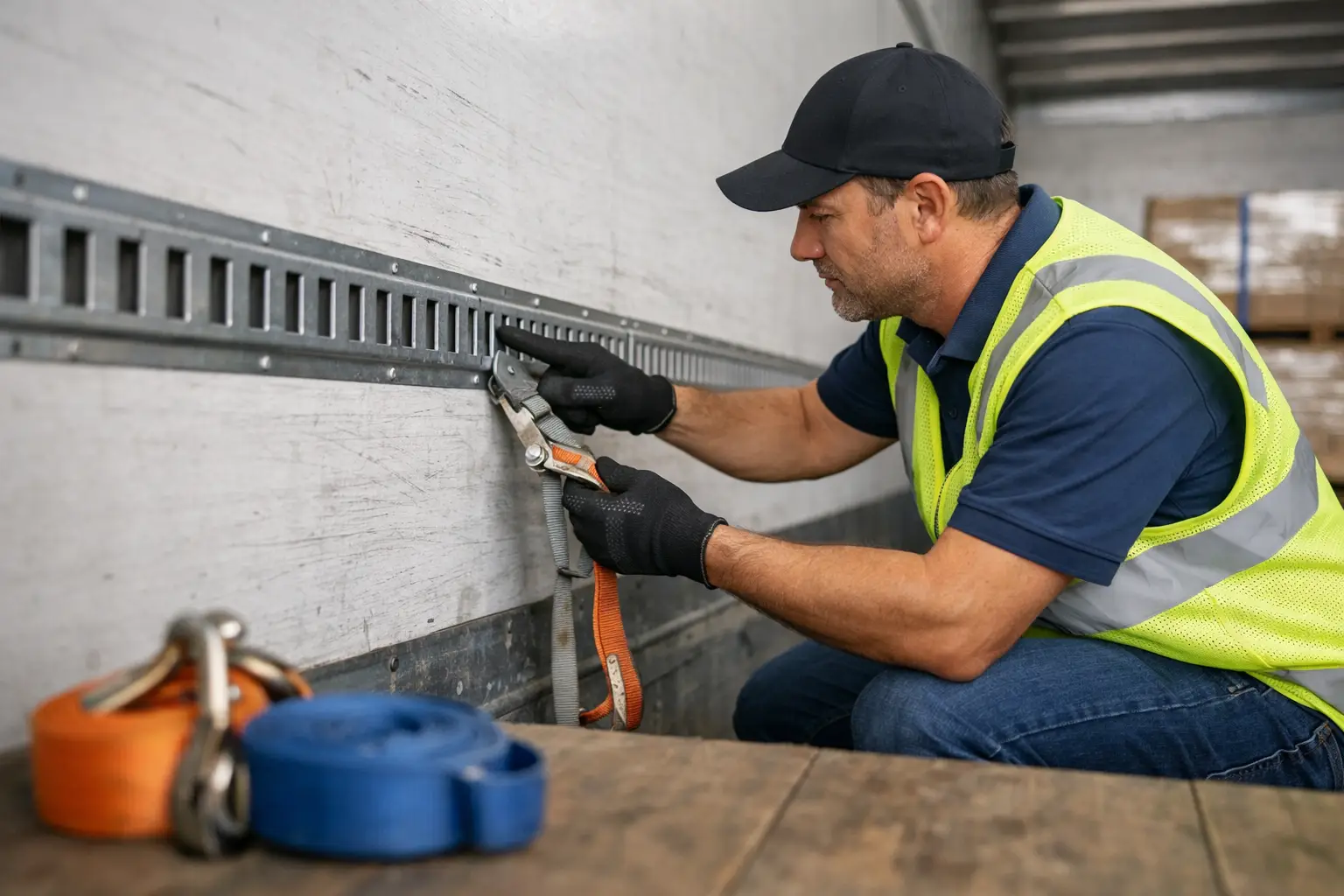
A restraint track can look serviceable from the ground and still have a problem that affects load security. Bent sections, loose mounting points, worn engagement areas and body damage are easy to miss when a truck is under loading pressure. Knowing how to inspect restraint tracks gives drivers, workshop teams and fleet managers a practical way to identify faults before freight is restrained and the vehicle leaves site.
For curtain-sided trucks and tautliners, the track is part of the restraint system, not just a mounting rail. If it cannot hold the intended restraint hardware securely, the system cannot deliver its designed performance. A short, consistent inspection before loading is far quicker than managing damaged freight, a roadside defect or an injury after a restraint point fails.
How to inspect restraint tracks before each load
Start with the truck parked on firm, level ground where it can be inspected safely. Open the curtains fully where required and make sure there is adequate light along the length of the body. Do not climb on tyres, pallets or freight to get a better view. Use approved access equipment if a section of track cannot be inspected safely from ground level or an appropriate platform.
Walk the full length of each track rather than inspecting only the area planned for the current load. Freight patterns change, and an unused damaged section may be needed later in the shift. Look along the track from each end where possible. This makes bends, dips and misalignment easier to see than a close-up inspection alone.
Check that the track is straight, securely mounted and free from obvious impact damage. Pay particular attention to sections near the rear opening, door posts, headboard and regular loading positions. These areas are more likely to be struck by forklifts, pallets, shifting freight or handling equipment.
Run a visual check over every engagement point, slot or profile used by the restraint fitting. The hardware should be able to locate correctly without forcing it into place. If a fitting binds, will not seat fully or can be withdrawn when it should be locked, stop and investigate. Do not assume the issue is minor because the rest of the track appears sound.
Check the mounting points and truck body
The condition of the track itself is only part of the inspection. A track can be undamaged while its mounting fasteners, support structure or surrounding bodywork has deteriorated.
Look for missing, loose or damaged fasteners. Watch for enlarged holes, pulled-through fixings, cracking around mounting locations or gaps between the track and the body. Rust staining, fresh paint damage and movement around a fastener can all indicate that the track has been loaded beyond its intended condition or that water has reached the fixing area.
Check the wall, post, frame or other structure supporting the track for cracks, distortion and signs of a previous repair. In a curtain-sided body, damage can be concealed behind liners, curtains or freight. If the track has moved, the body is bowed, or a mounting point no longer sits square, the issue needs assessment by a competent repairer or truck body builder.
A restraint track is not a substitute for a sound truck body. Its capacity and performance depend on the complete installed system, including the attachment method and the structure it is fixed to.
Look for wear, corrosion and contamination
Dirt, grit, pallet wrap, loose straps and residue can prevent restraint hardware from engaging as intended. Clear the track of loose contamination using a method that will not damage the track or create a slip hazard. Avoid coating engagement areas with unapproved lubricants. A slippery surface may attract dirt and can interfere with the way particular fittings lock into place.
Surface marks are not always a reason to remove equipment from service. However, deep gouges, sharp edges, crushed sections, heavy corrosion or visible metal fatigue are different. They can weaken the track, damage straps or bungee components, and stop fittings from seating correctly.
Inspect for:
- bends, twists, dents or flattened sections in the track profile
- cracks, splits, corrosion or sharp edges around engagement areas
- loose, missing or damaged fasteners and mounting brackets
- distorted truck body structure around the installation
- debris or damage that prevents restraint fittings from locking properly.
If there is doubt about the condition of a track, treat it as unserviceable until it has been assessed. A driver should never have to make a judgement call between keeping a schedule and using a restraint point that does not look right.
Test restraint hardware with the track
A visual inspection needs to be followed by a functional check of the hardware that engages with the track. Use the correct fitting for the installed track and follow the equipment manufacturer’s operating instructions. Similar-looking fittings are not automatically compatible, and mixing components can create an unsafe connection.
With no load applied, place the fitting into the intended engagement point and confirm that it locates fully and locks as designed. Check the release mechanism operates correctly. There should be no excessive movement, partial engagement or need to strike, force or modify the component to make it fit.
Inspect the connected restraint equipment at the same time. Check straps for cuts, abrasion, fraying, contamination and damaged stitching. Examine hooks, buckles, tensioners, bungee units and extendable poles for deformation, wear and secure operation. A sound track cannot compensate for worn restraint gear, just as a new strap cannot compensate for a damaged track.
For a patented system such as StrapNGo, use the designated hardware and installation configuration. The safe working performance of any integrated restraint system relies on its approved components being used together, not on improvised substitutions.
Know when a track must be removed from service
Some defects require immediate action. Remove the affected restraint position, or the truck where necessary, from service if the track is cracked, significantly bent, loose, badly corroded, damaged at a mounting point or unable to retain its correct fitting. The same applies where the supporting vehicle structure is distorted or cracked.
Tag or clearly identify the defective equipment so another driver cannot use it during the next load. Report the fault through the fleet’s maintenance process and record the location of the damage, the truck registration, the date and clear photographs where practical. This gives workshop staff enough information to plan a repair and helps identify repeat impacts at a particular depot or loading task.
Do not straighten a track with a bar, hammer it back into shape, weld it, drill extra holes or replace fasteners with whatever is available in the workshop. These fixes can alter the track’s strength and invalidate the intended installation. Repairs and replacements should be completed by a competent provider using suitable approved parts and fastening methods.
Build inspections into normal fleet practice
Pre-start checks catch visible daily damage, but they should not be the only inspection. A sensible fleet process also includes scheduled detailed inspections, particularly for trucks operating on rough roads, carrying awkward freight or working through high-turnover distribution environments. The right interval depends on usage, freight type, operating conditions, manufacturer guidance and the fleet’s maintenance plan.
After any load shift, forklift strike, collision, hard braking event or report of restraint hardware releasing unexpectedly, inspect the relevant track before the truck is loaded again. Even if the freight remained in place, the event may have placed unusual force on the restraint points or their mounting structure.
Good records matter. They show that inspections are being completed, make recurring faults visible and support better maintenance decisions. If one section of track is repeatedly bent near a loading bay, the answer may be driver training, a change to forklift access, improved load placement or protection for the body, rather than replacing the same component again.
The best restraint-track inspection is the one that happens before the straps are needed. Give the track a deliberate check, use only compatible equipment and remove doubtful components from service. That small discipline protects drivers, freight, equipment and the productivity of every run.