
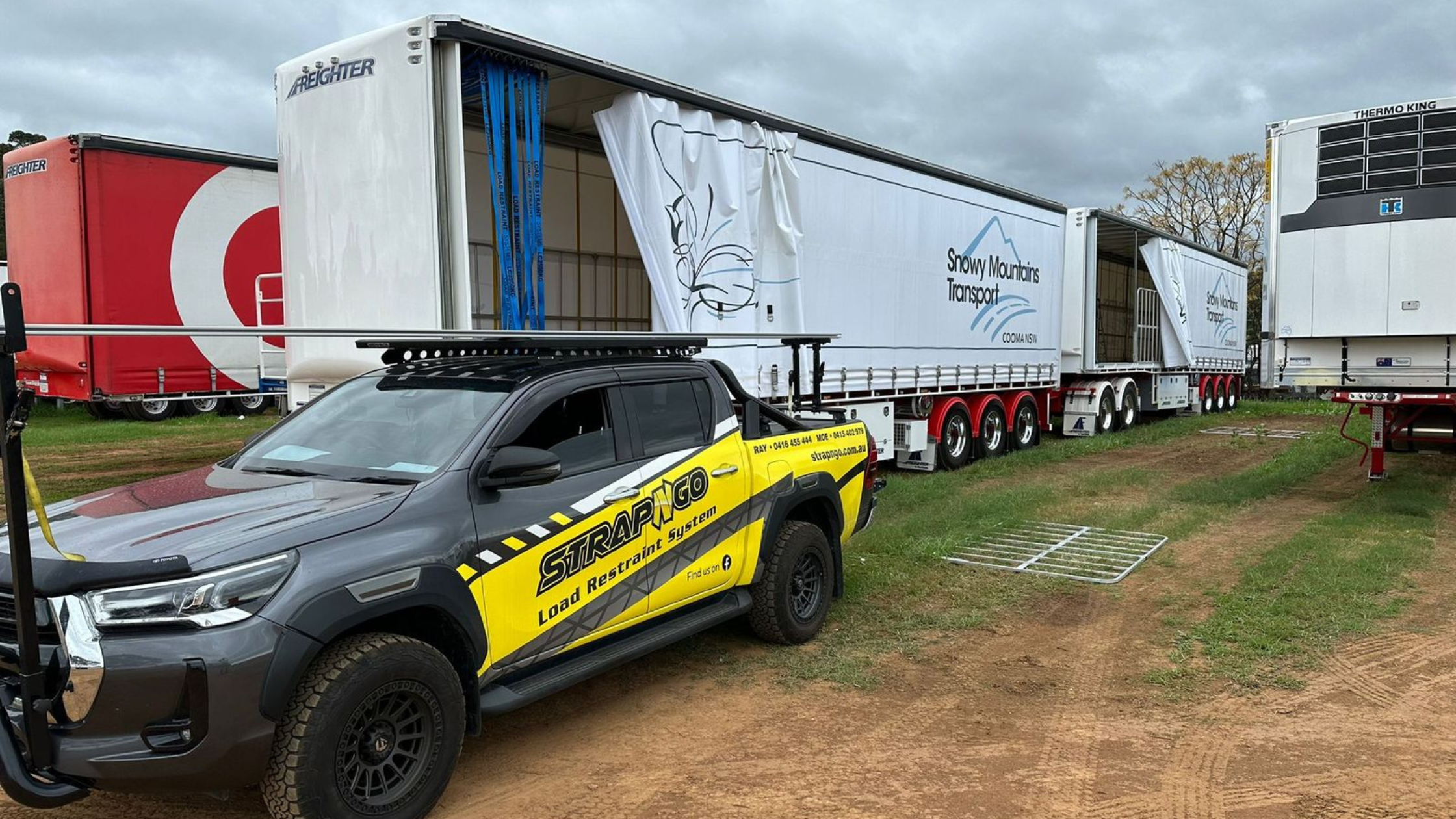
Every extra reach, climb and pull inside a tautliner adds up over a shift. If you want to reduce manual handling in trucks, the biggest gains usually come from changing the restraint process, not asking drivers to keep working around a poor one.
For Australian fleets, owner-drivers and body builders, this is not a minor workshop issue. Manual handling sits right in the middle of safety, compliance and productivity. When drivers are repeatedly throwing straps, stretching overhead, climbing on and off trailers or working close to traffic at the roadside, the risk is obvious. So is the cost. Injuries, delayed turnarounds, fatigue and inconsistent restraint practices all hit the operation.
Why manual handling remains a truck loading problem
Many restraint setups still depend on the driver doing too much physical work by hand. That often means lifting and positioning straps, reaching high into the body, bending awkwardly around freight and moving up and down the length of the truck multiple times to secure one load. On paper, each action looks small. In practice, repetition is what causes the problem.
Curtain-sided trucks and tautliners can be especially demanding when the restraint method has not been designed around daily use. If the system forces the driver to enter awkward spaces, handle heavy or tangled equipment, or work above shoulder height, the process becomes slower and less safe. That risk increases further when the load changes from job to job, weather conditions are poor, or the truck is parked in a less-than-ideal loading area.
This is why manual handling should be treated as a design issue, not just a behaviour issue. Training matters, but no amount of toolbox talks can fully compensate for a restraint system that creates unnecessary physical strain.
Reduce manual handling in trucks by changing the restraint method
The most effective way to reduce manual handling in trucks is to remove unnecessary physical steps from load restraint. That means looking closely at how the freight is secured, where the driver has to stand, how often they need to reach or climb, and whether restraint gear can be applied from a safer, more controlled position.
A well-designed system does more than hold freight in place. It should also reduce lifting, stretching and repeated handling. For fleets running tautliners, that can mean using an integrated restraint setup that allows straps to be positioned and secured with minimal labour, rather than relying on loose equipment that has to be dragged, thrown or manually fed into place every time.
This is where purpose-built systems make a practical difference. A patented restraint design that works with the truck body, rather than against it, can reduce the amount of manual effort required from the driver while also improving consistency across the fleet. That has direct value for operators who are trying to improve safety without slowing down the loading task.
What safer loading looks like in practice
A safer process is usually a simpler one. The driver should be able to secure freight without excessive reaching, without climbing where it can be avoided, and without repeated awkward movement along the tray or inside the body. Equipment should be accessible, predictable and easy to operate in real freight conditions.
In practical terms, that means restraint gear should stay organised and ready for use. It should not end up tangled, buried behind freight or positioned so high that the driver has to improvise just to access it. If an extendable pole or similar tool allows the job to be done from ground level or from a safer stance, that is not a convenience feature. It is a risk control.
Good loading flow also matters. If the sequence of loading and restraining is clumsy, drivers tend to make extra movements, backtrack, or handle the same equipment several times. That wastes time, but more importantly it increases exposure to strain and fatigue. A cleaner process reduces both.
The trade-off fleets need to think about
Not every truck body, freight profile or route pattern is identical, so there is no single answer that suits every operator. A metro distribution fleet with frequent stops may prioritise speed and repeatability. A regional carrier moving mixed freight may put more weight on flexibility across different load types. A body builder may be focused on installation practicality and compatibility with common makes.
Even so, the direction is clear. If a restraint setup depends heavily on manual force and repeated handling, it is likely costing more than it saves. The cheaper option at purchase can become the expensive option in operation when you factor in slower loading, higher injury risk and uneven driver uptake.
That is why it pays to assess manual handling as a whole-of-operation issue. Look at the loading bay, roadside deliveries, depot conditions, driver experience levels and the variety of freight being carried. The right system should support the way the truck actually works, not just the way it was originally specified.
Reduce manual handling in trucks without slowing the job down
A common concern is that safer processes will add time. In transport, that concern is understandable. If a restraint method feels slower, drivers and operations teams will resist it, especially when schedules are tight.
But in many cases, reducing manual handling improves speed because it removes wasted motion. Drivers spend less time untangling gear, repositioning straps, climbing in and out of the body or correcting poor restraint placement. The process becomes more repeatable, which means less variation between drivers and fewer delays caused by workarounds.
That is where Australian-made systems built specifically for tautliners can earn their keep. When the restraint process is designed for minimal labour and straightforward use, safety and productivity are not competing priorities. They work together. StrapNGo has built its patented system around exactly that outcome for curtain-sided trucks and tautliners used across Australian freight operations.
What to check when reviewing your current setup
If you are assessing whether your fleet needs a better solution, start with the loading task itself. Watch how drivers secure a normal load, not the ideal one. Look for the points where they have to overreach, bend awkwardly, manually reposition equipment or climb to complete a restraint task. Those are usually the areas where risk and lost time are concentrated.
Then consider consistency. If one experienced driver can secure a load quickly but another takes much longer or uses a different method, the system may be too dependent on individual technique. A better restraint setup should narrow that gap and make the safer method the easier method.
Compatibility matters as well. Any solution needs to work with the truck body and the fleet mix you already have. For many operators, that means choosing equipment that can be fitted through established truck body builders and works across common brands such as Isuzu, Iveco, Fuso, Hino, Sitrak, UD Trucks, Mercedes-Benz and Scania. If installation is difficult or inconsistent, adoption suffers.
Finally, think beyond the immediate restraint task. Reduced manual handling can lower fatigue across the day, particularly for drivers doing multiple stops. That affects not only injury risk but also concentration, pace and how reliably the job gets done by the final drop.
A better standard for truck restraint
Transport operators do not need more complicated safety language. They need restraint systems that are practical on the ground, suit the truck body, and reduce the physical effort required to secure freight properly.
If your current setup still relies on repeated pulling, lifting, stretching and climbing, there is room to improve it. The best time to address manual handling is before the next strain injury, the next delayed run or the next driver tells you the job is harder than it should be.
Safer freight restraint should feel like part of a well-run operation – controlled, efficient and repeatable every time the curtains open.