
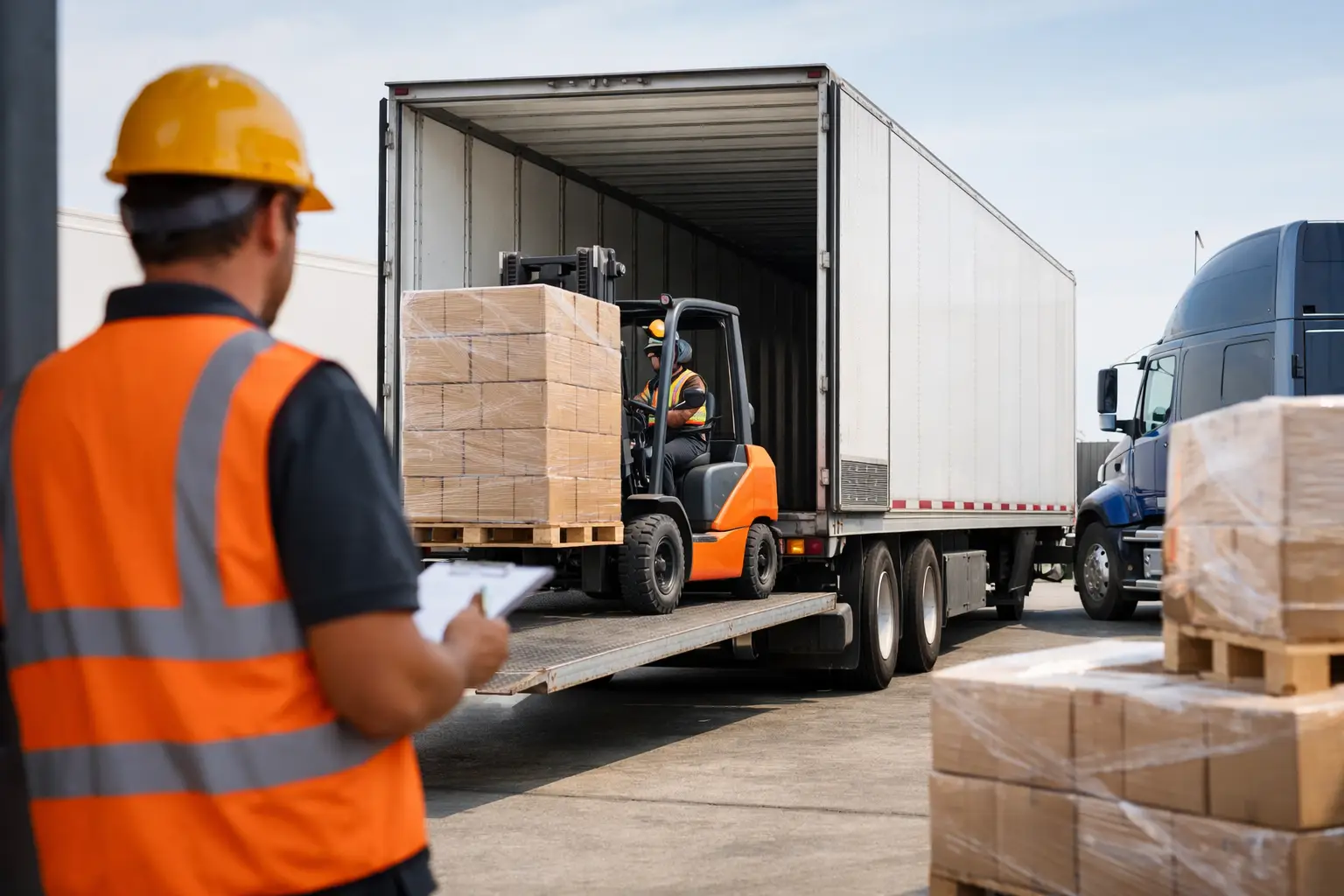
A truck can lose serious time before it ever leaves the yard. Not on the road, but at the point where freight is loaded, restrained and checked. If you want to improve loading productivity trucks, the biggest gains usually come from fixing what slows drivers down every single day – repeated climbing, manual strap handling, poor access inside curtain-siders, and restraint systems that turn a simple load into a labour-heavy job.
For fleet operators, owner-drivers and workshop managers, loading productivity is not a soft metric. It affects turnaround times, labour costs, delivery performance, driver fatigue and safety exposure. When the restraint process is slow, awkward or physically demanding, the cost is felt across the whole operation.
What actually slows truck loading down
Most loading delays are not caused by one major failure. They come from small, repeated inefficiencies that become normal over time. A driver has to climb up and down to reach straps. Curtains need to be opened fully for access when only part of the load bay is in use. Restraint gear ends up out of position, tangled or hard to retrieve. Staff work around the truck instead of through a consistent system.
That matters because every extra movement adds time. It also adds risk. If a driver is stretching, reaching, lifting or climbing more than necessary, productivity and safety both start to slip.
In curtain-sided trucks and tautliners, the restraint method plays a bigger role than many businesses realise. Freight can be loaded quickly by forklift, but if securing it takes too long, the loading task is still inefficient. In practice, a fast load is only as fast as the restraint system behind it.
Improve loading productivity trucks by reducing manual handling
The clearest way to improve loading productivity trucks is to reduce the physical effort required to secure freight. This is where many operations still rely on outdated methods that depend heavily on driver movement and manual strap placement.
A lower-labour restraint process changes the pace of the job. Instead of climbing in and out, reaching overhead or dragging straps into place, the driver can secure freight from a safer and more controlled position. That means fewer interruptions, less wasted motion and quicker completion of each stop.
There is also a flow-on effect. Drivers who are less physically taxed through the day tend to work more consistently across multiple drops. The task remains repeatable, even under time pressure. That consistency matters just as much as raw speed.
Why restraint design affects turnaround times
Not all load restraint systems are equal when it comes to productivity. Some systems meet the minimum requirement of securing the load, but they do it in a way that costs time on every job. Others are designed to support both restraint performance and operational efficiency.
The difference often comes down to access, placement and control. If the restraint system is built into the truck body in a way that keeps gear available and ready to use, loading becomes more predictable. If the system allows freight to be restrained with minimal labour, the driver can complete the task faster without cutting corners.
This is especially important for multi-drop work, regional freight runs and any operation where delays at one stop affect the rest of the schedule. Saving a few minutes on each load or unload may not sound dramatic on paper, but over a week, a fleet can recover hours of productive time.
A safer loading process is usually a faster one
Some businesses still treat safety and productivity as if they pull in opposite directions. In truck loading, that is usually the wrong way to look at it. A safer process is often a faster process because it removes unstable, inefficient movements from the task.
If a driver can restrain freight without climbing onto the tray area, reaching deep into the body or handling loose equipment in awkward positions, the job becomes simpler. Simpler jobs are generally completed faster and with fewer mistakes.
There is also less chance of rework. Poorly placed or rushed restraints often need to be adjusted before departure, or worse, after a problem is noticed down the track. A system that helps drivers secure loads properly the first time protects both schedule and compliance.
Where standard loading methods fall short
Traditional restraint practices can still work, but they often rely too heavily on individual effort. A good driver may keep the job moving through experience and workarounds, but that does not mean the system itself is efficient.
This becomes obvious when businesses grow, onboard new drivers or try to standardise loading procedures across several vehicles. If productivity depends on who is doing the job, the process is not well controlled.
That is why many operators review loading productivity at the system level rather than just the driver level. They look at how the truck body is set up, how restraint gear is accessed, how many manual actions are involved, and whether the method supports safe, repeatable loading across the whole fleet.
Improve loading productivity in trucks with better system integration
The best productivity gains tend to come from restraint systems that are integrated into the truck body rather than treated as loose accessories. Integration improves access, consistency and speed.
For workshop managers and truck body builders, this is a practical issue. A restraint solution should work with the vehicle, not fight against it. It needs to suit tautliners and curtain-sided trucks, fit common commercial vehicle platforms, and support the real freight tasks performed each day.
When a system is designed for this environment, loading becomes less dependent on ad hoc handling. Drivers know where the equipment is, how it operates and how to secure the load with minimal labour. That level of repeatability is what lifts productivity over time.
A patented system such as StrapNGo is built around that exact commercial need – improving driver safety while increasing loading efficiency in curtain-sided truck operations. For many fleets, that combination is what makes the investment stack up.
Productivity gains are different for each operation
It depends on the freight profile, delivery pattern and truck utilisation. A metro fleet doing frequent stops may see the biggest gains from faster restraint at each drop. A regional operator may place more value on reduced fatigue and safer handling across longer shifts. A business with a mixed driver pool may benefit most from a simpler, more consistent loading method that reduces variation between operators.
This is why the right question is not just whether a restraint system is faster. It is whether it improves loading across the actual conditions your drivers and vehicles face every day.
For example, a high-volume fleet may care most about reducing turnaround time at depots and customer sites. An owner-driver may focus more on cutting physical strain while keeping the job compliant and efficient. Both are valid productivity goals, but they are not identical.
What to assess if loading times are slipping
If your truck loading process feels slower than it should be, start by looking at where labour is being spent. Watch the job from curtain open to departure check. Count the unnecessary steps, not just the total minutes.
Look closely at how often drivers climb, stretch, reposition themselves or chase restraint gear. Check whether freight can be secured from a safe working position. Review whether the current method is easy to repeat across different load types, or whether every job requires improvisation.
It is also worth checking what happens under pressure. A process that only works well when there is plenty of time is not a strong process. Good systems hold up during busy loading windows, tight delivery schedules and ordinary operational stress.
The commercial case is broader than loading speed
Faster loading matters, but it is only part of the value. Lower manual handling can reduce the chance of injury. Safer loading positions can help cut exposure to falls and strain. A more controlled restraint process can support compliance and reduce the risk of load movement.
That broader commercial outcome is why many transport businesses now look at restraint equipment as an operational asset rather than a simple consumable. The right setup can support safer work, better fleet utilisation and stronger day-to-day consistency.
In a competitive freight market, those details matter. Margins are tight, schedules are unforgiving, and every task around the truck needs to earn its place. If the restraint method is slowing the job down or creating unnecessary risk, it is costing more than it appears.
Loading productivity does not improve through pressure alone. It improves when the truck, the restraint system and the work method are set up to do the job properly. If you want better turnaround without asking more from your drivers’ bodies, start with the loading process itself. That is often where the most practical gains are waiting.