
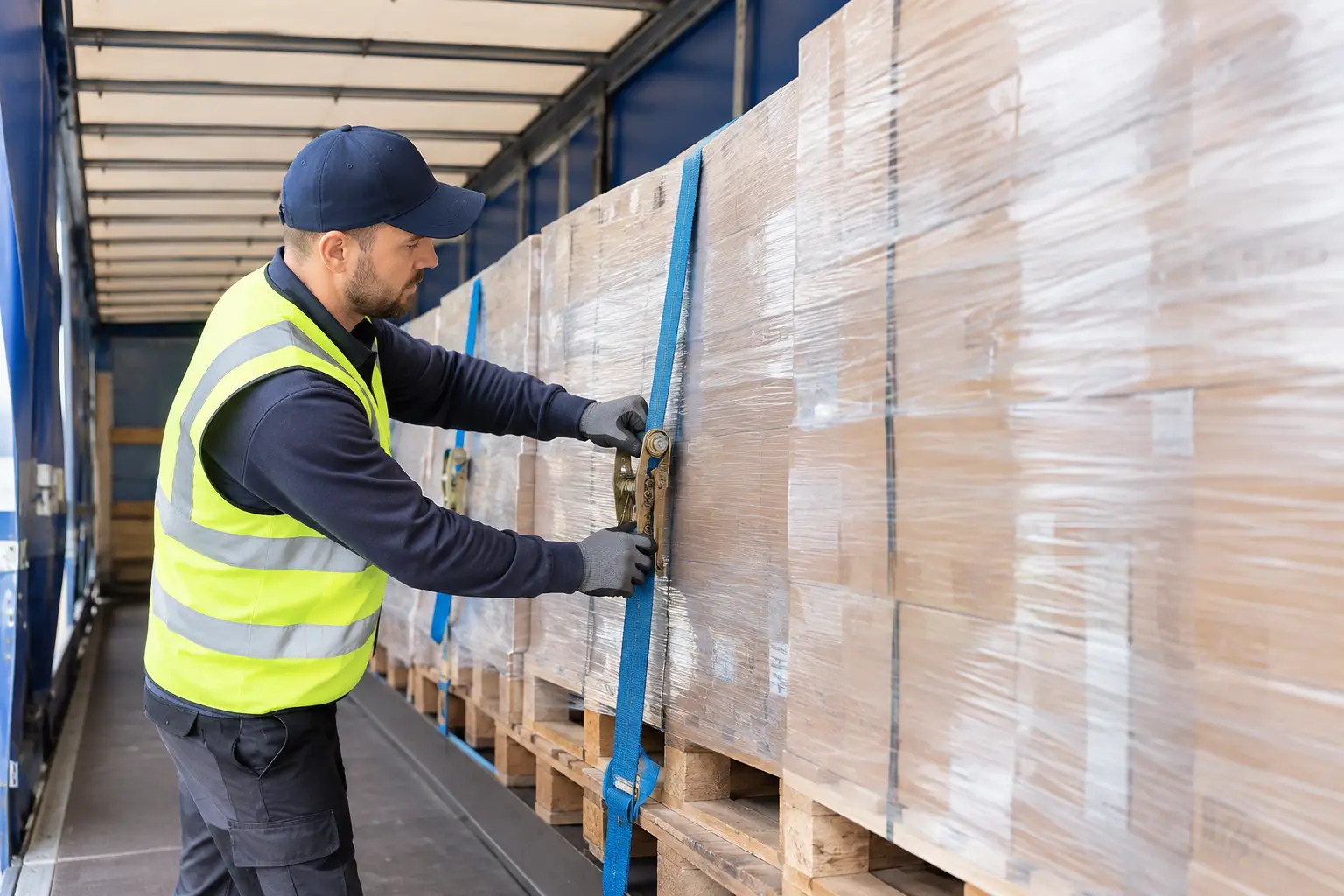
A curtain-sided truck can look fully loaded and still be unsafe. Pallets that are not positively restrained can shift under braking, cornering or evasive manoeuvres, placing the driver, other road users and the freight at risk. Knowing how to secure pallets in tautliners starts with one clear rule: the curtains are not load restraint.
A safe result depends on the whole loading job – the condition of the pallets, where the weight sits, the restraint equipment used and the checks made before the truck moves. Get those basics right every time and loading becomes safer, faster and more consistent across the fleet.
Start with the load, not the restraint
Before a strap, curtain buckle or restraint system is touched, assess the freight. A restraint system can only perform as intended when the load is stable to begin with.
Check that each pallet is sound, evenly packed and wrapped or contained well enough for the trip. Broken deck boards, loose cartons, unstable stacks and overhanging product can compromise the load before the vehicle leaves the yard. If a pallet has movement within it, applying more force from a strap may crush the freight without making it secure.
Weight distribution matters just as much. Load the heaviest pallets low and in the appropriate position for axle weights and vehicle stability. Avoid leaving large open spaces between pallet groups where freight can gain momentum. Where a space is unavoidable because of the consignment, use a suitable restraint arrangement that prevents forward, rearward and sideways movement.
The loading plan should also account for delivery order. Reaching over or climbing around freight to access restraints at a later stop creates unnecessary risk. A practical load plan puts the next delivery within safe reach and keeps restraint equipment accessible from the ground wherever possible.
How to secure pallets in tautliners: use positive restraint
Tautliner curtains protect freight from weather and help contain the load area, but they are not designed to replace properly rated load restraint. Pallets must be restrained to withstand the forces generated during normal transport, including heavy braking, cornering and uneven road conditions.
The correct method depends on the freight, pallet configuration, vehicle body and rated restraint points. For many palletised loads, restraint is achieved with rated webbing straps connected to suitable tracks or anchor points, positioned to stop movement in the required direction. Blocking, dunnage, gates or other approved restraint equipment may also be needed, particularly for mixed loads, short pallet runs or awkward gaps.
Do not assume one strap arrangement suits every load. A tightly packed full load may need a different approach from a part load with several delivery points. Tall, light pallets can behave differently from dense industrial product. Slippery packaging, uneven pallet bases and loads with a high centre of gravity all require additional consideration.
Just as importantly, use equipment that is compatible with the truck body and the task. Check lashing capacity markings, track ratings, hooks, buckles and webbing condition. Damaged straps, bent fittings, worn tracks and improvised anchor points should be removed from service. A restraint is only as strong as its weakest component.
Position restraints for the movement you need to control
The purpose of a restraint is not simply to put tension over freight. It is to prevent the load from moving. That means considering direction.
Forward movement is usually the critical factor under braking. The front pallet row needs effective restraint or blocking against the headboard arrangement, with no assumption that friction alone will hold it in place. Rearward movement can occur under acceleration or when travelling on grades. Sideways movement is a major concern in cornering, especially with tall palletised freight or part loads sitting away from the side structure.
Place restraints so they bear against strong, stable parts of the load. Avoid running webbing over sharp edges without protection, across loose cartons or over areas where it can slip off during transport. Edge protection can reduce webbing damage and help spread pressure where the freight needs it.
Tension should be firm and even, not excessive. Over-tensioning can damage cartons, crush product or pull a pallet out of shape. Under-tensioning allows slack to develop as the vehicle moves. After the first section of the journey, or sooner if conditions warrant it, stop in a safe location and recheck the load. Freight can settle after loading, particularly if the route includes rough roads, roundabouts or repeated braking.
Reduce manual handling exposure at the curtain
Traditional restraint methods can force drivers to climb, stretch overhead or work close to live traffic at the roadside. Those are avoidable hazards, not simply part of the job.
Where possible, choose a system that lets the driver apply and release restraints from ground level. An integrated track-and-bungee arrangement with an extendable pole can reduce the need to throw straps over the load or climb on tyres and side rails. It also gives the operator a more repeatable loading process, which is valuable when different drivers use the same vehicle.
StrapNGo is designed specifically for curtain-sided trucks and tautliners, with a patented Australian-made system that supports safe, low-labour pallet restraint. The right set-up should fit the truck body properly, use rated hardware and be installed by a competent truck body builder or approved installer.
This is not only a safety decision. Reducing awkward reaches and repeated climbing can shorten loading time, lower fatigue and help drivers complete multi-drop work without cutting corners. Productivity improves when the safe method is also the practical method.
Complete a pre-departure restraint check
A final walk-around is where small problems are found before they become an incident. Take the time to check the load after all curtains are closed and before the vehicle enters traffic.
Confirm that:
- pallets are stable, with no leaning stacks, damaged wrap or loose product;
- load weight is distributed correctly and clearances are maintained;
- straps, tracks, buckles and hooks are rated, undamaged and correctly engaged;
- restraints are tensioned, positioned to control movement and protected from sharp edges;
- curtains are secured properly, without being relied on as the primary restraint; and
- no loose equipment, dunnage or unused straps can move during transit.
The driver should also know what has changed from the usual arrangement. A part load, a backload or a last-minute extra pallet can alter the restraint requirement. If the load no longer matches the plan, stop and reassess it rather than making do with an arrangement that is merely convenient.
Match the method to the freight and route
There is no single answer to every tautliner load. A full, uniform run of standard pallets travelling between depots may be straightforward. A mixed regional delivery with partial unloads, irregular freight and rougher roads needs more planning and more frequent checks.
Food and beverage pallets, building products, packaged industrial goods and retail freight can all present different risks. Some need protection from strap pressure; others need more containment because they are tall or lightly wrapped. Wet pallets, damaged shrink wrap and loads handled several times before collection deserve closer inspection.
Route conditions matter too. A vehicle operating mostly on smooth metropolitan roads will still encounter braking and cornering forces, but interstate or regional work can introduce rough surfaces, cambers and longer travel periods. Build those conditions into the restraint plan instead of treating every run as identical.
Train for a repeatable process
Good equipment does not remove the need for training. Drivers, loaders and workshop staff should understand the approved loading process, the limits of each restraint component and the signs that a load needs to be reworked.
Keep the process simple enough to follow on a busy dock. Use consistent restraint locations where the vehicle and freight allow it. Make pre-start inspections routine. Replace damaged equipment promptly and record recurring issues, whether that is poor pallet quality, a problematic customer load or a layout that makes safe access difficult.
The safest pallet restraint process is the one drivers can carry out correctly on every load, in the rain, under time pressure and at the final stop of a long day. Make safe access, properly rated equipment and a disciplined final check part of the job, not an extra task after loading is finished.