
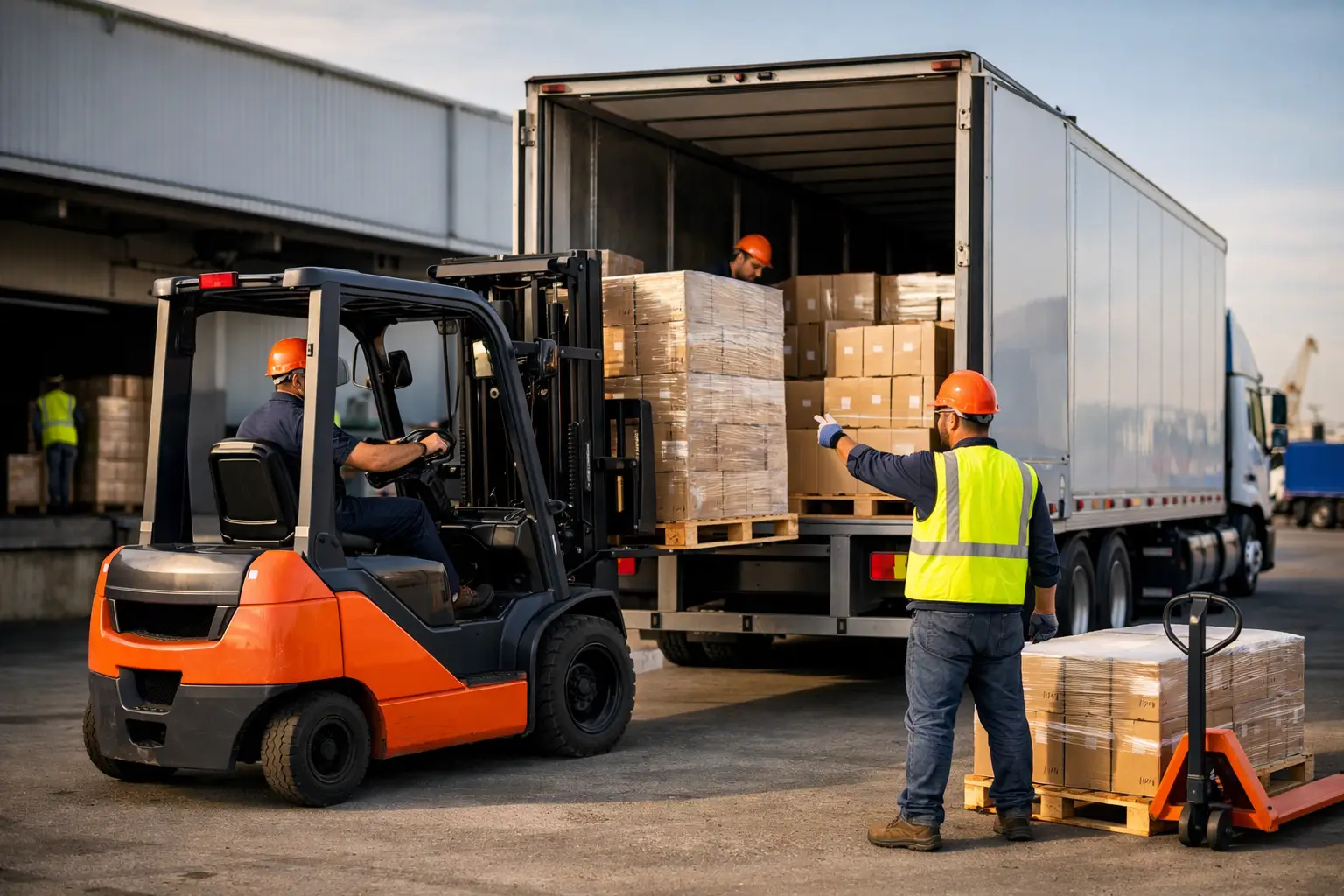
A truck can be loaded, paperwork signed and ready to leave, then lose another 20 minutes while a driver climbs around the tray fitting restraints. That delay is not just an inconvenience. It reduces vehicle utilisation, adds manual handling risk and can push the next delivery behind schedule. Learning how to speed up freight loading starts with treating load restraint as part of the loading process, not a final task once the freight is already on board.
For curtain-sided trucks and tautliners, the fastest operation is usually the one with the least unnecessary movement. That means a clear load plan, suitable equipment positioned where it is needed, and a restraint method that keeps drivers off the truck where practical. Speed matters, but it must never come at the cost of a safe and secure load.
Start with the load plan before the truck arrives
Loading time is often lost before the first pallet moves. Freight is staged in the wrong order, mixed consignments have not been checked, or the loader has no clear instruction on axle weights, delivery sequence and restraint points. The result is rework: shifting pallets, reopening curtains and adding restraints after the fact.
A practical load plan should identify the freight type, weight, dimensions, destination order and any special restraint requirements. For multi-drop work, load the last delivery first where access and weight distribution allow it. Keep heavy freight low and positioned to maintain suitable axle loads. Fragile or irregular items need their own approach rather than being treated like standard palletised freight.
This does not need to become a lengthy office exercise. For regular runs, a repeatable loading pattern can be documented and followed by the warehouse team and driver. When everyone knows where each freight type belongs, loading becomes more consistent and restraint can be applied with fewer interruptions.
Set up the loading area for flow
A congested loading bay slows every part of the job. Forklifts wait for people on foot, drivers search for dunnage, and restraints are stored somewhere that requires another walk across the yard. Small delays accumulate quickly across a fleet.
Keep the working area organised around the actual sequence of loading. Freight should be staged by route or drop order. Dunnage, edge protection and any required restraint hardware should be inspected and ready before the vehicle docks. Clearly separate pedestrian paths from forklift operating zones, particularly when the driver needs to check the load during loading.
Communication also matters. One person should be responsible for confirming the loading plan, especially where there are mixed freight types or changing delivery requirements. Hand signals, radio procedures or a simple pre-load briefing can prevent the stop-start confusion that causes the most avoidable delays.
Reduce double handling
Double handling is one of the clearest signs of an inefficient freight operation. It happens when a pallet is loaded only to be moved again for access, weight balance or restraint. It also happens when freight is brought to the bay before the truck and route sequence are confirmed.
The solution depends on the operation. A high-volume distribution centre may use fixed staging lanes and standardised load diagrams. A smaller regional carrier may rely on the driver and forklift operator confirming the order before loading begins. In both cases, the objective is the same: lift each item as few times as possible.
Make load restraint faster without cutting corners
Traditional straps can be effective, but they can also consume time when drivers must throw them over freight, climb onto the tray, untangle webbing or repeatedly adjust tension. On a curtain-sided truck, those tasks may be performed multiple times each day in variable weather and roadside conditions.
The right restraint method should suit the truck body, freight profile and work being completed. It should allow the operator to secure the load efficiently while meeting the requirements of the load restraint guide, workplace procedures and applicable chain of responsibility obligations. A restraint system is not a shortcut if it is properly designed and fitted. It is a way to remove unnecessary labour from a critical safety task.
For tautliners and curtain-siders, track-mounted restraint systems can help keep equipment accessible and ready for use. Instead of searching for loose straps or working above shoulder height, the driver can position restraints from ground level using purpose-built hardware. StrapNGo’s patented Australian-made system is designed around this practical outcome: safer load restraint with minimal labour for curtain-sided truck operations.
The benefit is not simply faster loading. It is more predictable loading. When restraint equipment is in the same position, used in the same way and checked as part of a standard process, operators are less likely to miss a step under time pressure.
Match the restraint method to the freight
Not every load can be restrained in exactly the same way. Palletised general freight, steel products, machinery and loose building materials each create different forces and risks. The fastest method is the one that has been selected in advance for that freight type, rather than improvised at the dock.
Where freight is irregular, allow additional time for suitable blocking, bracing, edge protection or containment. Trying to force an unsuitable standard process onto an unusual load can create delays later, or worse, leave the vehicle carrying an unsafe load. Productivity comes from standardising what can be standardised and applying sound judgement where it cannot.
Keep drivers out of high-risk positions
A driver climbing onto a truck body to manage restraints may appear quicker than finding the right equipment, but the risk is significant. Falls, slips, overreaching and strains can turn a routine loading task into a serious incident. A single injury also carries a far greater operational cost than the minutes saved by rushing.
Look for ways to complete restraint work from ground level or from a protected position. Extendable poles, correctly located tracks and accessible restraint units can reduce the need to climb, throw straps or reach across freight. Good truck body design supports this by making restraint points easy to access without obstructing loading equipment.
This approach is especially valuable for owner-drivers and smaller fleets. When one person is responsible for driving, checking, securing and delivering the load, reducing physical strain helps maintain a reliable working pace across a full day.
Standardise checks, not just loading steps
Fast loading still needs a final verification. The key is to make that check deliberate and efficient rather than an informal last look before departure. A consistent pre-departure routine helps confirm that the load is stable, restraint equipment is correctly tensioned, curtains and doors are secured, and nothing is likely to move during transit.
A short written checklist can be useful for new staff, changing freight profiles or higher-risk loads. Experienced teams may complete the same checks from habit, but the standard should remain clear. Check restraint condition as well as placement. Worn webbing, damaged tracks, bent fittings or compromised hardware can slow the job and undermine the load’s security.
Maintenance should happen before equipment fails in the loading bay. Inspect restraint equipment regularly, remove damaged components from service and keep replacement parts available. A fleet that waits until a restraint unit is unusable will eventually face an avoidable delay at the worst possible time.
Measure the delays that matter
If loading regularly runs late, measure where the minutes are going. Do not assume the forklift is the problem. The cause may be freight staging, paperwork, unavailable drivers, poor dock access, restraint setup or rework caused by incorrect load order.
Track practical measures such as average load time by vehicle type, time spent on restraint, number of pallet moves per load and loading-related incidents or near misses. Review the results with drivers and warehouse staff. They see the daily friction points that are often missed in a management report.
There will always be loads that take longer. Oversize freight, mixed consignments and difficult access require more care. The goal is not to rush those jobs. It is to remove wasted time from the routine jobs, so the team has the time and attention needed for the exceptions.
A faster freight loading process is built through better preparation, safer restraint and repeatable habits. When the truck, freight, equipment and people are ready to work in the right order, loading becomes less of a daily scramble and more of a controlled operation that gets every vehicle moving safely.