
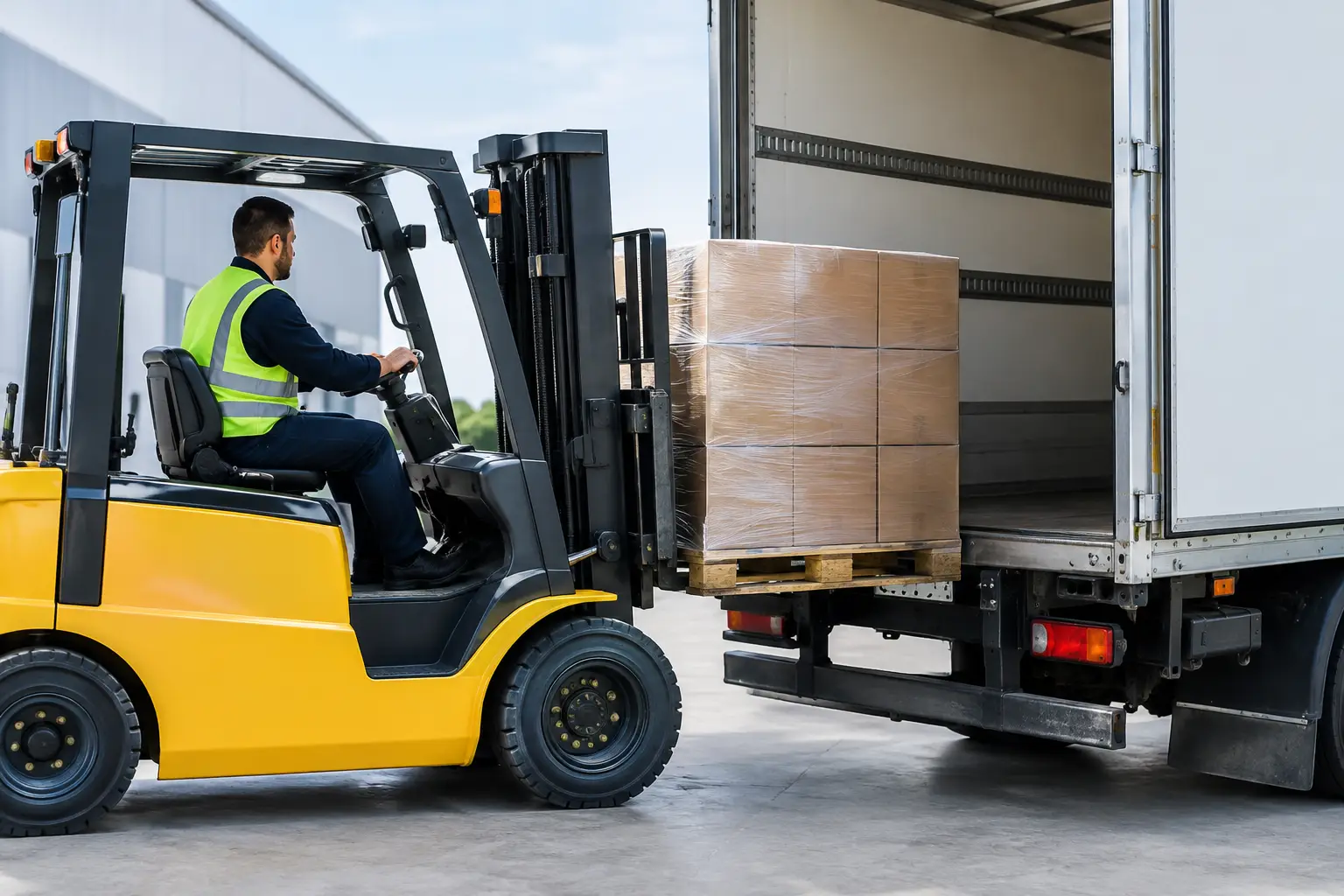
A curtain-sided truck can be loaded, paperwork signed and ready to leave, yet still lose valuable minutes while the driver walks the length of the body, handles straps at height and reworks restraints around the freight. Across several loads each day, those minutes become labour cost, delayed departure windows and unnecessary manual handling exposure.
This loading efficiency improvement case study looks at a representative Australian distribution fleet operating curtain-sided trucks on metro and regional runs. It examines where time is lost in a conventional restraint process, what changes when restraint equipment is designed for the job, and how fleet managers can assess the result without relying on guesswork.
The operating problem: restraint work was slowing the truck down
The fleet in this case operated tautliners carrying mixed palletised freight. Loads commonly included boxed goods, wrapped pallets and varying delivery quantities. Drivers were competent and the equipment met the basic task, but the restraint process depended heavily on manual straps.
At each loading point, drivers needed to locate straps, move around the vehicle, throw or feed straps over freight where required, tension them, then repeat the process for the next section of the load. Where access was tight, the task could involve climbing, reaching overhead or working close to traffic and forklift activity.
None of these individual actions looked significant on a single job. The problem was repetition. A driver completing several loads a day was spending substantial time on a process that added physical effort without moving freight, completing deliveries or improving customer service.
The operations manager also identified a safety concern. Manual load restraint was often performed during the busiest part of the shift, when forklifts, pedestrians and vehicles were moving through the loading area. The more often a driver had to work alongside the truck or reach into the body, the greater the exposure to avoidable risk.
The baseline measurement
Before changing equipment, the fleet timed a sample of loading and restraint activities over two weeks. It did not measure only the time spent tightening a strap. The assessment started when the driver began preparing the truck and ended when the vehicle was ready to depart.
The team recorded restraint preparation, access and positioning, tensioning, adjustments and final checks. It also noted occasions where straps had to be untangled, repositioned or replaced because the freight pattern had changed.
The results showed that the biggest delays did not always come from the number of straps used. Time was lost in handling them. Reaching, walking, climbing and correcting poorly positioned restraints added up quickly. The process also varied between drivers, which made planned loading times less reliable.
Loading efficiency improvement case study: the change made
The fleet selected a track-based restraint arrangement suited to tautliners and curtain-sided bodies. The objective was not to eliminate proper restraint checks or reduce compliance standards. It was to make the correct process faster, more consistent and less physically demanding.
The new approach used a fixed track and restraint units positioned for practical access, with an extendable pole and hook used where needed. Rather than relying on loose equipment that had to be retrieved and handled repeatedly, the restraint components were available in the truck body and ready for the next load.
For this type of operation, the installation detail matters. Track position must suit the body, freight profile and normal working method. A system that is technically fitted but awkward for drivers to use will not deliver the expected productivity benefit. The fleet worked with its truck body builder to ensure the layout matched the vehicles and common freight tasks.
StrapNGo was considered appropriate because its patented, Australian-made system is designed specifically for tautliners and curtain-sided trucks, rather than being a general-purpose restraint product adapted to the application.
Drivers were involved before rollout
The fleet did not treat the new equipment as a workshop-only project. Two experienced drivers trialled the method first and gave feedback on placement, reach and the sequence of use. Their input helped identify where a restraint unit could be accessed quickly and where a small adjustment to the operating routine improved the workflow.
This step was important. A loading efficiency project can fail if drivers are asked to change their routine without understanding why. In this case, the practical benefit was clear: less climbing, less handling of loose straps and fewer unnecessary trips around the vehicle.
Training focused on the approved restraint method, pre-start checks and correct use of the pole and hook. Drivers were also reminded that speed never replaces a final load-security inspection. Faster restraint work is only valuable when freight remains safe and secure for the full journey.
What changed in the loading bay
After installation and training, the restraint process became more predictable. Drivers could work through the load in a consistent sequence, using equipment already positioned in the body. The system reduced the need to manage loose straps and limited the reaching and climbing that had previously been part of the task.
The fleet found the clearest time saving on repeat loads with familiar pallet patterns. On these jobs, drivers no longer needed to spend time finding equipment or working out a different arrangement each time. The restraint process followed a repeatable method.
Mixed freight loads still required judgement. A truck carrying irregular product, partial pallets or changing delivery drops cannot be treated as a simple stopwatch exercise. Drivers still needed to select suitable restraint points, account for load distribution and check that the freight was properly restrained. However, the equipment removed several low-value handling steps from the process.
The result was not just a shorter average loading time. It was less variation between loads. For an operations manager, that consistency makes it easier to schedule collection times, allocate vehicles and communicate realistic departure expectations to customers.
The safety result matters as much as the minutes saved
Loading efficiency and safety are often discussed separately. In practice, they are closely connected. A process that requires less unnecessary climbing, overhead reaching and movement around a busy truck is generally a safer process, provided the restraint system is suitable and used correctly.
In this case, drivers reported less physical strain during restraint work. The fleet also reduced the number of occasions where drivers needed to handle loose equipment in active loading zones. That did not remove all risk. Forklift movements, uneven surfaces, weather and changing freight remain part of transport work. But it reduced exposure to tasks that added little operational value.
The benefit was especially relevant for drivers completing long shifts or multiple pickups. Fatigue is not only about driving hours. Repetitive physical work, rushed loading and awkward manual handling can affect a driver before the vehicle leaves the depot.
How the fleet measured return on the change
The fleet avoided claiming a benefit based solely on a fast trial run. Instead, it compared like-for-like work over several weeks. It reviewed average restraint time per load, loading delays, driver feedback and any restraint-related issues recorded through normal reporting.
The commercial calculation included the cost of the equipment and installation, balanced against labour time, improved vehicle turnaround and reduced manual handling exposure. The exact payback period depended on the number of loads per vehicle, the type of freight and how inefficient the original method had been.
A high-utilisation metro vehicle completing multiple loads each day had more opportunity to recover time than a truck completing one straightforward linehaul load. Likewise, a fleet with already well-organised restraint practices may see a smaller gain than an operator relying on loose, inconsistent equipment.
That is why fleet buyers should be cautious of one-size-fits-all figures. The practical question is not, “How many minutes will this save on every load?” It is, “Where does our current restraint process create repeated handling, delay or risk, and can this system remove it?”
Questions to ask before fitting a new system
Before committing, assess the truck body design, normal freight types, number of loads per shift and the current restraint routine. Speak with the drivers who do the work daily. They can identify the awkward steps that are rarely visible in a spreadsheet.
Also confirm that installation is completed through an experienced truck body builder or approved installer, and that drivers are trained in the intended method. Equipment quality, correct fitment and consistent use all affect the outcome.
A loading efficiency project should never be judged by speed alone. The better result is a truck that leaves the bay on time, with freight properly restrained and the driver less exposed to unnecessary manual handling. That is the kind of improvement that continues to pay back load after load.