
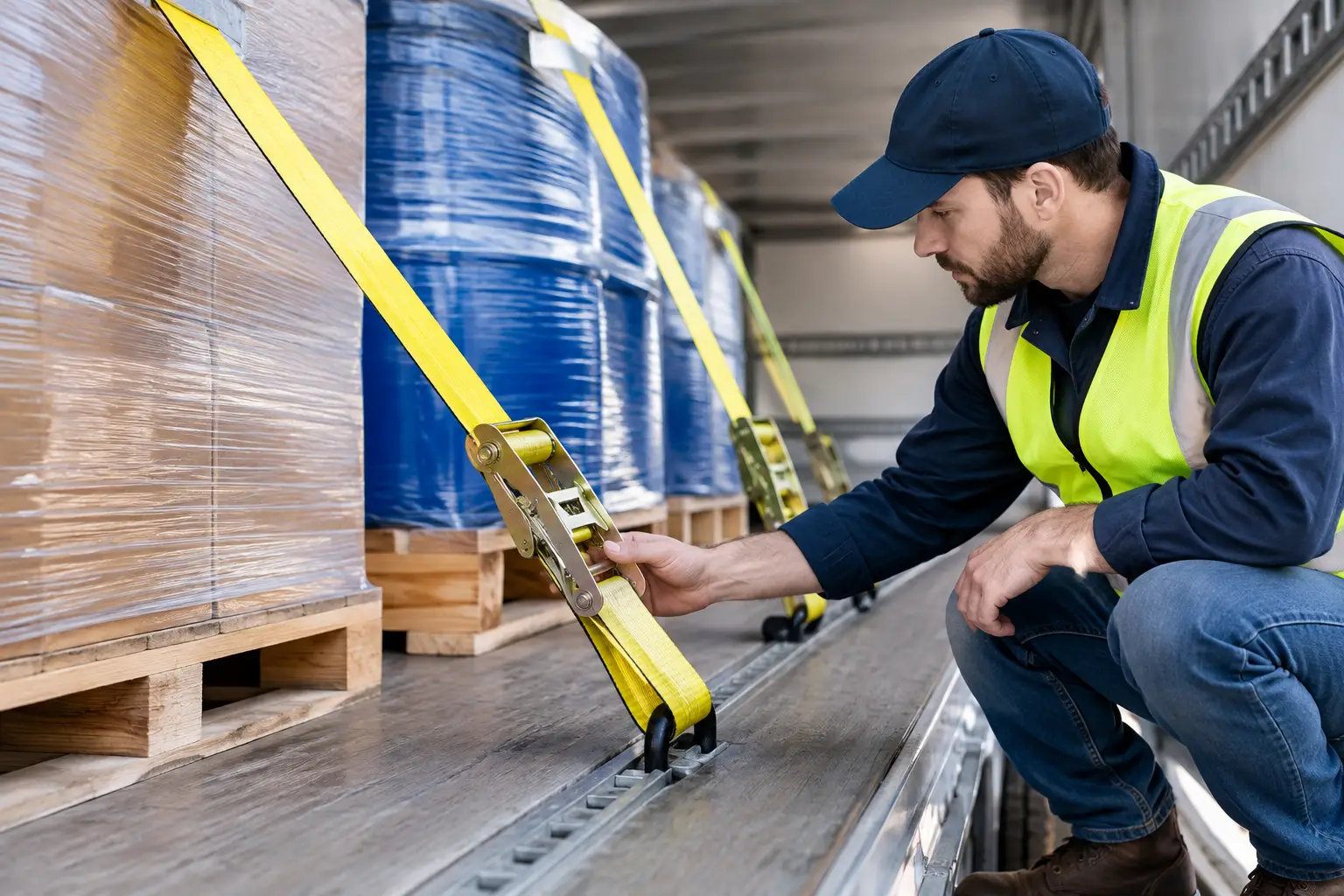
A restraint equipment review should start where the real risk sits: beside the truck, with a driver handling straps, climbing around freight or working near traffic. For tautliner and curtain-sided operations, restraint gear is not simply a box to tick at purchase time. It affects driver safety, loading speed, damage risk and whether the load remains secure through braking, cornering and uneven road conditions.
The right system depends on the freight, truck body and operating routine. A restraint method that works well for palletised general freight may be unsuitable for tall, irregular or high-mass loads. The goal is to select equipment that supports a complete, suitable load restraint arrangement – not to rely on one component as the answer to every job.
What a restraint equipment review needs to assess
A useful review looks beyond the rated capacity printed on a strap or fitting. That rating matters, but so do the way equipment is installed, the available anchor points, the load shape, the condition of the truck body and the process drivers follow every day.
For Australian operators, the NHVR Load Restraint Guide 2025 is a practical reference point when assessing the overall arrangement. It helps operators consider the forces a load restraint system needs to manage. Equipment selection should also align with applicable legal requirements, vehicle specifications and the task being performed.
The strongest review asks a straightforward question: can a driver secure this load consistently, safely and efficiently on a busy shift? If the answer relies on awkward climbing, excessive reaching, repeated manual handling or workarounds at the dock, the system deserves closer attention.
The load and vehicle come first
Start with the freight profile. Record the typical load weight, pallet dimensions, centre of gravity, stack height and whether the load is stable on its own. Also consider the variation across the fleet. A dedicated run with uniform pallets can use a more repeatable setup than a multi-drop operation carrying mixed freight.
Then inspect the vehicle. In a curtain-sided truck, the curtain is generally not the primary restraint method unless the complete system has been specifically designed and assessed for that purpose. Drivers still need suitable restraint equipment, correctly positioned track or anchor points, and a workable method of applying tension to the load.
Truck body configuration matters. Track location, available clearance, load deck height, side access and the distance between restraint points all influence whether a system will be practical in service. This is why equipment should be reviewed on the actual truck body, not only from a catalogue specification.
Restraint equipment review: safety before speed
Speed matters in transport, but a faster system is only valuable when it also reduces exposure to risk. Traditional restraint methods can require drivers to throw straps over freight, climb on tyres or decks, reach above shoulder height and work close to open traffic-side curtains. Those movements add up across a week.
Assess the loading sequence from the driver’s point of view. Can the restraint be positioned from ground level? Is a pole or guided mechanism available to reduce overhead reaching? Can the driver tension and release equipment without placing hands in pinch points or standing in an unstable position?
A system that removes unnecessary handling steps can make the job safer and more consistent. It can also reduce the temptation to rush a difficult restraint task at the end of a long run. That is an operational gain, not just a comfort feature.
Check the hardware as a working system
Do not assess straps, tracks, buckles and tensioning devices in isolation. Each part needs to work with the others under real loading conditions. A high-quality strap does not compensate for damaged track, poor installation or an unsuitable anchor position.
During inspection, look for wear that could affect function: cuts, abrasion, heat damage, frayed webbing, corrosion, distorted fittings, damaged hooks, bent track and tensioners that do not operate smoothly. Quarantine equipment that is damaged or doubtful and replace it in accordance with the manufacturer’s instructions and your maintenance process.
Installation quality deserves the same attention. Track and associated hardware need to be fitted to a suitable truck body structure and installed according to the relevant product requirements. A workshop or truck body builder should be able to explain the intended application, mounting method and any limits that apply to the installation.
Measure labour, not just loading time
A restraint option can appear economical until the labour is counted properly. Consider how many times a driver has to enter the load area, climb, reposition equipment, retrieve loose straps or adjust restraints after the vehicle has moved. These are small actions individually, but they consume time and create repeated manual handling exposure.
Measure a normal load, not an ideal demonstration load. Time the process from opening the curtain through to final inspection, then repeat it with the freight mix drivers handle most often. Include the time taken to stow equipment after unloading. Loose, tangled or misplaced restraint gear is a common cause of delay on the next job.
The most productive arrangement is usually one that is easy to repeat. Drivers should not need to invent a new method for every load. Clear restraint positions, accessible hardware and a consistent operating sequence make training easier and reduce variation between drivers.
Questions for drivers and workshop teams
A fleet manager may see the loading time. Drivers and workshop staff see the practical issues that do not appear on a spreadsheet. Bring them into the review early and ask what makes the current process difficult.
Useful questions include whether drivers can safely reach the restraint points, whether equipment regularly snags or goes missing, whether loads need re-tensioning in transit, and whether the system is easy to inspect and maintain. Workshop teams can identify fitment concerns, repeated repairs and compatibility issues across different truck models.
This feedback often reveals the difference between equipment that is technically available and equipment that is genuinely used as intended.
Compare systems against the job, not the sales claim
There is no single restraint system that suits every freight task. Over-centre buckles, ratchet straps, load bars, nets, tracks and integrated restraint designs each have a place when matched to the load and vehicle.
For curtain-sided fleets carrying regular palletised freight, an integrated side-mounted system may reduce the need for loose straps and overhead handling. For specialised loads or irregular freight, a more flexible combination of restraint methods may be necessary. The trade-off is straightforward: standardisation can improve speed and consistency, while flexibility can better accommodate changing freight profiles.
When comparing options, assess these four areas together:
- suitability for the load types and vehicle bodies in your fleet;
- the amount of manual handling and roadside exposure involved;
- installation, inspection and replacement requirements; and
- how reliably drivers can apply the system on every shift.
Patented, Australian-made systems such as StrapNGo are designed specifically for tautliners and curtain-sided trucks, with complementary hardware intended to support a lower-labour restraint process. As with any equipment, suitability depends on correct installation, the complete restraint arrangement, the freight carried and the applicable requirements for the operation.
Put the equipment through a controlled trial
A controlled trial is more valuable than a quick visual comparison. Fit the proposed equipment to representative vehicles, then use it across the loads, drivers and routes that reflect normal work. Record loading time, driver feedback, maintenance observations and any issues with access, clearance or restraint placement.
Training is part of the trial. Even well-designed equipment can be used incorrectly when drivers have not been shown the intended sequence, inspection points and limitations. Keep instructions practical. A driver should understand what to check before use, how to apply the restraint, when to stop and escalate a concern, and how to stow the equipment safely.
Review the results after enough operating time to capture real conditions, including wet weather, tight loading bays, multi-drop work and high-volume periods. A system that performs only in ideal conditions is not ready for fleet-wide adoption.
The right restraint equipment makes safe work the easier option. When drivers can secure freight with less climbing, less handling and a clear, repeatable process, the result is a better day on the road and a more dependable operation behind it.