
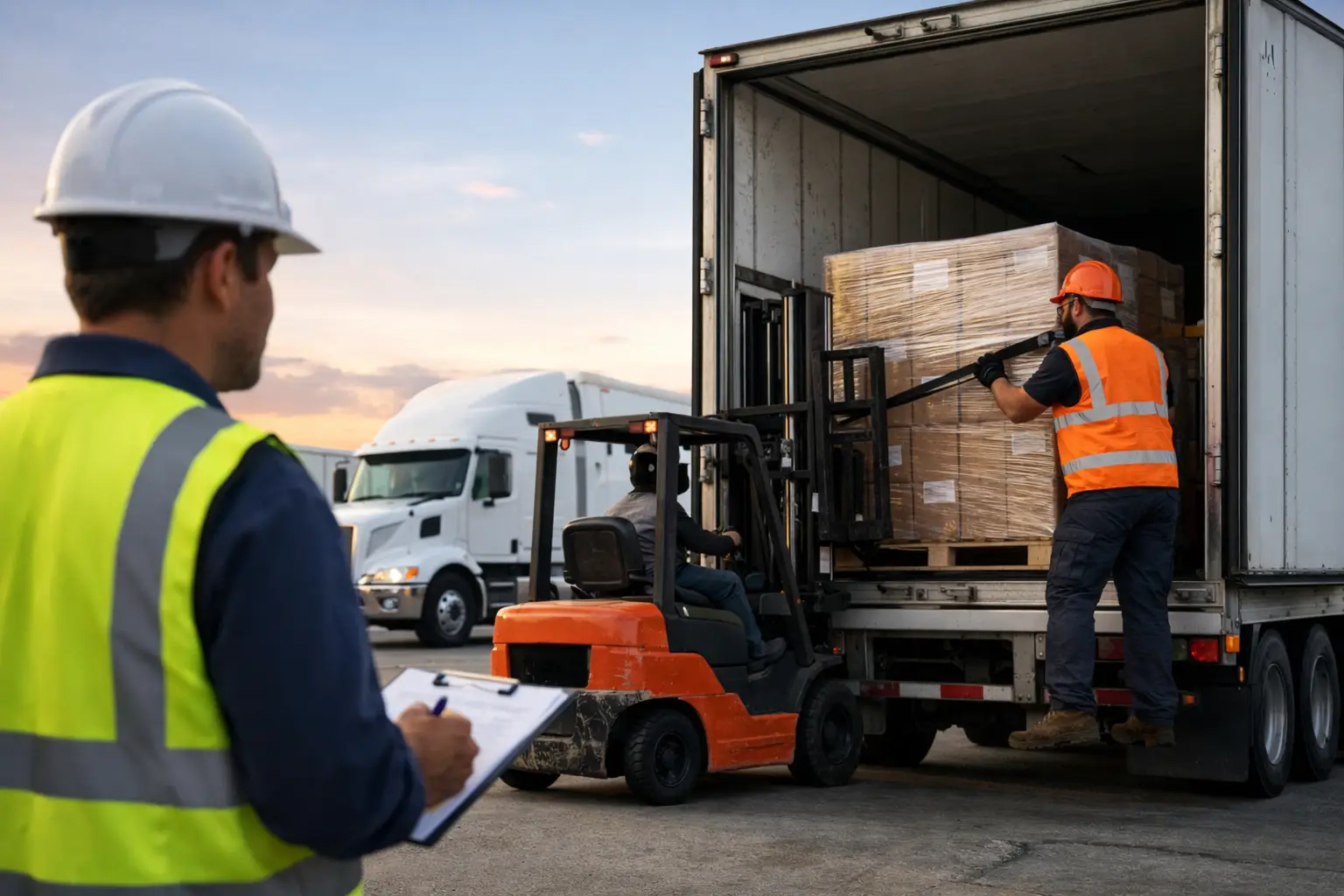
A truck can be loaded on time and still leave the yard inefficiently. When drivers are climbing, reaching, repositioning straps and correcting poor freight placement, every extra minute adds labour cost and manual handling exposure. This fleet loading productivity guide focuses on the practical changes that help Australian curtain-sided truck and tautliner fleets load faster while keeping freight safe and secure.
Productivity is not about rushing a driver through restraint. It is about removing avoidable handling, making the job repeatable and ensuring the restraint method suits the freight task. A faster process that creates an unsecured load, damaged goods or a roadside correction is not productive.
Start With the Loading Sequence, Not the Stopwatch
The loading dock is where most restraint delays begin. Freight arrives in an order that does not match the run, pallets are unevenly distributed, or the driver receives incomplete information about load weight and delivery sequence. The restraint task then becomes a series of adjustments.
Set the loading plan before the forklift starts. Confirm the load type, total weight, restraint requirement, delivery order and any freight that needs separation or protection. For multi-drop work, placing the last delivery at the front may look efficient at dispatch but can create repeated load movement later in the run.
A practical loading sequence gives the driver a clear starting point. Freight is positioned, checked and restrained in an order that reduces rework. It also prevents the common situation where a driver has to loosen restraints to access one pallet, then re-secure the entire bay.
Build consistency into repeat freight
Many fleets move the same freight every day: pallets, packaging, building materials, retail stock or industrial supplies. These runs should not rely on each driver developing their own method.
Document the preferred placement and restraint arrangement for repeat loads. Keep it simple enough to use at the dock: which freight goes where, how it is restrained, where equipment is stored and what must be checked before departure. The aim is not paperwork for its own sake. It is a consistent safe method that new drivers, relief drivers and warehouse staff can follow.
There will always be exceptions. Mixed freight, unusual dimensions and urgent backloads need judgement. A standard process gives the operator a sound baseline, so exceptions are visible and managed rather than becoming normal practice.
Reduce Manual Handling in Load Restraint
The physical work involved in conventional restraint can be significant. Reaching across freight, carrying straps, throwing equipment over a load and climbing in and out of a truck body all consume time. They also expose drivers to slips, falls, shoulder strain and repetitive handling injuries.
The best improvement is often to bring the restraint point to the driver rather than forcing the driver to reach for it. Track-mounted systems, correctly positioned restraint hardware and purpose-designed poles can reduce the need to climb or throw straps. That supports minimal labour without asking drivers to compromise on restraint quality.
For tautliners and curtain-sided trucks, a system designed specifically for the body type matters. General-purpose equipment may appear cheaper at purchase, but it can add handling steps every time the truck is loaded. Across a fleet, those small delays become real cost.
StrapNGo is designed around this practical outcome: a patented Australian-made load restraint system that allows freight to be secured with less manual effort in tautliners and curtain-sided truck bodies. The value is not simply the hardware. It is a more controlled process that can be repeated load after load.
Check the access points
Walk through a normal loading task with the people who do it. Look for the points where a driver has to stretch, twist, climb, carry equipment or wait for assistance. These are usually the places where productivity and safety are being lost together.
Ask whether the restraint equipment is available from ground level, whether it can be positioned without crossing an exposed edge, and whether the driver can complete the task without working around awkward freight. If the answer is no, the process needs attention.
A restraint system should support the load plan, not force the load plan to work around the system.
Make Equipment Availability Part of the Process
A well-designed restraint method fails if the required equipment is missing, damaged or stored at the wrong end of the truck. Drivers should not be searching the body for loose straps or borrowing equipment from another vehicle at dispatch.
Assign a home position for every piece of restraint equipment. Inspect it at regular intervals and remove damaged components from service promptly. Include the track, hardware, webbing, hooks, bungee units and poles in the inspection routine, where applicable.
The goal is simple: the driver should arrive at the load, know what is required and have working equipment ready to use. That reduces downtime and helps avoid last-minute decisions that can lead to unsuitable restraint methods.
For operators with several truck makes and body configurations, standardising the setup where possible also makes a difference. Drivers moving between Isuzu, Hino, Fuso, Iveco, UD Trucks, Mercedes-Benz, Scania or other fleet vehicles should not have to relearn the basic restraint process each shift. Body layout will vary, but the operating principle should remain familiar.
Measure the Delays That Matter
Loading productivity is easy to misread if the only measure is departure time. A truck may leave quickly because the driver skips checks, while another takes longer because the freight mix is genuinely difficult. Neither result tells you enough on its own.
Track the causes of delay over several weeks. Look for recurring issues such as late freight allocation, missing restraint equipment, pallet instability, damaged packaging, waiting for a forklift or repeated load adjustments. A short delay code on a dispatch sheet can reveal patterns without burdening drivers with administration.
Separate controllable delays from unavoidable ones. Weather, traffic at a customer site and late inbound freight cannot always be prevented. Poor equipment placement, unclear load instructions and inconsistent training can.
When a restraint change is introduced, measure more than minutes saved. Consider driver feedback, manual handling incidents, load shifts, damaged goods, equipment replacement and the need for roadside adjustments. A change that saves two minutes but causes ongoing operational problems is a poor trade-off.
Train for the Job Drivers Actually Do
Induction training often covers basic restraint principles, then leaves drivers to learn the rest from experience. That is not enough where freight types, body layouts and delivery conditions vary.
Use practical, vehicle-based training. Drivers should demonstrate how they position freight, select and operate the restraint equipment, identify damaged components and respond when a load does not suit the standard arrangement. Supervisors should assess the task in the same conditions drivers face at the depot and on customer sites.
Training must also make clear when to stop. A driver should not feel pressured to depart with an unstable load, unsuitable equipment or a restraint arrangement they cannot verify. Clear escalation prevents a safety issue from becoming a delivery problem further down the road.
Refresher training is particularly useful after new equipment is fitted, new freight contracts begin or an incident exposes a gap in the process. It keeps the expected method visible and reinforces that productivity does not override safe load restraint.
Use a Departure Check That Drivers Will Follow
A departure check should be quick enough to use every time and specific enough to catch real problems. Long forms tend to become a tick-and-go exercise. A short physical check is more effective when it is built around the actual load.
Before the curtains are closed, confirm four essentials:
- Freight is positioned to suit the vehicle, delivery sequence and load plan.
- The restraint method is suitable for the freight and is correctly tensioned or secured.
- Equipment is undamaged, engaged correctly and not likely to loosen in transit.
- Curtains, doors and body components are closed and secured for travel.
This is not a substitute for meeting applicable load restraint requirements or using competent judgement. It is a final control that catches missed steps while the truck is still at the depot.
Improve One Bay, One Route or One Truck Type First
Fleet-wide changes are easier to support when they have been proven in real work. Start with a route that has frequent loading delays, a truck type with high manual handling exposure or a depot moving consistent freight. Record the current method, trial the improvement and compare the result.
Involve drivers and loaders early. They will identify practical issues that are not obvious from an office or workshop, including clearance around pallets, equipment access and customer-site conditions. Their feedback can turn a good idea into a method that works on the road.
A safer loading process should feel easier to complete, not harder to enforce. When equipment, freight planning and driver training are working together, productivity follows – and the truck leaves the yard ready for the run ahead.