
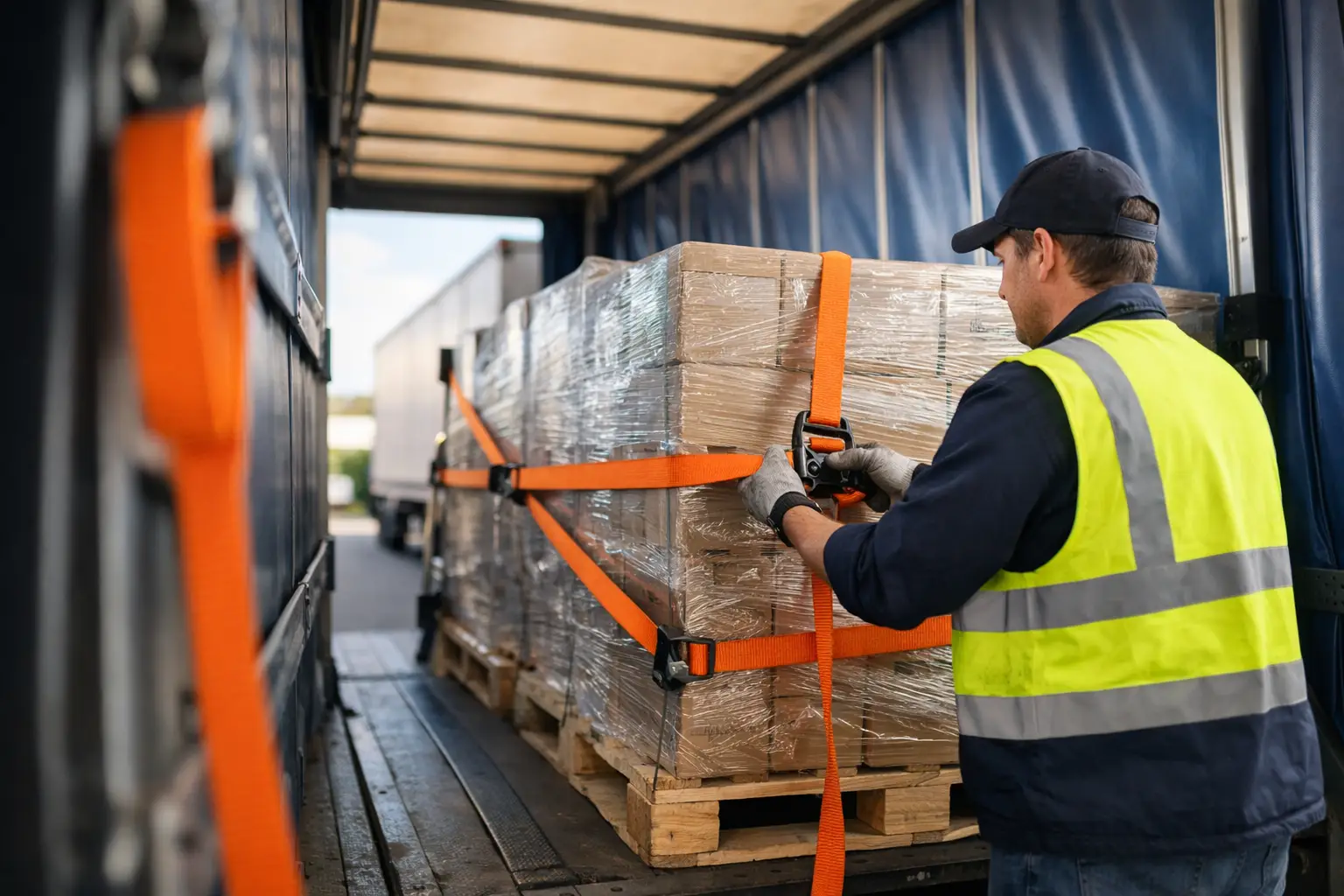
A load shifts once and the whole job changes. What looked secure in the yard can turn into damaged freight, a roadside issue, or a driver exposed to unnecessary risk. That is why a tautliner load restraint guide needs to start with the real priority on Australian roads and in Australian yards – keeping loads controlled without adding labour, delay or avoidable manual handling.
Tautliners and curtain-sided trucks are built for access and flexibility, but that same access can create bad habits if restraint is treated as an afterthought. Curtains are not load restraint. They are weather protection and containment only. The restraint job has to be done by a system that matches the freight, the vehicle body and the operating conditions.
What a tautliner load restraint guide should focus on
In day-to-day transport work, load restraint is not just a compliance box. It affects delivery times, driver fatigue, freight damage, workers’ compensation exposure and the consistency of your loading process across the fleet. A good system needs to hold the load where it belongs under braking, cornering and rough road movement, while still being quick enough to use on every run.
That balance matters. If a restraint method is slow, awkward or physically demanding, people cut corners. If it relies too heavily on climbing, reaching, dragging straps or repeated repositioning, the safety risk rises before the truck even leaves the site. For most operators, the right restraint approach is the one that drivers will actually use properly every time.
Start with the freight, not the truck
The first question is not which strap or gate to use. It is what the load is likely to do in transit. Palletised freight, mixed cartons, industrial product, bagged goods and awkward-length items all behave differently. Some loads are stable and uniform. Others settle, lean or leave gaps as deliveries come off.
That changes the restraint method. A full, tight load with little movement may need a different setup from a multi-drop run with partial unloads through the day. The more the load profile changes between stops, the more important it is to have a restraint system that can be adjusted quickly and safely from the ground where possible.
Weight distribution also matters as much as tie-down strength. Even a well-strapped load can become a problem if the axle groups are overloaded or the freight is placed too high or too far back. Good restraint starts with sensible loading, even before the first strap goes on.
Curtains are not restraint
This point still causes confusion on the ground. A tautliner curtain might look heavy-duty, but it is not there to stop a load moving under normal driving forces. If freight shifts hard against the curtain, you are already in a failure scenario.
That is why every tautliner load restraint guide should make a clean distinction between body components and restraint components. Curtains, buckles and body panels support the vehicle body. The restraint task must be handled by rated systems designed for the freight being carried. Depending on the application, that can include straps, tracks, gates, anchor points and purpose-built restraint systems installed inside the body.
Why manual restraint methods create problems
Traditional restraint methods can get the job done, but there is often a trade-off. The more physical effort required, the greater the chance of delay, rushed loading or strain injuries. Drivers dealing with repeated strap throwing, climbing, overreaching or awkward pole work are exposed to risks that build up over time, not just in one incident.
The other issue is consistency. In a fleet environment, a restraint method that depends too much on individual technique can produce mixed results. One driver gets it right every time. Another takes shortcuts because the load is behind schedule or access is poor. A better system reduces variation and makes the safe method the practical method.
For operations managers and workshop teams, that has a direct commercial effect. Less manual handling means lower physical strain. Faster, simpler restraint means less time at each stop. Better consistency means fewer damage claims and fewer conversations after a near miss.
Choosing the right restraint system for a tautliner
There is no single answer for every fleet, but there are clear criteria. The system needs to suit the freight task, fit the truck body properly, and work within the daily reality of pick-ups, deliveries and yard conditions. It also needs to be durable enough for freight work, not just suitable on paper.
A practical restraint system for curtain-sided trucks should reduce unnecessary reaching and climbing. It should help drivers secure freight from a safer position and support quick adjustment as the load changes. It should also integrate cleanly with common truck bodies and major vehicle brands, rather than forcing operators into a complicated retrofit that slows the workshop down.
This is where purpose-built tautliner restraint systems have a clear advantage. A patented internal restraint setup, properly installed and matched to the body, can improve both safety and productivity because it removes much of the labour built into older methods. For Australian fleets running regular pallet freight, regional deliveries or high-frequency metro work, that difference shows up quickly in loading times and driver acceptance.
Installation and compatibility matter more than many fleets expect
A restraint system is only as good as its fitment. Poorly placed hardware, awkward track position or components that interfere with the load space can create just as many problems as they solve. Workshop managers know this well. If installation is clumsy, the truck body suffers, loading access suffers and the driver ends up working around the equipment instead of with it.
That is why it pays to look at systems designed specifically for tautliners and curtain-siders, with proven compatibility across common truck makes and body configurations. Australian-made systems also bring a practical benefit here. Local support, local supply and installation through established truck body builders make it easier to standardise across the fleet and keep equipment working as intended.
Compliance is part of the picture, but not the whole picture
Most operators think about load restraint when an audit is due or a roadside inspection is on the cards. That is understandable, but compliance alone is not a strong enough benchmark. The better question is whether the restraint method is reducing risk in normal work.
A compliant setup that drivers avoid using properly because it takes too long is not an operational win. Neither is a low-cost method that contributes to freight damage, fatigue or lost time at every stop. The right system supports compliance by making correct restraint repeatable under pressure.
That is often where the strongest return sits. Not in a brochure claim, but in small daily gains – quicker load securement, less physical effort, fewer damaged pallets, smoother unloading and better driver confidence on the road.
A practical standard for fleet decision-makers
If you are reviewing your current setup, look at your loading task honestly. How much manual handling is involved? How often are drivers climbing or overreaching? How long does restraint take on a standard run? How often do loads need adjustment through the day? Those answers usually tell you whether your current method is still fit for purpose.
For many fleets, especially those running tautliners hard across metro, regional and interstate work, the ideal restraint system is the one that protects the driver while keeping freight moving. That is the standard worth applying. Not cheapest upfront, and not most familiar, but safest and most efficient in real operating conditions.
StrapNGo was built around that exact requirement – a patented, Australian-made load restraint system for tautliners that improves driver safety while reducing labour and helping operators load faster.
The best restraint system is the one your team can rely on at 5 am in the depot, in the rain at a customer site, and on the last drop when everyone wants the day done. If it makes safe loading easier, it is doing its job.