
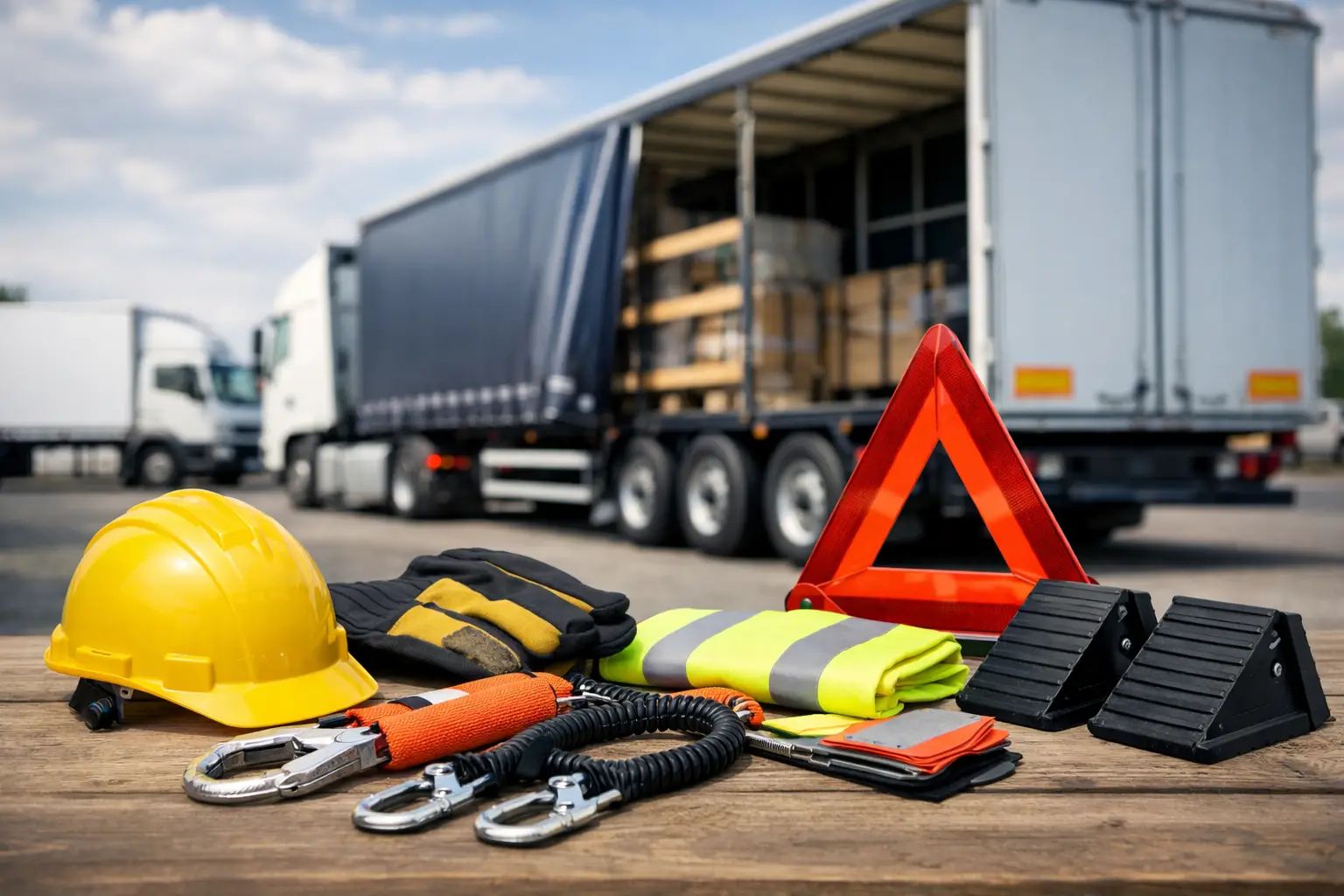
A driver standing on a trailer tyre, reaching high to throw straps across a load, is still a common sight in Australian freight yards. It is also exactly the kind of routine that leads to preventable strain, slips and loading delays. When operators ask what the best tautliner safety equipment looks like, the answer is not a single accessory. It is a practical system that reduces manual handling, keeps drivers off the trailer where possible, and gets freight restrained properly without wasting time.
What the best tautliner safety equipment should actually do
Safety gear in a tautliner is only valuable if it works in the conditions your fleet deals with every day. That means metro multi-drop, regional linehaul, palletised freight, mixed loads and tight delivery windows. In this environment, the best equipment does more than tick a compliance box. It should lower the physical effort needed to secure freight, reduce exposure to falls and awkward reaches, and help drivers complete the job the same way every time.
That last point matters. A restraint method that relies too heavily on individual technique can create variation between drivers, depots and shifts. A safer setup is one that builds consistency into the process. If equipment is easy to access, easy to use and integrated into the truck body, uptake is far higher and shortcuts are less likely.
Best tautliner safety equipment starts with the restraint system
If you strip the issue back to first principles, the load restraint system is the core safety decision. Accessories help, but the system itself determines how much climbing, reaching and heavy manual effort is required.
Traditional strap-and-buckle methods still have a place, but they often come with trade-offs. They can be labour intensive, especially on repeated stops. They can encourage drivers to work from awkward positions. And when gear is loose, misplaced or hard to retrieve, loading time stretches out.
A purpose-built, track-based restraint system changes that equation. The strongest setups are designed to stay with the vehicle, position restraints where they are needed and allow freight to be secured with minimal labour. For many operators, that is the difference between a process that depends on physical effort and one that supports safer, repeatable loading.
A patented tautliner restraint system is especially worth attention because the design has been developed around a specific use case rather than adapted from general cargo gear. In practical terms, that usually means better fit within curtain-sided bodies, smoother operation and fewer workarounds on the floor.
The equipment that makes the biggest difference on the ground
A good safety setup for a tautliner usually combines several components rather than one stand-alone product. The right mix depends on freight type, trailer layout and how often vehicles are loaded and unloaded, but some items consistently make a meaningful impact.
An integrated restraint track is one of them. It keeps the system organised, reduces loose gear in the body and helps drivers secure loads from planned positions instead of improvising. That improves workflow as much as safety.
A bungee-assisted restraint unit can also remove unnecessary handling effort. When restraints are easier to position and recover, the process is faster and less fatiguing over a full shift. That matters in fleets where drivers may complete multiple loading cycles in a day.
An extendable pole with hook is another practical piece of equipment. It sounds simple because it is, but it solves a real hazard. If a driver can guide and retrieve restraint gear from the ground rather than climbing or overreaching, the job becomes safer straight away. Small reductions in risk, repeated every day, add up quickly across a fleet.
Then there is the basic issue of hardware quality. Hooks, tracks, buckles and associated fittings need to handle commercial use without becoming a maintenance headache. Cheap gear often looks fine at purchase and costs more later through replacement, downtime and inconsistent restraint performance.
Safety and productivity are tied together
In transport, equipment that slows the job down rarely stays in favour for long. That is why the best tautliner safety equipment has to improve productivity as well as safety. These outcomes are not competing priorities. In most loading environments, they support each other.
When a restraint process takes less time and less physical effort, drivers are less likely to rush the final steps. When gear is built into the vehicle, there is less hunting around for missing straps or damaged components. When drivers can operate from safer positions, there are fewer near misses and less fatigue by the end of the day.
For fleet managers, this has a direct commercial effect. Safer, faster restraint reduces loading bottlenecks, supports better schedule performance and can lower the hidden cost of manual handling injuries. It also helps standardise operation across different depots and vehicle types.
That does not mean every fleet needs the exact same setup. A high-volume metropolitan distribution task may value speed and repeatability above all else. A regional operation carrying mixed industrial freight may need more flexibility in load placement. The right choice depends on where the pressure points are in your business.
What to look for before you buy
The strongest buying decisions are made on fit, not marketing claims. Start with how the truck is used. Look at the freight profile, the restraint task, the body type and who is doing the work. If drivers are regularly climbing, stretching or wrestling with loose restraint gear, that is where improvement should start.
Compatibility matters too. Equipment should integrate cleanly with the truck body and existing fleet standards. For operators running mixed brands, consistency is valuable. A system that can be installed across common commercial vehicles makes training, maintenance and procurement far easier.
Australian conditions also matter. Local manufacture and locally supported installation are not just selling points. They can make a practical difference to lead times, replacement parts and after-sales support. For fleets that cannot afford vehicles sitting idle, that reliability counts.
There is also the issue of installer access. Equipment can be well designed and still underperform if it is poorly fitted. Working through experienced truck body builders and stockists usually leads to better outcomes than trying to patch together a restraint upgrade in the workshop without a clear installation standard.
Why simpler systems are often safer systems
There is a temptation in procurement to compare safety equipment by how much it includes. More parts can look more capable on paper. On the ground, overly complicated setups often create their own problems.
Drivers do not need a clever system that takes too long to learn or is awkward under pressure. They need a straightforward process that works in the rain, at night, in a crowded yard and on the last stop of a long day. Simplicity supports compliance because people are more likely to use equipment properly when it makes the job easier rather than harder.
That is why integrated, low-labour restraint systems continue to gain traction in tautliner operations. They remove unnecessary steps and cut down the physical effort involved in securing freight. In practical terms, that is what safer equipment looks like.
A better standard for tautliner safety
The best equipment is not always the one with the longest spec sheet. It is the one that reduces risk in the real loading task your people perform every day. For tautliners, that usually means a purpose-built restraint system, supported by quality track hardware, retrieval tools and installation that suits the vehicle body.
Australian operators are under constant pressure to move freight efficiently while keeping drivers safe. The right equipment helps with both. A patented Australian-made system such as StrapNGo is built around that reality – safer load restraint with minimal labour and better loading productivity.
If you are reviewing your current setup, start by watching what drivers actually have to do to secure a load. The hazards are usually obvious once you look closely. The right equipment should remove those hazards, not ask drivers to work around them.