
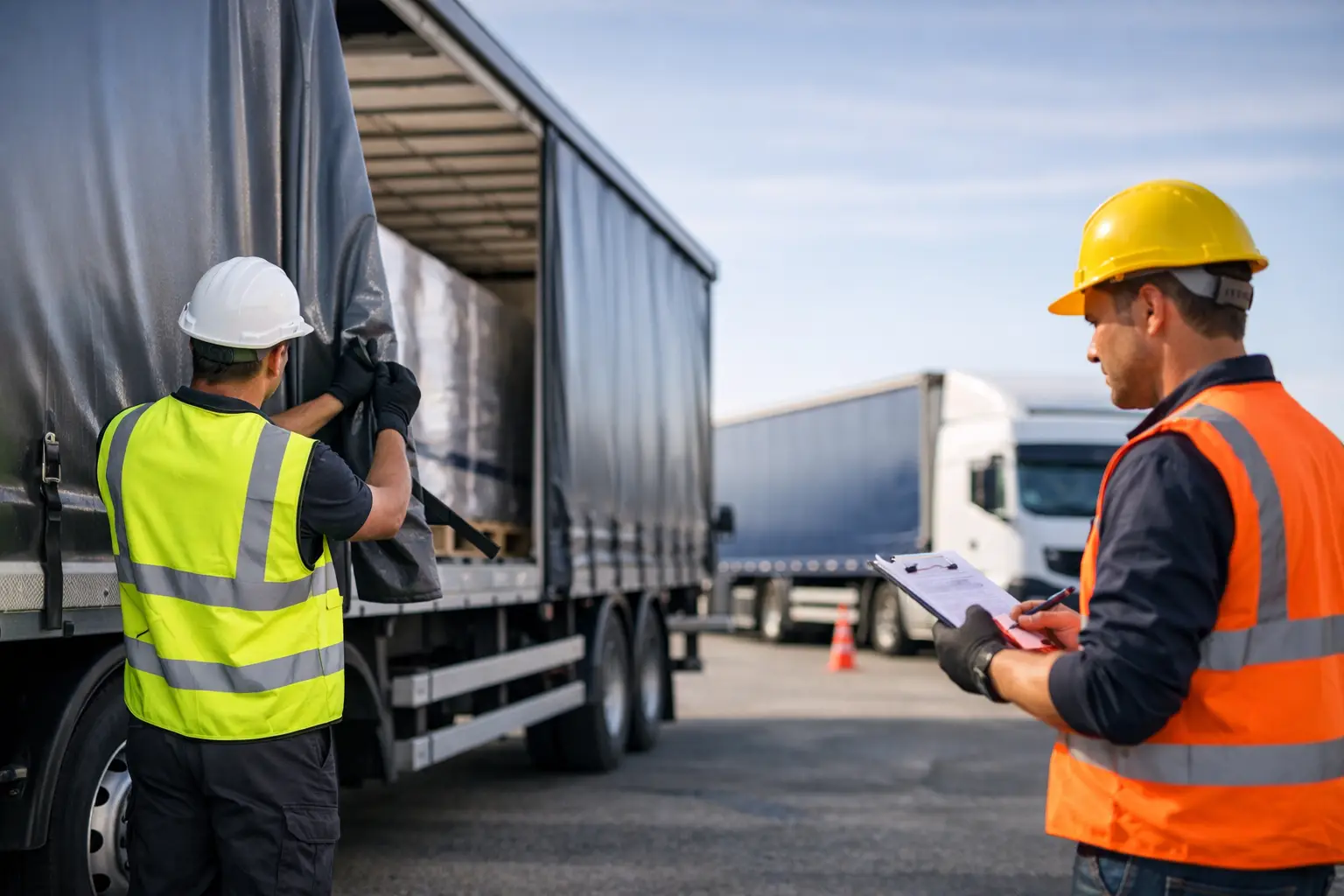
A curtain side truck safety guide should start where most incidents actually happen – not on the highway, but in the yard, at the dock, and on the roadside where drivers are asked to load, check and restrain freight under pressure. Curtain-sided trucks and tautliners are built for access and efficiency, but that same access can create risk when restraint systems rely on climbing, overreaching, repetitive strapping, or rushed decisions.
For fleet operators, the issue is not just compliance. It is lost time, manual handling exposure, damaged freight, preventable injuries, and vehicles sitting idle while a load is made safe. A safer truck body setup reduces those risks, but only when equipment, process and driver behaviour work together.
What makes curtain-sided trucks high risk
The curtain itself is often misunderstood. It contains the load only in limited circumstances and should never be treated as the primary restraint unless the body and curtain system are specifically engineered and rated for that task. Too many loading errors start with that assumption.
The real risk sits behind the curtain – unsecured or poorly restrained freight that can move under braking, cornering or uneven road conditions. Once freight shifts, the problem escalates quickly. A driver opening the curtain at delivery can be exposed to falling goods, and a small restraint failure can become a serious workplace incident.
There is also the physical strain. Traditional restraint methods in curtain-sided bodies can involve repeated throwing of straps, climbing onto decks, reaching overhead, working between closely packed pallets, and adjusting restraints from awkward positions. Over a full shift or across a fleet, that labour adds up to real injury risk and slower turnaround.
Curtain side truck safety guide – start with load restraint, not the curtain
Safe operation begins with one basic rule: restrain the freight properly inside the body. Curtains provide weather protection and controlled side access. They are not a shortcut around restraint planning.
Restraint needs to match the load. Palletised freight, mixed consignments, steel, packaged goods and awkward industrial items all behave differently in transit. The right setup depends on weight, shape, stack height, centre of gravity, friction with the deck, and whether the load can settle or compress during the trip.
That is why a one-size-fits-all approach usually fails in practice. A fleet moving stable pallet freight on metro runs may manage with a very different restraint process to an operator hauling mixed industrial loads across regional roads. Safe systems need to reflect the task, not just the vehicle type.
The loading stage is where safety is won or lost
If the freight goes on badly, the restraint job becomes harder and slower. Good loading discipline saves time because it reduces rework.
Freight should be placed to support even weight distribution and maintain vehicle stability. Heavy items belong where axle loading and restraint points can handle them properly. Gaps should be minimised where practical, because space allows movement. If a load can slide, tip or collapse before restraint is applied, the process has already started on the back foot.
Drivers and forklift operators need the same understanding of the load plan. When one side loads for speed and the other side has to fix it later, productivity disappears. Clear communication in the yard is a safety control, not just an admin task.
Reducing manual handling in daily restraint work
Many curtain-side injuries are not caused by a major crash event. They come from everyday strain – shoulders, backs, knees and hands copping repetitive work over months and years. That is why safer restraint systems matter commercially as much as they matter legally.
If a driver has to climb, stretch, drag or throw equipment repeatedly, the task carries a predictable manual handling risk. The safer option is to use restraint equipment designed to be applied from a safer working position with less physical effort and less time spent exposed beside the vehicle.
This is where equipment choice matters. A patented system built specifically for tautliners and curtain-sided trucks can reduce labour, improve consistency and lower driver exposure during loading. For many Australian fleets, that is not a nice extra. It is a practical way to improve safety and productivity at the same time.
A safer restraint process for drivers and operators
The most reliable loading systems are the ones drivers will actually use every day, under pressure, in weather, and across varied freight tasks. If the process is slow or awkward, shortcuts appear.
A sound process usually follows the same pattern. Check the body, track and restraint components before loading. Place freight to suit the run and the restraint plan. Apply restraints as the load is built, not as an afterthought. Confirm tension and positioning before departure. Recheck after the first part of the trip if the freight type calls for it.
Just as important is keeping the driver out of unnecessary risk zones. If the restraint method allows application from ground level or with minimal reaching, that is a better operational outcome than one that depends on balance, height or brute force.
Equipment condition matters more than most fleets admit
Even the best procedure fails if the gear is worn, damaged or badly fitted. Tracks, fittings, hooks, buckles and bungee components need regular inspection. Curtains also need attention, because torn or poorly tensioned curtains can create handling issues and hide developing restraint problems.
The same applies to compatibility. Restraint systems should suit the truck body and the work it performs. A system that integrates cleanly with common truck brands and established body builds is easier to maintain across a mixed fleet and easier to standardise in driver training.
Training should be practical, not theoretical
Drivers, workshop teams and loaders do not need long lectures. They need clear instruction on what good restraint looks like on the actual vehicles they use. Show the correct method, the common mistakes, and the point where a load is not safe to move.
Refresher training is worth doing after incident reviews, fleet expansion or equipment changes. New restraint hardware can improve safety, but only if the people using it understand why it is different and how to get the benefit from it.
Common failures this curtain side truck safety guide sees in the field
The same problems come up again and again. Freight is loaded with gaps that allow movement. Curtains are treated as restraint. Drivers are expected to fix poor loading with extra straps. Worn gear stays in service too long. Time pressure overrides the load plan. None of these failures are complicated, but all of them create exposure.
There is also a procurement issue. Some businesses still buy restraint gear on unit cost alone, then wear the labour cost, injury risk and lost loading time every day after. Cheap equipment can become expensive when it slows the operation or increases handling risk.
A better question is whether the restraint system helps the business run safer and faster over time. That is where Australian-made, purpose-built systems have an advantage. They are designed around real transport tasks, local support and repeatable daily use, not just catalogue specifications.
Building a safer fleet standard
The strongest safety result comes from standardisation. When trucks across the fleet use the same restraint method, the same fittings and the same operating steps, training becomes simpler and compliance becomes easier to manage. Workshop teams know what to inspect. Drivers know what good looks like. Managers can identify poor practice faster.
That does not mean every truck body must be identical. It means the safety standard should be. If a restraint system can be fitted through truck body builders and stockists across Australia, it becomes far easier to embed that standard across metro, regional and interstate work.
For businesses running curtain-sided trucks, safety is rarely improved by telling drivers to be more careful. It improves when the truck body, the restraint equipment and the loading process are designed to remove unnecessary risk from the job. That is the point. Better systems produce better habits.
A good day in transport is not one where nothing went wrong by luck. It is one where the load was secured properly, the driver was not overworked getting it there, and the truck got back on the road without wasting time. That is the standard worth building into every curtain-sided fleet.