
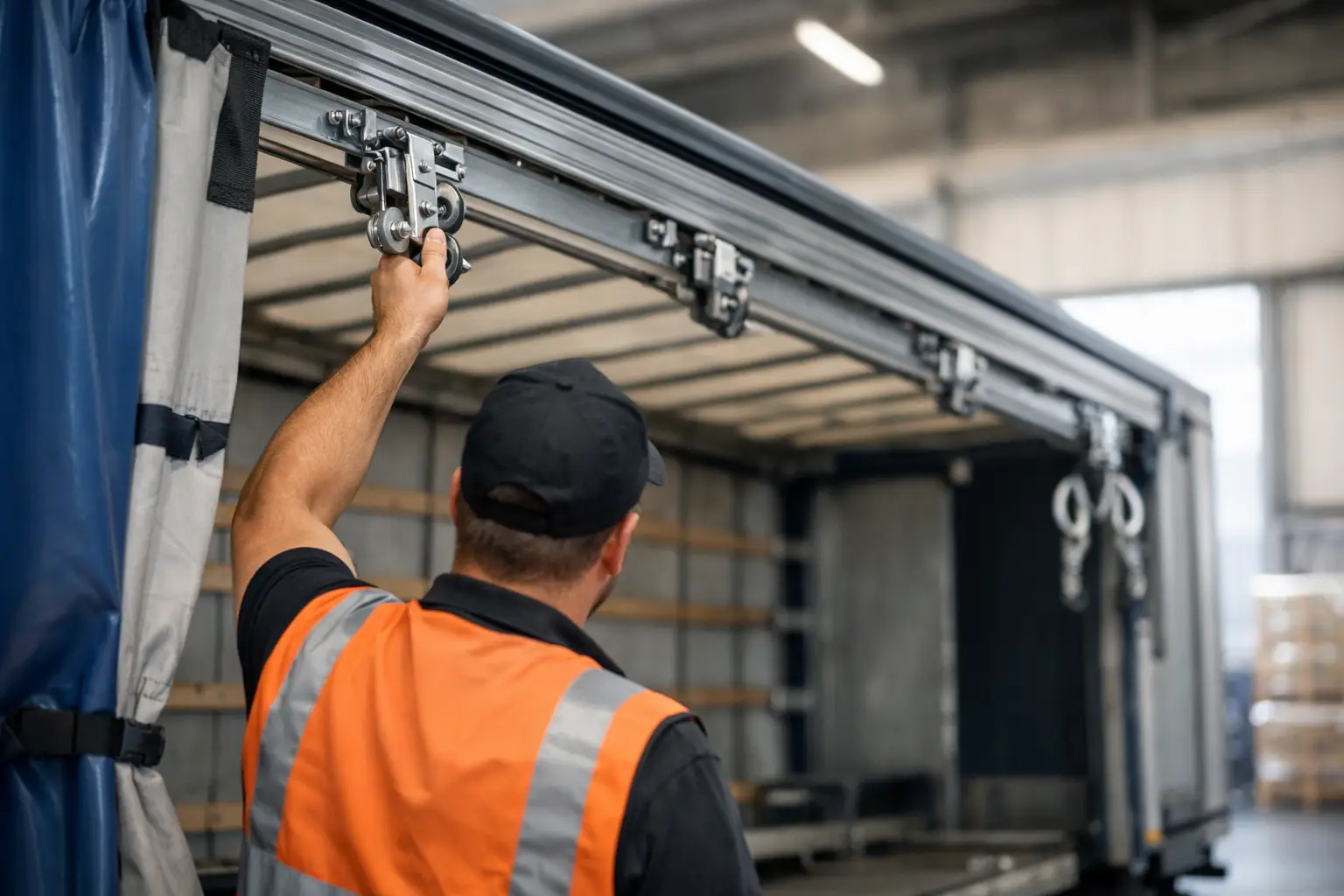
A new truck body is not the only time to improve load restraint. Can track systems retrofit an existing tautliner? In many cases, yes – provided the body structure, freight task and installation method are assessed properly. For fleet operators, that can mean safer restraint handling and less time spent securing everyday loads without taking a vehicle out of service for a full body replacement.
The key point is simple: a track system is not an accessory to bolt on wherever there is space. It is part of the restraint arrangement. Its position, fixing method and compatibility with the truck body all affect how safely and effectively the system performs.
When can track systems retrofit a tautliner?
Track systems can be retrofitted to many curtain-sided trucks and tautliners where there is suitable structural support inside the body. The right answer depends on the vehicle, not just its make or age. A well-maintained body with sound posts, rails and internal fixing locations may be a practical candidate. A body with damage, corrosion, previous unapproved modifications or uncertain structural capacity needs closer investigation first.
A retrofit is commonly considered when a fleet wants to reduce the physical work involved in applying conventional straps. Rather than climbing, reaching overhead or repeatedly handling loose restraint equipment, a track-mounted system can give drivers a more consistent restraint point and a more controlled process.
That does not mean every freight operation needs the same layout. Palletised general freight, packaged building products, irregular industrial loads and multi-drop work can place very different demands on the restraint system. The track position must support the actual loading pattern, not an idealised version of it.
The truck body comes first
Before any installation, inspect the body carefully. The installer needs to identify where the track can be fixed, how the fixing loads are transferred and whether the proposed position interferes with curtains, roof equipment, gates, load-rated rails or other body hardware.
This is why experienced truck body builders matter. They understand the construction of the body and can assess access, clearances and practical installation requirements. A system may suit a late-model tautliner from Isuzu, Hino, Fuso, Iveco, UD Trucks, Sitrak, Mercedes-Benz or Scania, but compatibility is still determined by the specific body fitted to that chassis.
Start with the freight task, not the hardware
The quickest way to get a poor outcome is to select a track layout before understanding what the truck carries. Load restraint should be planned around the freight, the loading method and the route conditions.
Consider the types of load carried most often, their height and weight distribution, whether they are loaded by forklift, whether the truck handles full loads or mixed consignments, and how frequently restraints are applied during a shift. A metro multi-drop vehicle may benefit from a setup that reduces repetitive handling. An interstate unit carrying consistent pallet freight may need a different arrangement that supports fast, repeatable loading at each depot.
It also pays to consider the exceptions. If a tautliner occasionally carries tall freight, machinery or odd-shaped items, the track and restraint arrangement must not limit safe loading or create a new obstruction. Retrofitting should improve the day-to-day task without compromising the jobs that fall outside the normal pattern.
What a proper retrofit assessment should cover
A practical assessment should be completed before components are ordered or fitted. It should cover more than measurements. The vehicle needs to be examined in its working condition, including any equipment already installed inside the body.
The assessment should address four areas:
- the condition and structure of the truck body, including suitable mounting locations;
- the load types, loading sequence and restraint forces expected in service;
- clearances for curtains, doors, forklifts, pallets and driver movement; and
- the installation method, inspection process and driver instruction required after fitment.
These checks protect both the operator and the investment. A poorly positioned track can restrict curtain operation, snag freight or make it harder to use the restraint equipment correctly. A correctly planned installation gives the driver a clear, repeatable routine.
Track position affects daily productivity
Height and placement are not minor details. If a restraint point is too high, the driver may still need to overreach or use unsafe access methods. If it is too low, the restraint may not control the load as intended. If the system is positioned where forklifts regularly approach, it may be exposed to impact damage.
The best position balances load control with ease of use. Drivers need enough room to operate the system from a safe stance, while loading staff need clear access to place freight without striking the equipment. This is particularly relevant on busy docks and uneven yards, where small inefficiencies quickly become repeated safety risks.
Safety gains depend on correct use
A track retrofit can reduce manual handling and remove some of the awkward movements associated with conventional load restraint. That is a meaningful benefit, especially for drivers completing multiple loads or deliveries each day. But equipment alone does not make a task safe.
Drivers still need to inspect the system before use, identify damaged components, understand the correct operating sequence and secure freight to suit the load. The curtain of a tautliner is generally not a load restraint device. Freight must be restrained appropriately within the body, using equipment suited to the task and operated in line with applicable requirements.
Training should be practical. A driver needs to see how the system works on the truck they operate, with the freight they actually carry. Short, site-based instruction is often more useful than a generic handout because it can address the real pinch points: where to stand, how to use an extendable pole where required, what to check before departure and when to report damage.
Plan for installation downtime and inspection
A retrofit usually requires less disruption than replacing a body, but the truck will still need to be scheduled out of service for assessment, installation and handover. The exact downtime varies with the vehicle, access to the installation points and the scale of the fit-out.
For larger fleets, it is sensible to stage the work. Fit one or two representative vehicles first, obtain feedback from drivers and supervisors, then standardise the layout across similar units where appropriate. This helps avoid installing a design that looks right on paper but creates problems in a live freight operation.
After installation, include the track system in regular vehicle and equipment checks. Look for loose or damaged fixings, deformation, corrosion, impact marks, worn moving parts and restraints that no longer operate as intended. Damaged equipment should be removed from service until it has been inspected and dealt with correctly.
Retrofit versus specifying on a new build
A new truck body gives the greatest freedom to integrate a track system during construction. Mounting locations can be planned early, body components can be selected around the restraint arrangement and the finished vehicle can be handed over with a consistent setup from day one.
Retrofit remains a strong option when existing tautliners have useful service life left and the body is suitable. It allows an operator to improve safety and handling now, rather than waiting for the next replacement cycle. The trade-off is that existing structure and layout set the boundaries. Some bodies will require a customised approach, while others may not be suitable for the proposed system at all.
For Australian operators, the most reliable path is to involve a qualified truck body builder or experienced installer early. Provide details of the vehicle, photos of the interior where requested and an honest picture of the freight task. That gives the installer the information needed to recommend a fit-for-purpose arrangement rather than a one-size-fits-all answer.
StrapNGo’s patented, Australian-made system is designed to support safer, lower-labour freight restraint in curtain-sided trucks, with installation available through established body builders and stockists. The value comes from applying the system correctly to the vehicle and the work it performs.
A retrofit should make the driver’s job simpler, not add another workaround. When the body is sound, the layout is planned around the load and the crew is shown how to use the equipment, a track system can be a practical step towards safer, more productive freight operations.