
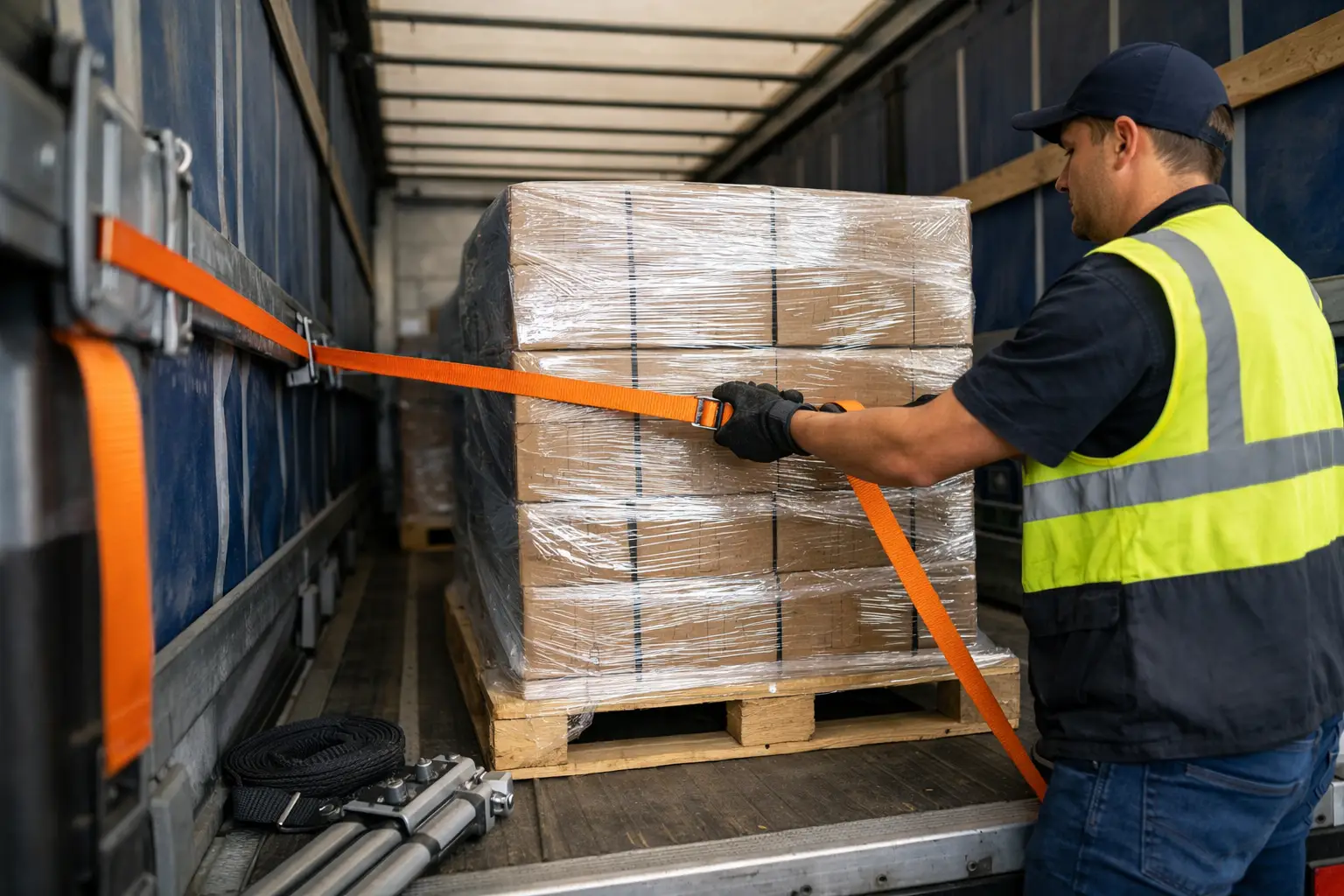
A shifted load in a tautliner rarely gives you much warning. You notice it when curtains are under pressure, straps are awkward to reach, or a delivery turns into a time-consuming reload on the side of the road. If you want to know how to secure freight tautliner operations safely, the answer starts well before the truck leaves the yard.
Load restraint in a curtain-sided body is not just about getting freight from A to B. It is about keeping drivers out of harm’s way, reducing manual handling, protecting the load, and making sure the vehicle can brake, corner and travel without freight moving inside the body. In day-to-day transport work, the best restraint method is the one that is safe, repeatable and quick enough to use properly every time.
How to secure freight tautliner loads properly
A tautliner curtain is not a load restraint system on its own. That point still gets missed in busy operations, especially when freight is packed tight and the run is short. Curtains help contain weather and provide side access, but they are not designed to restrain load movement unless they are part of a rated system and used exactly as specified.
That means freight needs positive restraint inside the body. The right setup depends on the freight type, weight, shape, stack height, pallet condition, and how many pick-ups and drops are built into the run. A single full load of uniform pallets is a different job from mixed freight with multiple delivery points. The restraint method has to suit the work, not just the truck.
At a practical level, securing freight in a tautliner comes down to four things – correct load placement, effective restraint equipment, safe access to the restraint points, and a process drivers can carry out without unnecessary strain or delay.
Start with load placement, not the straps
A poor load plan cannot be fixed with extra straps. Freight should be loaded to maintain vehicle stability, axle compliance and even weight distribution. Heavier items belong low and positioned to avoid overloading a single axle group. Lighter or crushable freight should not be buried under harder, denser product that can shift forward under braking.
Gaps matter. Even a small gap can allow freight to build momentum, especially on rough regional roads or during emergency braking. Where possible, loads should be packed tightly against a headboard, loading gate or other suitable blocking point. If gaps are unavoidable because of freight shape or delivery sequence, restraint has to make up for that movement risk.
This is where many fleets lose time. Drivers often end up adjusting, re-throwing or re-tensioning restraints because the load was not set up for the route in the first place. A smarter load plan reduces touches, shortens load times and lowers the chance of damage or injury.
Different freight needs different restraint
Palletised freight is generally straightforward if pallets are sound, stacks are stable and heights are consistent. Restraint becomes harder when pallets are broken, wrapping is loose, or mixed product creates uneven faces that straps cannot tension evenly across.
Long freight, machinery, steel, awkward fabricated items and mixed industrial loads need more thought. Some freight needs direct restraint to rated anchor points. Some needs containment combined with tie-down. Some loads are better secured with a dedicated internal system that keeps the driver from climbing, reaching or forcing straps into position manually.
There is no one-size-fits-all answer. The safe method depends on the load and the vehicle body.
Use restraint equipment that matches the task
Traditional restraint methods inside tautliners can be labour-heavy. Throwing straps over loads, climbing onto decks, reaching behind freight and working around curtains all add time and risk. If the process is hard work, it is more likely to be rushed, skipped or done inconsistently.
A better approach is to use a restraint system designed specifically for tautliners and curtain-sided trucks. That means equipment that can be deployed from a safer position, applies restraint where it is needed, and reduces manual handling. For many operators, that is the difference between a theoretical safety process and one that actually happens properly on every run.
The hardware matters. Tracks, restraint straps, buckles, hooks, poles and tensioning components all need to be fit for purpose and suitable for commercial freight use. Cheap gear does not stay cheap once it slows the job down, wears early or contributes to a load shift.
If you are reviewing your current setup, ask a simple question: does the system help the driver secure the load safely and quickly, or does it rely on workarounds and effort? In a busy fleet, that answer usually shows up in injury risk, loading times and equipment damage.
Driver safety is part of load restraint
Too many discussions about load security focus only on compliance after the truck is loaded. In reality, the loading task itself is one of the main hazards. Reaching overhead, dragging straps, climbing in and out of bodies, and working beside live loading areas all increase risk.
That is why safe restraint is not only about what holds the freight in place on the road. It is also about how the driver applies that restraint. A system that reduces climbing, stretching and manual force can improve safety immediately, while also making the task faster.
For fleets managing workers’ compensation exposure, fatigue and driver retention, this point matters. If a restraint process is physically demanding, it becomes harder to maintain across a large operation. If it is simpler and lower-labour, adoption is stronger and the standard stays more consistent from driver to driver.
Check restraint before departure and during the run
Even a well-secured load deserves a final inspection before departure. Look for leaning pallets, damaged packaging, uneven strap tension, unsecured gaps and anything pressing hard against curtains. Curtains should close properly and should not be carrying unexpected load force.
On longer or mixed-terrain runs, rechecks are just as important. Freight can settle, packaging can compress and road vibration can change strap tension. The exact timing depends on the load and the route, but the principle is simple – if conditions change, inspect the load again.
Productivity improves when restraint is built into the body
Operators often treat load restraint as a necessary delay between loading and departure. That is the wrong way to look at it. Done properly, restraint should be part of an efficient freight-handling process, not a separate headache at the end.
That is where purpose-built tautliner systems stand out. When the restraint method is integrated into the truck body and designed for fast deployment, loading becomes more predictable. Drivers spend less time wrestling with gear and more time getting the vehicle moving safely.
For multi-drop work, the benefit is even clearer. Every time freight is accessed, the driver needs to maintain control of the remaining load. A safer internal restraint system can make partial unloads more manageable and reduce the temptation to leave sections unsecured between stops.
This is not just about saving a few minutes. Across a fleet, faster restraint means better utilisation, less loading bay congestion and fewer delays that push runs into overtime. Safety and productivity are not competing priorities here. In a well-designed system, they support each other.
How to improve your tautliner restraint process
If your current method is slow, inconsistent or hard on drivers, start by reviewing the operation rather than blaming the people doing the work. Look at the freight profile, the truck bodies, the loading sequence and the restraint equipment currently in use. Most problems come from mismatch – the wrong system for the freight, or the right gear used in a way that does not suit the job.
Talk to drivers and workshop staff. They will tell you where time is lost, where injuries nearly happen, and which loads are hardest to secure. That practical feedback is often more valuable than a generic policy document.
It also pays to think long-term. A patented, Australian-made restraint system designed specifically for tautliners can give fleets a more consistent operating standard across different truck makes and body configurations. For operators running brands such as Isuzu, Iveco, Fuso, Hino, Sitrak, UD Trucks, Mercedes-Benz and Scania, compatibility and installer support are not small details. They affect rollout speed, maintenance and whole-of-fleet consistency.
StrapNGo is one example of that shift towards safer, lower-labour load restraint for curtain-sided trucks. The value is straightforward – improve driver safety, reduce physical effort and keep freight moving efficiently.
The real test of a restraint system
The best load restraint method is not the one that looks good in a manual. It is the one your team can use correctly, every day, under freight pressure, in all weather, across metro, regional and interstate work.
If you are working out how to secure freight tautliner loads more effectively, focus on a system that fits the body, suits the freight and protects the driver while the job is being done. When restraint is safer and simpler, compliance is easier to maintain and the whole operation runs better.
A good tautliner setup should let your drivers finish the job without forcing the issue, risking an injury or wasting time on gear that belongs in the past.