
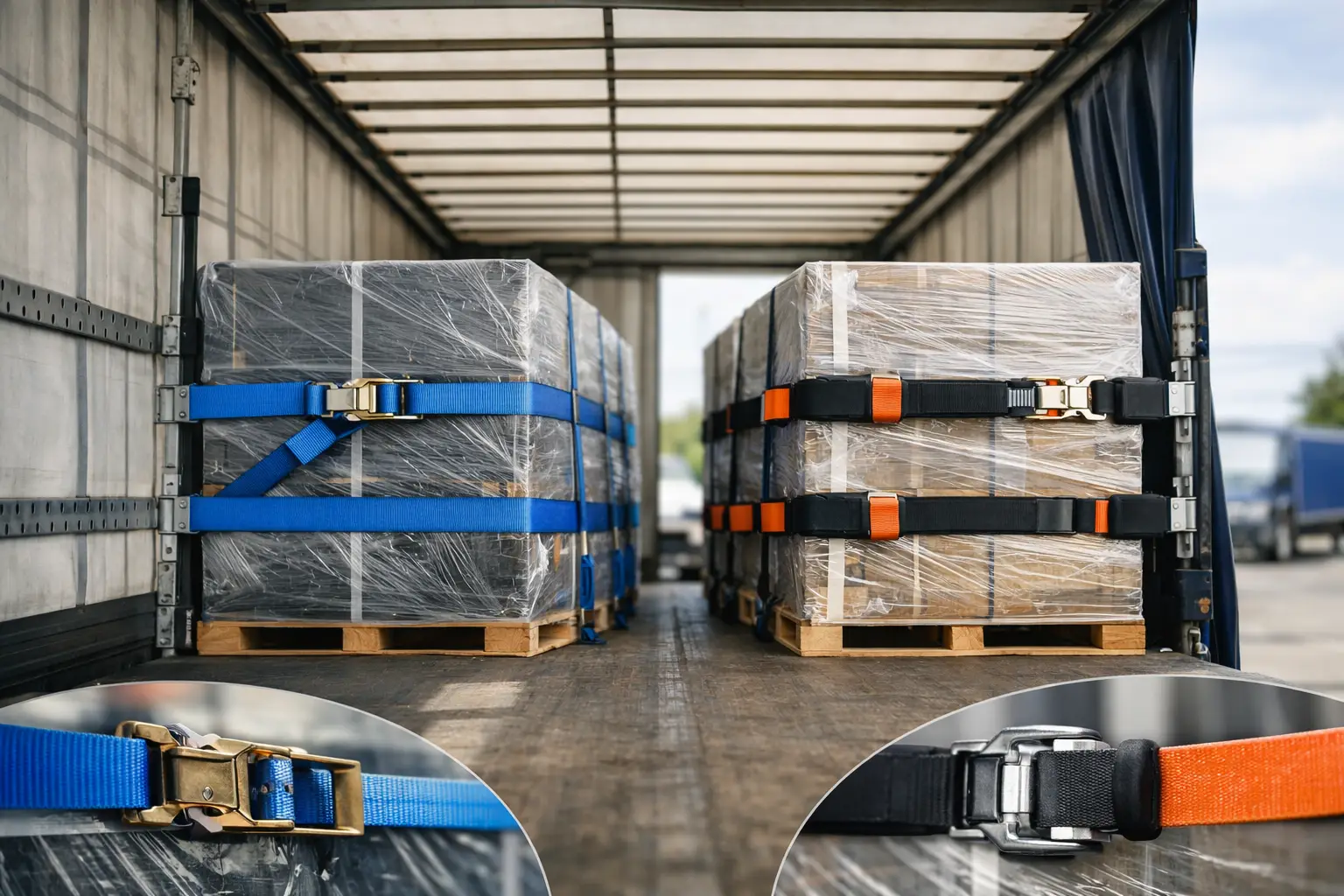
A proper tautliner restraint system comparison starts where the real cost sits – not at purchase, but at the curtain, on the roadside, in the yard, and at the end of a long shift when drivers are still climbing, reaching and tightening gear by hand. For fleet operators running curtain-siders every day, the right system is the one that improves safety and productivity without creating new delays, damage points or training issues.
That is why comparing restraint systems for tautliners needs more than a quick look at hardware. The better question is how each setup performs under daily freight conditions, with mixed loads, changing schedules and constant pressure to turn trucks around faster while keeping drivers safe.
What matters in a tautliner restraint system comparison
Most operators judge load restraint on four commercial measures: safety, labour, speed and consistency. Compliance matters, of course, but compliance on paper is only part of the story. A system that technically secures freight but still forces repeated manual handling, awkward reaching or climbing is carrying hidden risk every day.
Traditional restraint methods often rely on straps, gates, bars and manual positioning inside the body. These methods can still have a place, particularly for irregular freight or specialised applications, but they usually depend heavily on driver technique and physical effort. That creates variation between operators, shifts and sites.
By contrast, integrated restraint systems are designed to reduce that variation. They aim to make restraint faster to apply, easier to repeat and less physically demanding. In a busy fleet, that consistency can matter just as much as raw restraint strength.
Traditional straps and bars versus integrated systems
A useful tautliner restraint system comparison should separate conventional loose equipment from fixed or semi-fixed systems installed into the truck body. Both can restrain loads, but the operating experience is very different.
Traditional strap-based restraint
Standard straps are familiar, widely available and relatively low-cost to replace. They offer flexibility across many freight types and can be moved or reconfigured as needed. For operators carrying mixed palletised freight, that versatility is often the main reason they remain common.
The trade-off is labour. Manual strapping takes time, especially when multiple restraint points are needed across a load. It also increases driver exposure to stretching, pulling, climbing and awkward body positions. If the weather is poor, the truck is parked on an uneven shoulder, or the freight has shifted slightly, those risks increase.
There is also the issue of consistency. One experienced driver may apply straps efficiently and correctly every time, while another may be slower or less precise. Across a fleet, that variation affects both safety and productivity.
Fixed bars and gate systems
Bars and gate-style restraint can improve speed in some applications, particularly where freight dimensions are predictable. They can offer a more solid and repeatable setup than loose straps alone, and in the right body configuration they may reduce some manual handling.
However, fixed systems are only as useful as their fit to the freight task. If loads vary significantly in height, spacing or shape, rigid setups can become restrictive. They may also take up space, add handling steps or create compatibility issues if the truck body is used for different freight profiles.
Integrated tautliner restraint systems
Integrated systems built specifically for curtain-sided trucks are designed around the operating environment rather than just the restraint point. That distinction matters. Instead of treating load restraint as a separate manual task, they make it part of the body design and loading process.
When done well, that means less reaching, less climbing, fewer loose components and faster deployment. It also means a lower reliance on individual technique, which helps standardise restraint outcomes across drivers and depots.
Safety is the first dividing line
For most Australian operators, safety is the main reason to review restraint systems. The physical strain involved in manual restraint is well understood across the transport industry. Repeated shoulder work, pulling straps under tension, working beside traffic, and moving around loaded decks all add up over time.
A system that reduces manual handling is not just a driver comfort feature. It can lower exposure to injury risk, reduce fatigue through the shift and make roadside or kerbside work safer. That has practical value for owner-drivers and large fleets alike.
This is where patented integrated systems stand apart from basic restraint gear. The best designs are built to let drivers secure freight with minimal labour and less time spent inside the danger zone around the load. In practical terms, that can mean fewer high-effort movements and less need to climb onto or into the body during restraint.
Not every operation needs the same level of integration. If a truck only occasionally carries restrained freight, a conventional setup may still be workable. But for high-frequency multi-drop work, repetitive manual restraint becomes a cost centre quickly.
Productivity is where the numbers add up
A restraint system may look acceptable in the workshop and still slow the operation down on the road. That is why loading speed and turnaround time need to sit alongside safety in any real comparison.
Manual systems usually become slower as freight complexity rises. Extra pallets, uneven distribution, urgent reloads and mixed consignments all create more handling steps. Those minutes matter. Across one truck, they may seem manageable. Across a fleet, they accumulate into labour cost, missed windows and lower asset utilisation.
Integrated systems generally perform best when operators want a repeatable process. If the driver can secure and release freight faster with fewer steps, the truck spends less time stationary and more time earning. That is the commercial outcome procurement teams and operations managers should be measuring.
For truck body builders, this also matters at handover. A restraint setup that is easy to demonstrate and easy for the customer to use has stronger long-term value than one that looks fine at fit-out but creates operational friction later.
Fit, compatibility and installation matter more than brochures
A restraint system is only useful if it works with the truck body, the freight task and the operator’s daily routine. In any tautliner restraint system comparison, compatibility should be checked early. That includes body design, track layout, access points, freight dimensions and whether the system can be supported through local installers or body builders.
Australian fleets do not operate in ideal conditions. Equipment needs to handle hard use, varied routes and different vehicle makes across the fleet. A system that can be installed through established truck body builders and used across major brands gives operators a more practical path to rollout and maintenance.
That is one reason Australian-made systems often appeal to local operators. Support availability, product familiarity and supply confidence all count when equipment is being fitted across working vehicles rather than trialled in theory.
Choosing for your freight task
There is no single best restraint setup for every tautliner. It depends on what you carry, how often you load, and how much manual handling you are prepared to accept.
If your freight is irregular, low-frequency and highly variable, traditional straps may still offer enough flexibility. If your operation runs repeated pallet freight, regular multi-drop work or high daily restraint volumes, the balance often shifts toward integrated systems that reduce labour and standardise the task.
If driver safety incidents, loading delays or restraint inconsistency are already causing friction, that is usually the signal to look beyond the cheapest hardware option. The purchase price is only one line item. The bigger costs sit in injury exposure, slower loading and avoidable variation between drivers.
For many fleets, the strongest option is the one that combines compliant restraint with lower physical effort and faster handling. That is where a patented system such as StrapNGo fits the market well – not as a generic accessory, but as a practical transport safety solution built around safer loading and higher productivity in real tautliner operations.
The best comparison is not between products on a spec sheet. It is between the work your drivers do now and the work they should not have to do tomorrow.