
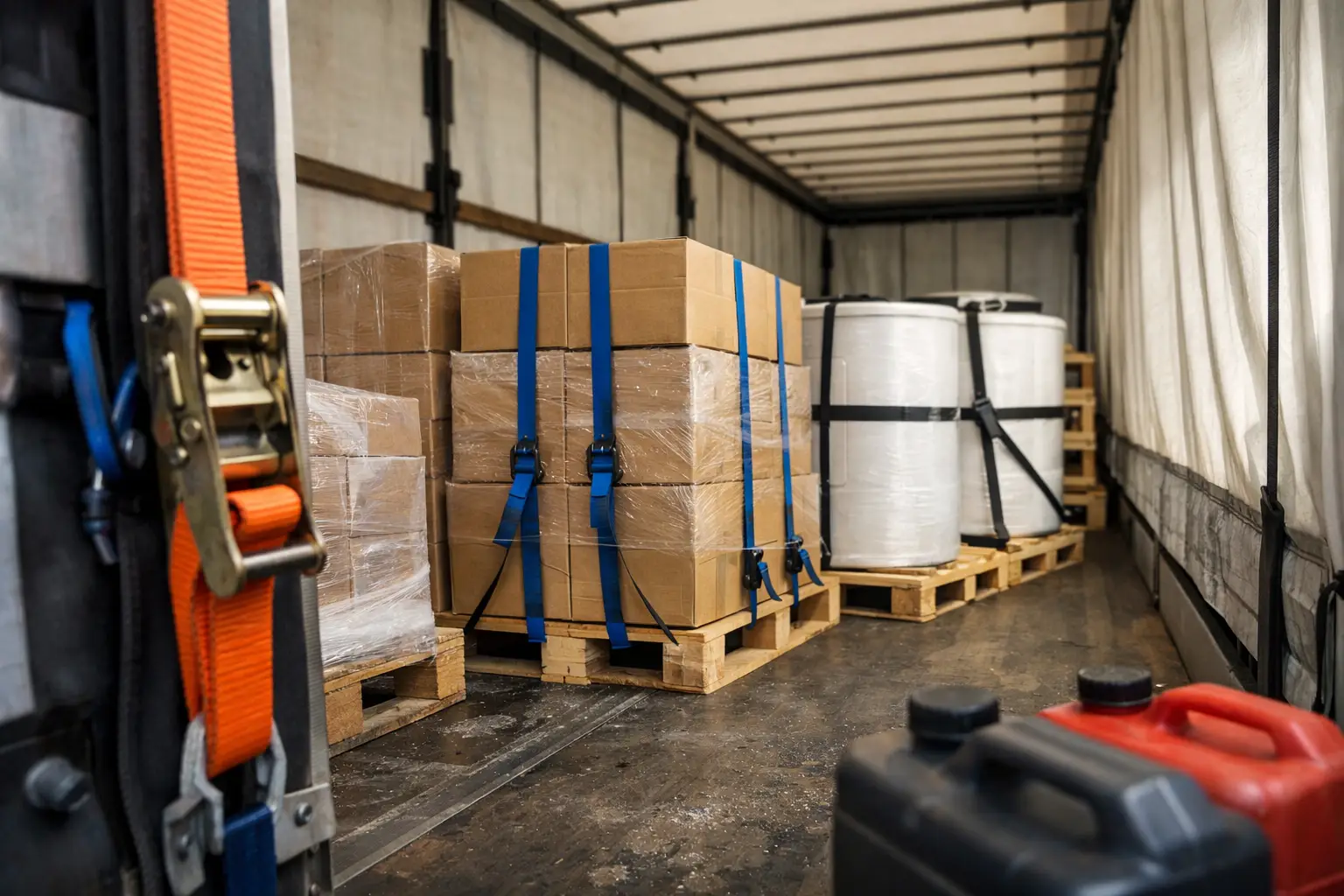
One hard brake, one roundabout taken a touch too fast, or one poorly packed pallet is all it takes for a load to move when it should not. If you are working out how to prevent freight shift, the answer is not one strap thrown over the top at the last minute. It comes down to load planning, the right restraint system, and a safer process that drivers can use properly every day.
Freight shift is not just a cargo problem. It is a driver safety problem, a compliance problem, and a productivity problem. In curtain-sided trucks and tautliners, that risk is even more relevant because the curtain is not a load restraint device. Too many operators still rely on workarounds that slow the job down and increase manual handling, especially when loads change from run to run.
Why freight shift happens in the first place
Freight moves when the restraint method does not match the load. That can mean not enough restraint points, poor load distribution, unstable packaging, worn equipment, or simple gaps between items that allow momentum to build. Even a well-packed load can shift if the truck body is not set up to restrain it efficiently.
The problem is rarely caused by one factor alone. A light, awkward load may need a different approach from dense palletised freight. Mixed freight adds another layer again. If there are voids in the load, inconsistent pallet heights, or goods loaded in the wrong sequence, the risk increases before the truck has even left the yard.
Road conditions matter too. Regional routes, uneven surfaces, emergency braking and repeated cornering all place force on the load. A restraint method that seems acceptable in the depot can fail quickly once the vehicle is in real operating conditions.
How to prevent freight shift before the truck leaves the yard
The best time to prevent freight shift is during loading, not after the curtain is closed. That starts with understanding the freight itself. Weight, shape, packaging strength and stackability all affect how the load should be restrained.
Heavier items should sit low and be positioned to support axle compliance and overall stability. Freight with weak packaging should not carry heavy loads on top of it. If you are carrying mixed freight, separate incompatible shapes and heights where possible rather than trying to force one restraint method across the whole deck.
Just as important is reducing empty space. Gaps let freight build momentum. Once that movement starts, the force on restraints increases quickly. Good loading practice aims to keep the load compact, stable and supported across the journey, not just at dispatch.
Restraint systems matter more than extra effort
A common mistake is assuming more labour equals more safety. In practice, repeated manual strapping inside a tautliner can create its own risks. Drivers climb, stretch, reach and work around unstable freight, often under time pressure. That is not an efficient safety model.
A better approach is to use a restraint system designed for the truck body and the freight task. In tautliners and curtain-siders, the system needs to be easy to deploy, consistent to use and capable of securing freight without turning every stop into a manual handling job.
This is where fixed internal restraint systems have a clear advantage over ad hoc methods. When the restraint is built into the vehicle setup, drivers are more likely to use it correctly and use it every time. That improves consistency across the fleet, which is what operators need if they are serious about safety and productivity.
How to prevent freight shift in tautliners with less manual handling
If you want to know how to prevent freight shift in a tautliner, focus on two things at once – load control and driver exposure. A restraint method that works only when a driver climbs in and wrestles with straps is not solving the full problem.
The safer option is a system that allows freight to be restrained from a more controlled position, with minimal reaching and less time spent inside the truck body. That reduces physical strain and lowers the chance of injury during loading and unloading. It also helps keep the job moving, which matters when vehicles are turning around quickly or working multi-drop runs.
There is no single setup that suits every freight profile. Palletised FMCG, industrial product, machinery components and mixed general freight all behave differently. But the principle stays the same. The restraint method should be repeatable, fast and suitable for the type of movement the load is likely to experience.
Equipment condition is part of load security
Even the best loading plan can be undermined by worn or damaged gear. Frayed straps, bent track, faulty fittings and tired components reduce restraint performance and create doubt for the driver using them. If the equipment does not look trustworthy, people start improvising.
That is why inspection routines matter. Restraint gear should be checked as part of normal fleet maintenance, not only when something fails. For workshops and fleet managers, that means looking at the whole system, including track, anchor points, hardware and any operating tools used to position restraints.
Quality of manufacture matters here as well. Transport equipment works in tough conditions, and cheap components rarely stay cheap once downtime, replacement cycles and safety exposure are factored in. A patented, Australian-made load restraint system built for local freight conditions gives operators more confidence than generic gear not designed around the realities of tautliner work.
Training has to be practical, not theoretical
Most operators know restraint matters. The issue is whether drivers and loaders can apply the right method under real conditions. If the process is too slow, too awkward or too physically demanding, shortcuts appear.
Training should be based on actual freight tasks, not just broad safety statements. Show drivers how different loads behave. Make clear where the restraint should sit, how much tension is required, and when a different setup is needed. Workshop and operations teams should be aligned as well, because a restraint process only works if the truck body, equipment and loading practice all support each other.
It also helps to remove avoidable complexity. The simpler the system, the easier it is to train, supervise and repeat across multiple vehicles and drivers. That is one reason many Australian fleets are shifting towards integrated restraint solutions rather than relying on loose gear and individual workarounds.
Compliance is part of the conversation, but not the whole point
Operators often start asking how to prevent freight shift because they are thinking about compliance. That is reasonable. A moving load can lead to defects, enforcement action, damaged freight and serious incident exposure.
But compliance alone is too narrow a target. The stronger commercial case is that good restraint protects drivers, reduces loading time and cuts the hidden costs of poor processes. If every delivery requires extra labour, repeated adjustments or freight rework on arrival, the business is paying for an inefficient setup every day.
The right restraint system supports both sides of the job. It helps operators meet their safety obligations while making the loading task faster and more controlled. That balance matters to fleets running hard schedules, owner-drivers managing their own risk, and truck body builders fitting out vehicles that need to perform from day one.
Choosing a better long-term solution
If freight shift is a recurring issue in your operation, it is worth looking beyond procedural fixes. Telling drivers to be more careful will not solve a restraint method that is slow, inconsistent or physically demanding. The truck setup itself may need to change.
For tautliners and curtain-sided trucks, a purpose-built internal load restraint system can deliver a better result than patching together old methods. The gain is not just in load security. It is in reduced labour, improved driver safety and more consistent loading across the fleet. That is why systems like StrapNGo have found a place in Australian transport operations that need practical safety improvements without complicating the job.
The best restraint method is the one your team can use properly, quickly and every single day. If it supports safer handling and keeps freight where it belongs, it is doing more than preventing movement. It is helping the whole operation run the way it should.