
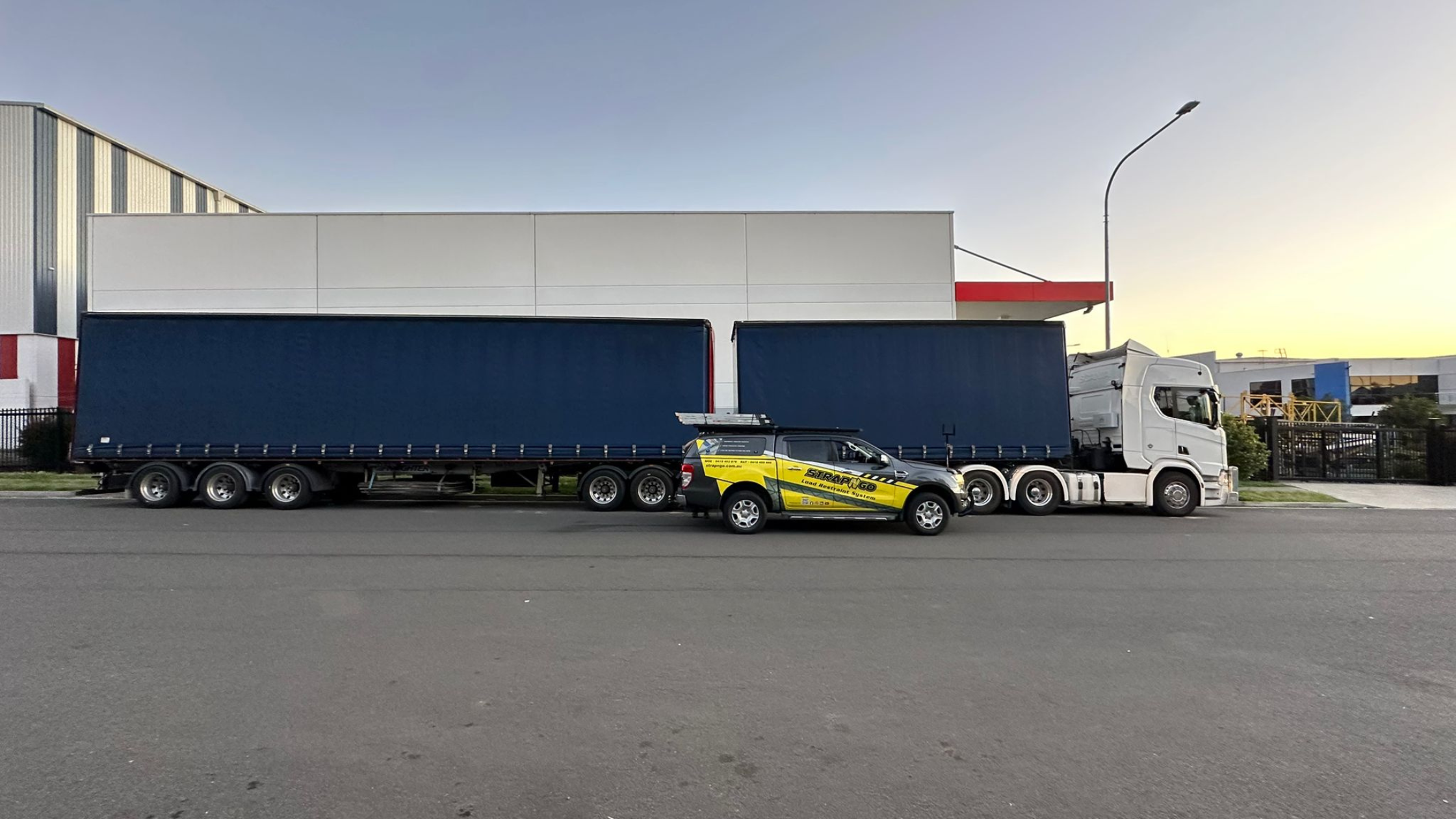
A load shift on a curtain-sider rarely starts as a big mistake. More often, it starts with a rushed schedule, awkward freight, a driver stretching too far, or a restraint method that takes too much effort to use properly every single time. That is where load restraint compliance Australia becomes a real operational issue, not just a box to tick.
For fleet operators, owner-drivers and truck body builders, compliance sits at the intersection of safety, productivity and practicality. If a restraint system is slow, physically demanding or hard to apply consistently, the risk goes up. If it is easy to use, repeatable and suited to the vehicle body, the chances of doing the job correctly every time improve. That matters on the road, at the loading dock and in the workshop.
What load restraint compliance Australia actually means
In practical terms, load restraint compliance Australia means freight must be restrained so it stays where it should under normal driving conditions. That includes braking, cornering, acceleration, road vibration and evasive manoeuvres. The goal is simple – the load must not shift in a way that creates a danger to the driver, the vehicle or other road users.
The legal and safety expectation is not limited to whether freight stays inside the truck. A load can still be non-compliant even if nothing falls out. If it moves enough to affect vehicle stability, damages the curtain, increases the chance of collapse during unloading or creates a manual handling hazard for the driver, there is a problem.
This is why compliance decisions should not be made on appearance alone. A neat-looking load is not always a secure load. The restraint method, the fit for the freight type, the condition of the equipment and the way the task is carried out all matter.
Compliance is also a driver safety issue
Too many conversations about restraint focus only on roadside enforcement. That is part of the picture, but it is not the full picture. The larger issue is driver exposure.
With tautliners and curtain-sided trucks, traditional restraint methods can require repeated climbing, reaching, throwing straps, tightening gear and working close to traffic or unstable freight. Each step adds physical strain and another chance for injury. Over a week, that strain accumulates. Over a fleet, it becomes a workers compensation and downtime issue.
A compliant operation is one where the restraint method supports the person doing the work. If a system reduces climbing, cuts manual effort and allows freight to be secured from a safer position, that is not just convenient. It directly supports better compliance because drivers are more likely to use it correctly and consistently.
Why tautliners and curtain-siders need special attention
Curtains are not load restraint devices. In the industry, that point is well understood, but day-to-day pressure can blur the line. When freight is loaded tightly and the curtain closes neatly, there can be a false sense of security. The curtain may contain the space, but it does not replace a proper restraint system.
That is why tautliners and curtain-siders need a restraint approach built around what actually happens in these bodies. Freight varies. Delivery schedules are tight. Loads can be partial, mixed or awkwardly shaped. Drivers often need to secure freight quickly across multiple stops. A method that works in theory but slows the job down in practice is often where compliance starts to slip.
The right setup depends on the freight task. Palletised goods, mixed industrial freight and regional distribution work all bring different demands. In some operations, traditional straps may still suit part of the task. In others, an internal restraint system designed specifically for curtain-sided bodies can deliver a safer and more efficient result. It depends on load type, body configuration and how often the vehicle is loaded and unloaded.
The biggest compliance failures are usually system failures
When loads are poorly restrained, the immediate focus often falls on the driver. Sometimes that is fair. Often, it misses the bigger issue. Repeated restraint failures usually point to a system problem.
That system problem might be equipment that is too slow to use, poor body design, damaged hardware, inconsistent loading practices, lack of training or a restraint method that does not match the freight profile. If drivers have to improvise to get the work done, compliance becomes unreliable.
A better question is this: can your current setup be applied correctly, under time pressure, by different drivers, across different loads, every day? If the honest answer is no, there is a compliance gap even before an incident occurs.
Choosing equipment that supports compliance
The most effective restraint equipment does two jobs at once. It helps secure the load, and it makes the correct process easier to follow.
For curtain-sided fleets, that usually means looking closely at internal restraint systems, track placement, hardware durability and how the operator interacts with the equipment. A good system should reduce unnecessary handling, keep the task inside the truck body where possible and minimise awkward movements. It should also stand up to commercial use without constant adjustment or replacement.
This is where patented, purpose-built systems have a clear advantage over makeshift approaches. Equipment designed specifically for tautliners is more likely to integrate cleanly with the truck body, work consistently across common freight tasks and support a repeatable loading process. That matters for owner-drivers, but it matters even more for larger fleets trying to maintain standards across multiple vehicles and operators.
Australian-made equipment also has practical value beyond the badge. It supports local supply, local support and product design based on local freight conditions. For workshops and procurement teams, that can make installation, servicing and fleet standardisation more straightforward.
Load restraint compliance Australia in the workshop and procurement process
Compliance is not only decided at the loading bay. It often starts earlier, when a truck body is specified, built or upgraded.
Truck body builders and workshop managers play a key role here. If a restraint system is added as an afterthought, there can be compromises in fit, usability and durability. If restraint is considered during the body build or fleet upgrade stage, the result is usually cleaner, safer and easier for drivers to use.
Procurement teams should be asking practical questions, not just comparing unit prices. How long does the restraint process take per load? How much manual effort is involved? Can the system be installed across major truck brands and body types? Will it help reduce injury exposure and loading delays? Can drivers use it correctly without workarounds?
A cheaper option that costs time on every load, increases strain and leads to inconsistent use is rarely the cheaper option for long.
Building a safer, faster restraint process
The strongest compliance outcomes usually come from standardising the task. When the method is clear and the equipment is designed to support it, the whole operation becomes more predictable.
That means giving drivers a restraint system they can use without unnecessary climbing or overreaching. It means making sure hardware is kept in working order. It means matching the restraint approach to the freight profile rather than forcing one method onto every load. And it means treating productivity and safety as connected, not competing, outcomes.
A well-designed internal restraint system can help achieve that balance. By reducing labour and making freight securement faster, it removes some of the pressure points that lead to shortcuts. That is one reason businesses across Australia are moving towards solutions that are built specifically for curtain-sided trucks rather than relying on older, heavier manual processes.
For operators looking to improve both safety and output, StrapNGo reflects that shift – a patented Australian-made restraint system designed to make load securement safer, quicker and more practical in real fleet conditions.
What good compliance looks like day to day
Good compliance is not flashy. It is consistent. The freight is secured properly. The driver is not taking unnecessary risks. The loading task does not rely on brute force. The workshop knows the equipment fits the body. The business can show a clear, defensible approach to restraint.
That standard is achievable, but only when restraint is treated as part of operational design rather than a last-minute task. The more your restraint method depends on perfect behaviour under pressure, the more fragile your compliance becomes. The better approach is to give your people equipment and processes that make the safe option the practical option.
If you are reviewing load restraint compliance Australia across your fleet, start with the reality of the job, not the paperwork. Look at what drivers actually do, where the effort sits and what slows the task down. That is usually where the clearest improvement opportunity is found.