
A roadside delivery can go sideways fast. One uneven shoulder, one rushed unload, one driver climbing in and out of a curtain-sided truck too many times, and a routine stop turns into a safety issue, a delay, or both. That is why safe loading for roadside deliveries matters well beyond compliance. It affects driver welfare, turnaround times, freight integrity and the real cost of every run.
For operators running tautliners and curtain-sided trucks, roadside work comes with conditions you do not control. Traffic keeps moving. Ground levels vary. Space is tight. Customers still expect freight on time. In that environment, the loading method has to do more than hold cargo in place. It has to reduce manual handling, limit exposure to traffic and help drivers secure and release loads with less physical effort.
Why safe loading for roadside deliveries is different
A warehouse dock gives you structure. A roadside drop rarely does. Drivers may be working beside live traffic, on gravel, on a sloping verge, or in industrial areas where forklifts, pedestrians and other vehicles are all sharing limited space. The risk profile changes straight away.
The first issue is access. When restraint systems are awkward to reach or require repeated climbing, stretching or walking the full length of the truck, every extra movement adds time and risk. The second issue is consistency. A method that works well in a depot can become unreliable when the driver is under pressure to unload quickly in a less controlled setting.
There is also the simple fact that roadside deliveries often involve partial loads. Once part of the freight is removed, the remaining load still needs to be restrained properly for the next leg. If that process is slow or labour-heavy, drivers are more likely to cut corners. That is where incidents start.
The real hazards at the roadside
Most transport operators know the obvious hazards, but the operational impact often gets underestimated. Manual restraint tasks can expose drivers to shoulder strain, back injuries and slips when they are working around curtains, buckles, tracks and awkward freight positions. Add weather, poor lighting or soft ground and the task becomes harder again.
Traffic exposure is another serious factor. The longer a driver spends outside the vehicle body adjusting restraints or moving around the side of the truck, the longer they remain in a live-risk zone. Reducing that time is not just good practice. It is a practical control measure.
Freight movement is the third pressure point. A load that was secure at departure can behave differently after several stops, especially if deliveries are staggered and weight distribution changes across the route. Safe restraint for roadside work needs to account for that changing load profile, not just the first departure from the yard.
What a safer loading process looks like
A safer process is usually a simpler one. Drivers need a system that allows them to secure and release freight without unnecessary climbing, lifting or overreaching. They also need a setup that is repeatable across different truck bodies, freight types and delivery conditions.
In practice, safe loading starts before the first strap is applied. The load should be planned in delivery order so drivers are not disturbing more freight than needed at each stop. Heavier freight should remain properly supported and restrained as the delivery sequence progresses. Clear separation between consignments also helps reduce unnecessary handling at the roadside.
The restraint method itself should support quick engagement and release from a safer working position. If a driver needs excessive force, multiple adjustment points or repeated access along the body, productivity drops and injury risk rises. A lower-labour approach is not just about saving time. It is about making the safe option the easy option.
Safe loading for roadside deliveries starts with restraint design
Not all restraint systems are equal once a truck leaves the depot. Traditional methods can do the job, but they often rely heavily on manual effort. That is where design matters.
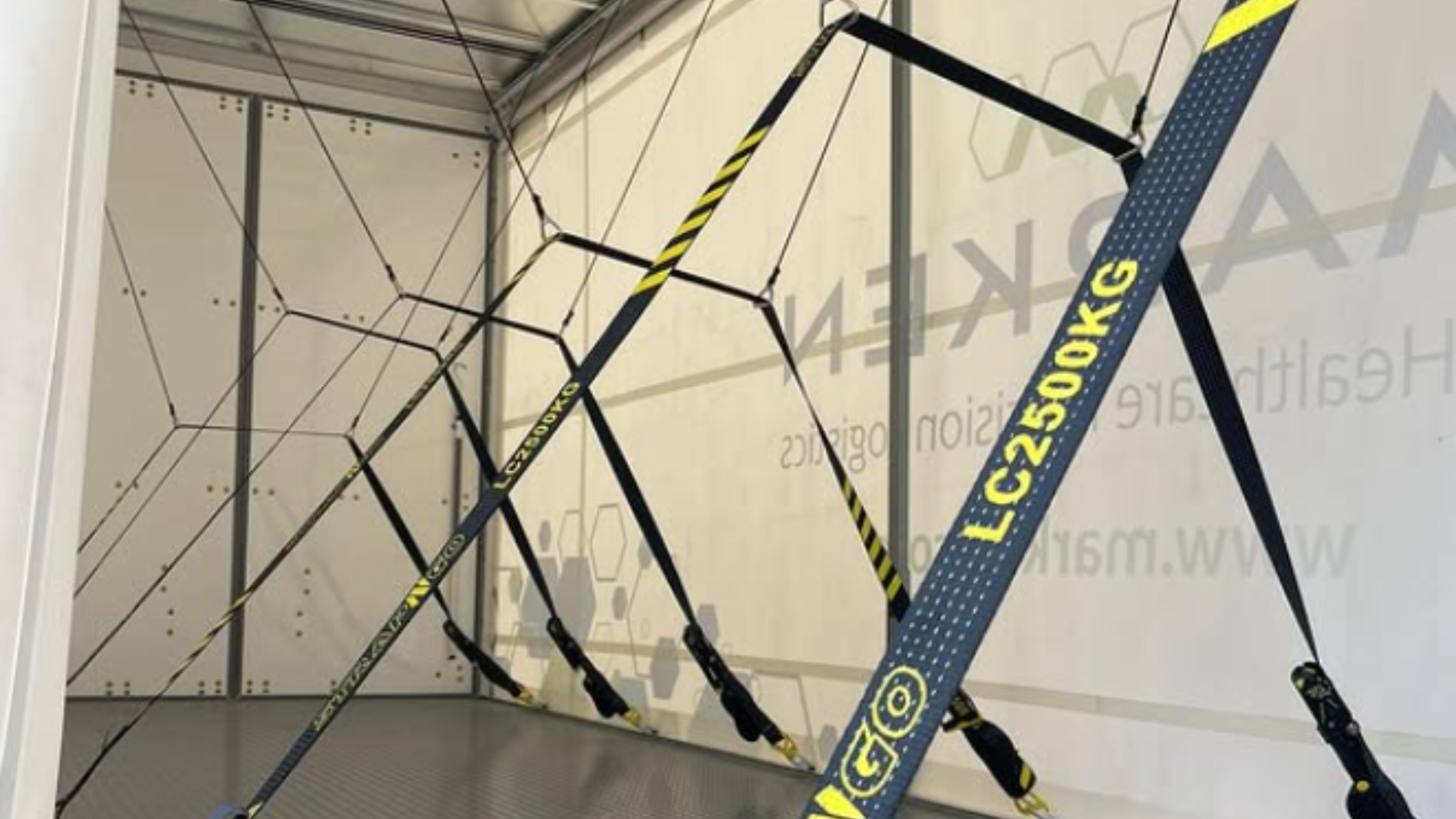
A restraint system built for tautliners and curtain-sided trucks should help drivers secure freight from a more controlled position and with fewer movements. It should be suited to repeated multi-drop work, not just linehaul conditions where the load stays untouched for long stretches. It should also integrate cleanly with the truck body rather than creating more clutter, snag points or extra steps.
This is where patented systems designed specifically for curtain-sided operations can make a measurable difference. By reducing the physical effort required to position and apply restraints, operators can improve both safety and productivity at the same time. That combination matters because a process that is safer but too slow often gets bypassed in the real world. A process that is faster and safer is far more likely to be followed properly.
Productivity is part of the safety equation
There is a tendency to treat safety and efficiency as separate conversations. On the road, they are closely linked. If a driver can secure a load faster with minimal labour, they spend less time exposed at the roadside. They are less fatigued over the course of a shift. They are also more likely to resecure remaining freight correctly after each stop.
For fleet operators, that flows through to vehicle utilisation, delivery performance and injury prevention. A restraint process that trims minutes off every stop can produce meaningful savings across a multi-vehicle fleet. If it also reduces manual handling incidents, the value goes beyond time alone.
That is why no-nonsense transport businesses look hard at loading systems, not just freight schedules. Better restraint design is not an accessory. It is part of operational control.
What fleet managers and drivers should check
If roadside deliveries are part of the daily task, it is worth reviewing the full loading process rather than focusing only on driver behaviour. Start with the obvious question: how much manual handling does the current method actually require? If drivers are climbing, dragging, reaching or constantly repositioning themselves to secure freight, there is room to improve.
Next, look at consistency across the fleet. Mixed restraint methods create mixed outcomes. Standardising the approach across compatible truck bodies makes training easier and gives drivers a repeatable process under pressure.
It is also worth checking how well the restraint system supports partial loads. Many roadside issues appear after the first or second drop, when the original load pattern has changed. A good system should still allow quick, secure restraint of the remaining freight without turning each stop into a wrestling match.
Finally, ask drivers where time is actually being lost. The best feedback often comes from the cab, not the office. Drivers can tell you where the process becomes awkward, where they feel overexposed, and where the current method encourages shortcuts.
A practical standard for roadside operations
Safe roadside loading is not about making the job slow or overcomplicated. It is about removing unnecessary risk from a task that already happens in less-than-ideal conditions. The best standard is one that drivers can apply every day, on real routes, under real delivery pressure.
That usually means three things. The restraint system must be secure. It must require minimal labour. And it must suit the truck body and freight task. When those elements line up, drivers are better protected and freight keeps moving.
For Australian fleets running tautliners and curtain-sided trucks, the commercial case is straightforward. Safer restraint methods reduce physical strain, help manage roadside hazards and support faster, more consistent deliveries. StrapNGo was built around exactly that outcome, with a patented Australian-made system designed to improve safety and productivity where it counts – on the truck, on the route and at the point of delivery.
Roadside deliveries will never be a perfectly controlled environment. The goal is to give drivers a loading system that performs reliably anyway, with less effort, less exposure and fewer chances for something to go wrong.