
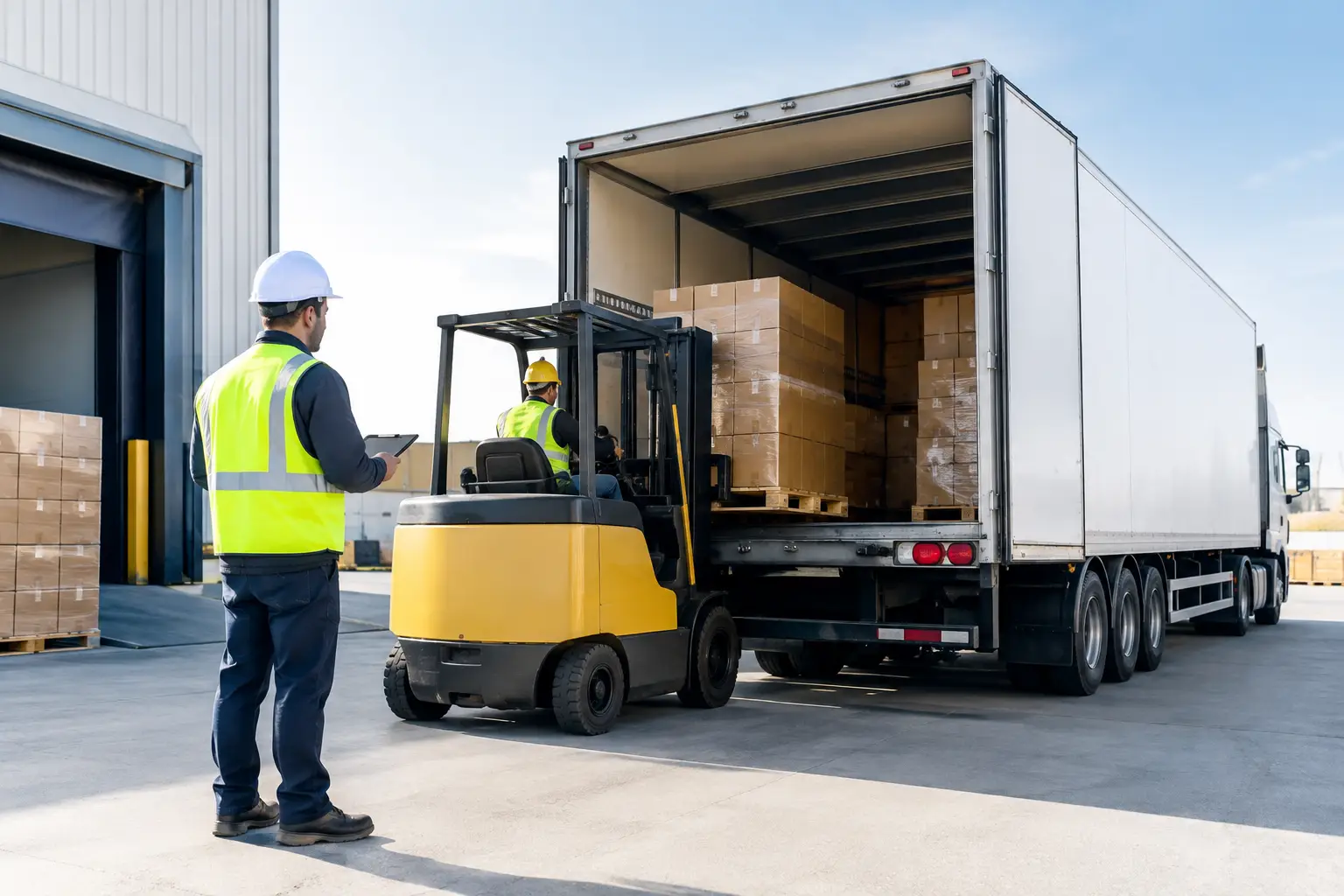
A rushed load can create problems long before the truck reaches the gate. Freight that is poorly positioned, difficult to restrain or loaded in the wrong sequence puts pressure on drivers, dispatch teams and delivery schedules. Effective truck loading planning gives every load a clear method – from allocation and placement through to restraint, final checks and safe unloading.
For curtain-sided trucks and tautliners, the plan needs to account for more than cubic capacity. It must consider load weight, load shape, restraint needs, axle distribution, the delivery run and the work required of the driver at every stop. The practical goal is straightforward: safe and secure freight, with minimal labour and less exposure to manual handling risk.
Truck Loading Planning Starts Before the Freight Arrives
A sound plan begins with accurate freight information. If operations only know the number of pallets, they do not have enough information to load safely. The loader or dispatcher should also know the total mass, pallet dimensions, centre of gravity where relevant, whether the goods are stable and whether any items can move, settle, roll or deform in transit.
This matters because restraint is not an afterthought. A pallet may look stable at the dock, then shift when the vehicle brakes, corners or travels over uneven roads. Long freight, machinery, steel, stacked product and awkwardly shaped items all need individual consideration. Packaging alone is not load restraint.
The vehicle also needs to be part of the plan. Confirm the available deck length and width, internal height, load-rated restraint points, track arrangement, headboard condition and payload limits. For a curtain-sided body, the curtains are generally weather protection and containment, not a substitute for an appropriate load restraint arrangement. Plan the restraints around the freight and vehicle, not around assumptions.
Build the Load Around Weight and Delivery Sequence
Load placement affects both vehicle behaviour and the work at the other end of the trip. Heavy freight should generally be positioned to support correct axle loading and vehicle stability, with weight distributed in accordance with the vehicle manufacturer’s requirements and applicable mass limits. A concentrated heavy load in the wrong position can affect steering, braking, axle loads and handling.
Delivery sequence is the other operational factor. Freight for the first drop should be accessible without forcing a driver to move, climb around or remove restraint from unrelated freight. That does not mean loading every first-drop item nearest the rear regardless of its weight. It means balancing safe weight distribution with a practical unload sequence.
For multi-drop work, discuss the load with the driver before departure. They often know the access constraints that do not appear on a run sheet: narrow yards, uneven surfaces, limited forklift access, time restrictions or deliveries where the vehicle cannot be repositioned easily. A load that works on paper can still create an unsafe task at a customer site.
Choose a Restraint Method That Matches the Job
The restraint method must be suitable for the load, the vehicle and the forces likely to occur during transport. Use the NHVR Load Restraint Guide 2025 and relevant legal requirements as part of the planning process, while recognising that compliance depends on the complete arrangement, correct installation and equipment suitability.
The key question is not simply, “How many straps are on the load?” It is whether the arrangement can restrain the freight against forward, rearward and sideways movement in the conditions the truck will encounter. The answer depends on mass, friction, load shape, blocking, containment, restraint angles, rated equipment and how the load is secured to the vehicle body.
A restraint system should also suit the frequency of the work. For a tautliner completing several deliveries a day, a method that requires repeated climbing, throwing straps over freight or reaching into awkward spaces can increase fatigue and slow the job. Faster is only an improvement when it remains controlled and safe.
StrapNGo is designed for this operating environment, providing a patented Australian-made load restraint system for curtain-sided trucks and tautliners that can help reduce the labour involved in securing freight. As with any restraint equipment, it must be correctly installed, used as intended and assessed as part of the complete load restraint arrangement.
Plan for the People Doing the Work
The best truck loading plan considers the person applying and releasing the restraints. Drivers should not have to improvise around damaged gear, inaccessible anchor points, poor lighting or freight that has been loaded too tightly to secure safely.
Before loading begins, check that the work area is suitable. The vehicle should be on stable ground where possible, the loading zone should be managed for forklift and pedestrian movement, and there should be enough clearance to work safely along both sides of the body. Wet decks, loose dunnage, poor housekeeping and rushed communication are common contributors to incidents.
Manual handling risks deserve the same attention as freight movement. Reaching above shoulder height, pulling heavy straps, climbing onto tyres or decks, and working between freight and side curtains can all create avoidable risk. Equipment such as an extendable pole with hook can reduce the need for unsafe reaches when used correctly. The right hardware is useful, but a poor load sequence can still force a poor task.
Keep equipment checks practical
Pre-start checks do not need to be complicated, but they need to be consistent. Inspect straps, tracks, hooks, buckles, bungee units and other restraint components for damage, wear, contamination or incorrect fitment. Remove damaged equipment from service and investigate why it failed.
Also check the load itself. Broken pallets, split wrapping, leaning product and loose packs should be dealt with before departure. A driver should never be asked to make an unsafe load acceptable by adding more restraint over damaged or unstable freight.
Allow Time for a Proper Final Check
A final check is where a loading plan becomes an accountable transport task. Before the truck leaves, confirm that the load is positioned as planned, restraints are fitted and tensioned correctly, loose items are secured, curtains are closed where applicable and the vehicle is within relevant mass and dimension requirements.
The driver should be able to identify what has been restrained, how it is restrained and what will need attention at each delivery point. This is particularly important when the vehicle has been loaded by one team and driven by another. Clear handover avoids the familiar problem of a driver discovering a difficult or unsafe unload arrangement after arriving on site.
Re-checking during the journey may be necessary, especially after the first section of travel, after rough road conditions or when freight is known to settle. Where it is safe and practical, inspect the load and restraint equipment at suitable stops. Do not wait for visible movement or a customer complaint before addressing an issue.
Make Loading Plans Repeatable Across the Fleet
A one-off plan can solve one load. A repeatable process improves a fleet. Operations managers should identify regular freight types, recurring routes and common delivery constraints, then create practical loading methods for those jobs. This might include preferred pallet positions, restraint configurations, equipment allocation and notes for specific customers or sites.
Standardisation helps drivers and loaders work with less guesswork, but it should not become rigid. A changed pallet height, different product density, new vehicle body or altered delivery sequence can require a different arrangement. The plan should guide the job, not replace competent judgement.
Training is most effective when it uses the freight and vehicles people handle every day. Show the team why a load is positioned a certain way, what can go wrong when restraint angles change and how to recognise an unsafe unloading sequence. Drivers and loaders who understand the reason behind the method are more likely to apply it consistently.
Good truck loading planning protects more than the freight. It gives drivers a safer task, helps fleets keep vehicles moving and reduces the daily friction that costs time across loading docks, depots and delivery sites. Start with the real load, the real vehicle and the real conditions your people face – then build a method they can use every day.